Stone floors and stone bathrooms are where a post-construction clean most often goes badly wrong, and NW1 has a lot of both. Limestone, marble and honed travertine appear constantly in refurbished mansion flats and converted period houses, and every one of those materials is calcareous. The mildly acidic products that lift cement haze from porcelain will etch them within seconds, leaving a dull patch that no amount of further cleaning recovers. The damage is not dirt; it is a change to the surface, and putting it right means refinishing.
Reading the surface before choosing a product
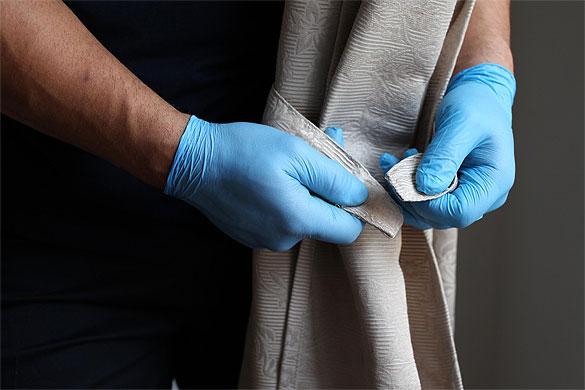
A technician working in a newly finished bathroom has to establish three things before touching anything: what the material is, whether it has been sealed, and what the residue actually consists of. Polished porcelain, glazed ceramic, natural stone and composite all look similar under site lighting and behave completely differently. A discreet test in a corner is not a formality. Where there is any doubt about a stone floor, the safe route is a pH-neutral product and mechanical effort rather than chemistry doing the work.
Cement film on a newly laid floor
Grouting leaves a thin veil across the whole surface, which dries as a haze that looks like poor lighting rather than dirt. On porcelain it comes off with a mild acidic wash and a full rinse. On stone it has to be taken off with a stone-safe alkaline or neutral cleaner, agitation with a soft pad and repeated rinsing, then the floor has to dry completely before a sealer is considered. Sealing over haze traps it permanently, and sealing a damp floor causes clouding under the surface.
Grout, sealant and the junctions between them
New grout is porous for several weeks and picks up anything spilled on it, so a strongly coloured cleaner used early will stain it. Silicone at the perimeter of a tray or bath needs to cure before it is washed, and it must never be scrubbed with an abrasive, which tears the surface and gives mould somewhere to take hold. Where a fitter has smeared silicone across grout lines, removing it without disturbing the joint is careful work with a plastic edge.
Mansion blocks, mews and the way in
Period blocks here often have a single narrow staircase, a small lift that was never intended for equipment, and a porter who applies house rules about working hours and use of the front entrance. Mews properties have the opposite problem: a wide door but a cobbled approach and no room to stand a vehicle. Getting furniture and stored belongings back into a finished flat is a job in itself and is usually arranged through man and van team in Camden. Small outstanding fixes after the contractor has gone are handled by our Camden team.
Aftercare in the first months
A newly finished stone or tiled surface is at its most vulnerable immediately. Grit walked in from the street acts as an abrasive on a soft stone, so matting at every entrance matters more than any product. Acidic household substances — descalers, some bathroom sprays, even citrus — will mark limestone and marble. Routine upkeep that respects those limits is described under cleaning services team in Euston, and it is worth agreeing the regime before a new floor sees its first winter.
Arranging the visit
Quotes reflect room count, the number of bathrooms and the presence of natural stone, which takes materially longer than a modern engineered surface. What helps is knowing what was installed: keeping the fitter's material details to hand removes the guesswork that otherwise adds time. Access arrangements, porter permissions and any restriction on working hours should be settled first. Comparable projects east of here are covered by the Islington branch, and the general scope of after builders cleaning services UK is set out nationally.