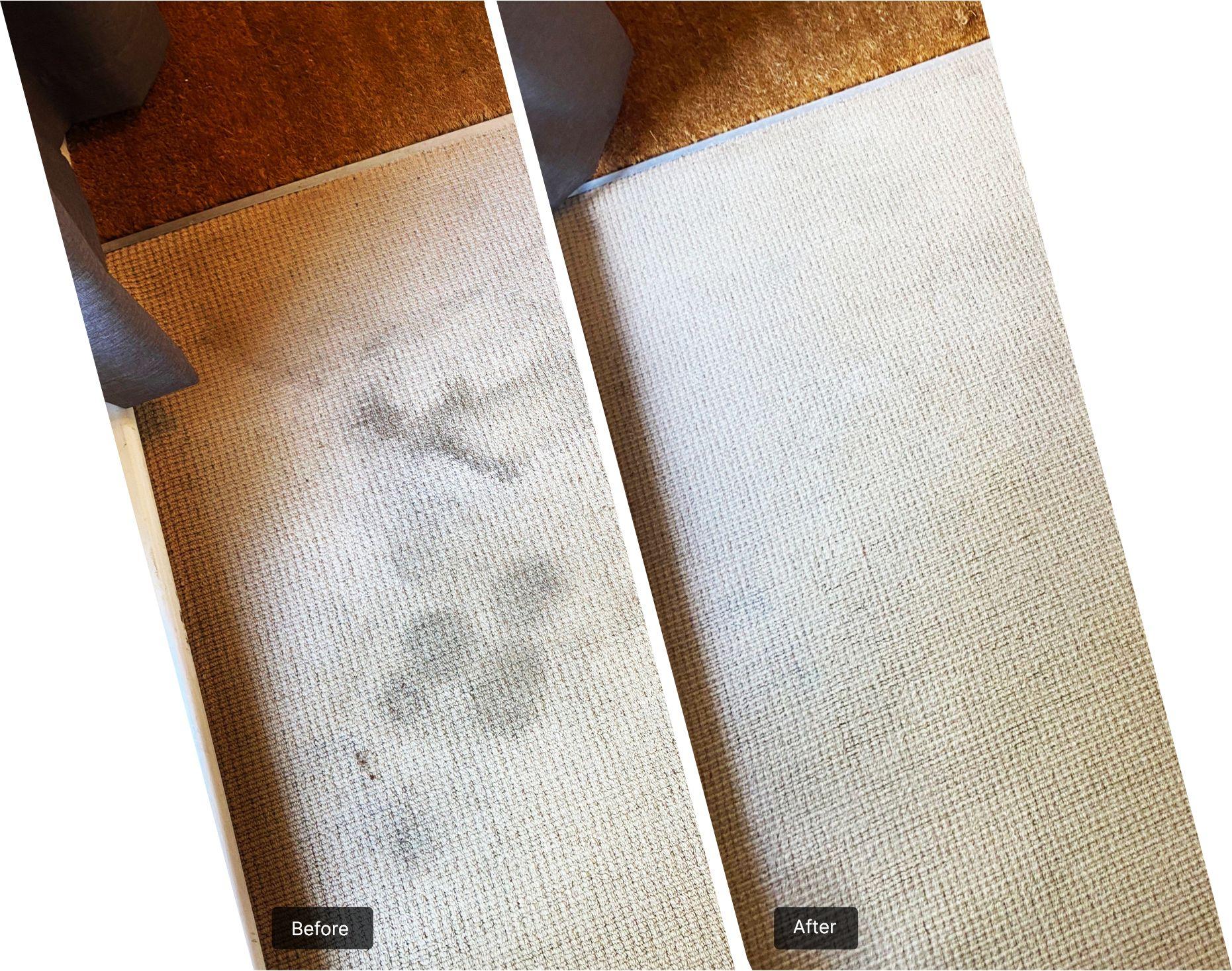
Carpet damage that appears where nobody walks is almost always biological. A thinning patch under a bed, a bald line behind a wardrobe or a ragged edge tucked beneath a radiator points to moth or carpet beetle rather than wear, and wool is the target. Kidlington has a lot of housing with wool or wool-rich carpet still down, and undisturbed corners in those rooms are exactly the conditions an infestation wants.
Damage in the places with no footfall
Traffic suppresses these insects: vibration, light and vacuuming all discourage them, so damage concentrates precisely where none of those happen. The tell-tale signs are grazed pile where fibres have been eaten to the backing rather than crushed, fine sandy frass among the yarn, and silken tubes along the gripper line. Recognising damage as infestation rather than wear changes the whole response, and the diagnostic approach is outlined on professional rug cleaning.
The adults are harmless; the larvae are not
The moths seen fluttering near a lamp do no damage at all. Their larvae eat keratin, which means wool, and they will ignore synthetic fibre entirely unless it is soiled with something organic. This is why a wool carpet contaminated with food or pet residue is far more attractive than a clean one, and why treating the soiling is a genuine part of treating the insect.
Edges, grippers and the gap under a wardrobe
Serious work happens at the perimeter. Carpet is lifted from the gripper along the affected wall where it can be done safely, the gap behind the skirting vacuumed out with a crevice tool, and the underlay and sub-floor inspected, because eggs and larvae shelter there rather than in open pile. Heavy furniture is moved rather than worked around. Comparable properties nearby are treated the same way, as trusted carpet cleaning in Thame describes.
Cleaning removes the food supply
Hot extraction will not kill everything in a floor, but it removes the larval food source, the frass and a large proportion of the eggs, and it makes the environment far less suitable. Combined with thorough regular vacuuming, including under and behind furniture, it is usually enough to break a light infestation without further measures. Where upkeep is already arranged through Chipping Norton cleaning services team, that regularity does much of the work.
When a floor is opened during building work
Lifted floors during a project frequently reveal the real source: old wool felt underlay, an abandoned nest in a void, or decades of debris between joists. Cleaning the exposed sub-floor and removing that material while access exists is far easier than dealing with it later. Carpets go back down only once everything has been extracted and the fine residue cleared, which forms part of the work described under after builders cleaning throughout Kidlington.
Sheepskins, felt underlay and the other things they eat
A carpet is rarely the only wool in a room. Natural felt underlay, an old sheepskin, a rug left under a bed, a stuffed cushion or the felt inside a piano all sustain the same larvae, so clearing a carpet while leaving the source untouched merely delays the return. Everything woollen in the affected room is inspected, and anything that can be laundered or frozen is dealt with alongside. Storage areas matter too, since a wardrobe floor above an infested carpet keeps the cycle running. Treating one room and ignoring the landing beside it is the commonest reason a household believes an infestation has come back.
What an infestation visit covers
The survey identifies fibre, maps the affected areas and checks perimeters, under-furniture zones and adjoining rooms, since infestations rarely stop at a doorway. Treatment is quoted on the treated area and on whether edges are lifted. Eaten pile does not grow back, so where damage is severe the honest answer is repair or replacement rather than another clean. Where a tenancy is ending, the findings are recorded as part of a local professional.