A staircase absorbs more punishment per square metre than any other floor in a house, and it is the part most often skipped. Every tread takes the full weight of a footfall landing on a narrow strip at the front edge, so wear concentrates in a band a few centimetres wide while the rest of the tread stays comparatively fresh. In the post-war semis and terraces that make up much of Woodley, that band is usually the first thing a visitor sees from the hallway.
Why the nose of each tread goes first
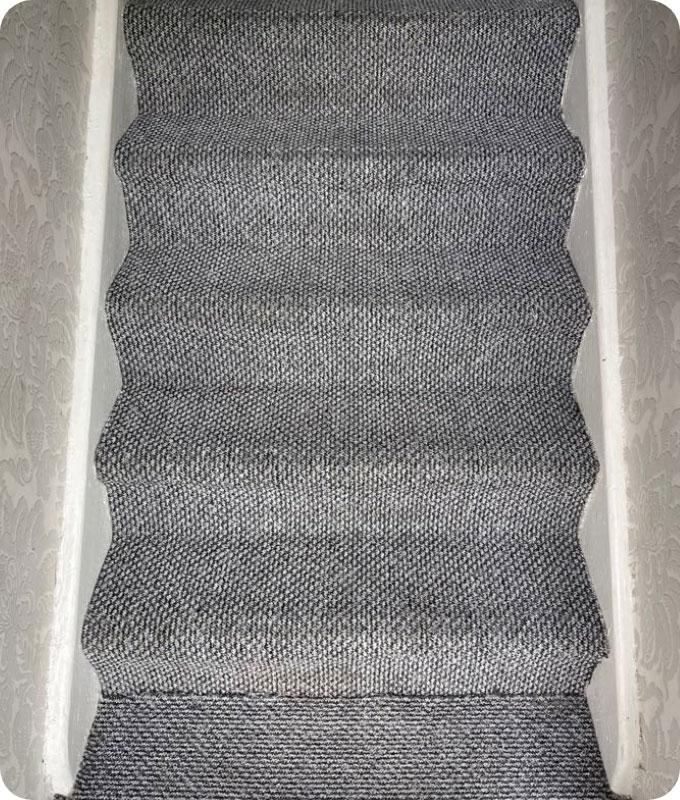
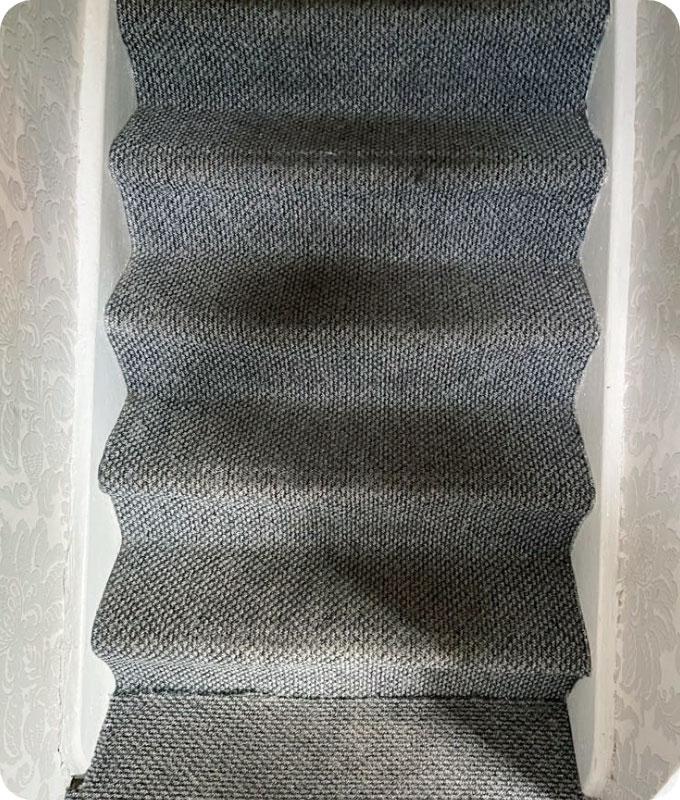
The nosing is where the pile is bent over a sharp radius and compressed at the same time. Fibres there flatten, then fray, then part. Grit carried up from the hall accelerates it, because the same pressure that crushes the yarn also drives particles into it. A clean will restore colour and lift the tufts, but yarn that has already parted at the nosing will not come back, which is worth understanding before the job rather than after.
Hand tools rather than a wand
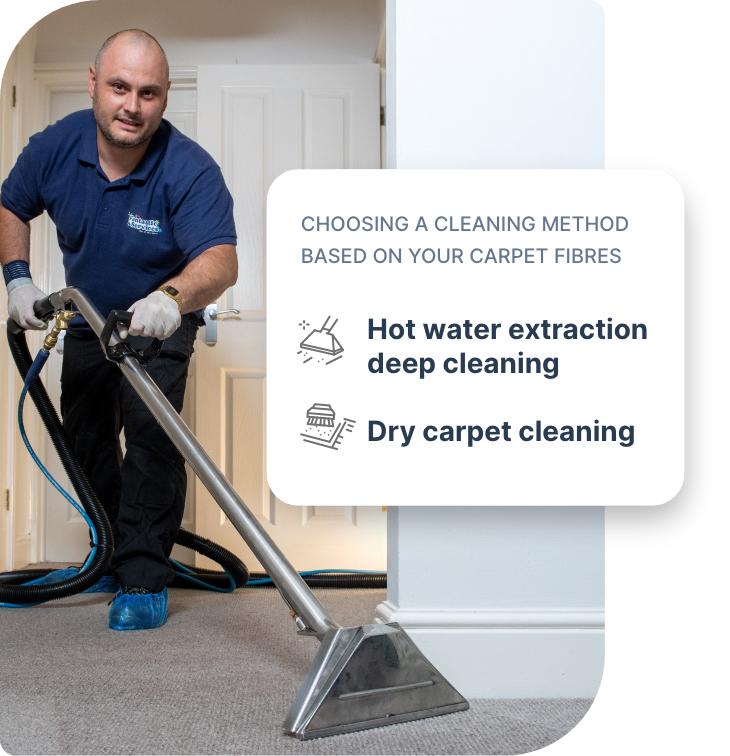
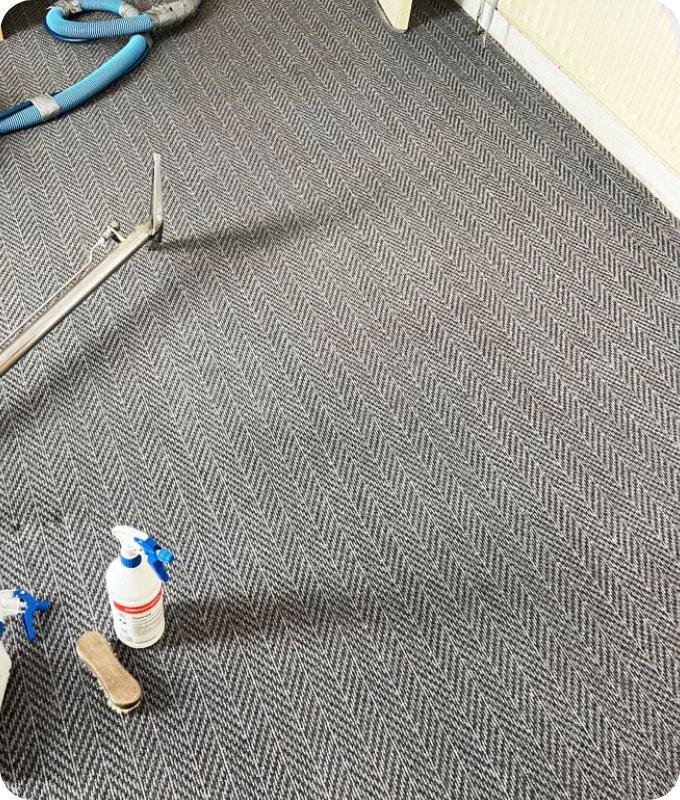
A stair tool is small, light and shaped to reach into the angle between tread and riser, where a full-size wand simply cannot sit flat. Working top down, each tread is pre-treated, agitated with a brush along the direction of the pile and then drawn dry in short overlapping strokes. It is slower than floor work by a long way, and the price reflects time rather than area for exactly that reason.
Winders and the awkward quarter turn
Plenty of houses here have a staircase that turns with tapered treads rather than a square landing. Those wedge-shaped steps take the heaviest traffic on their narrow inner end and are the hardest part of the flight to keep dry, because the carpet is stretched over a curve and moisture collects at the tight edge. Extra dry passes across the narrow side stop water sitting against the riser and lifting the grippers over time.
Keeping the stairs usable while they dry
A wet staircase is a genuine hazard, so the aim is a pile left barely damp instead of soaked. Where a household needs the flight in use straight away, a low-moisture method with a bonnet or pad is the sensible choice, accepting a slightly lighter result in exchange for a surface that is safe within the hour. Where the stairs can be left alone, a full extraction clean gives the deeper outcome. Both approaches are described on carpet stain removal.
Landings, thresholds and the rooms beyond
Soil does not stop at the top step. The landing directly outside a bathroom door collects damp footprints, and the threshold strips between rooms trap grit that gets kicked over them. Treating the flight without the landing leaves an obvious tide line, so the two are normally quoted together. Households that also want kitchens seen to book that separately under same-day oven cleaning services in Woodley.
Spindles, rails and the rest of the stairwell
The vertical surfaces beside a staircase hold as much dust as the treads do, and a flight that has just been cleaned tends to show up the spindles next to it. Wiping those down at the same time is what makes a stairwell look finished rather than half done, and it is easily combined with the floor work where somebody already comes in to do the housework. Move-out work further along the valley is covered by end of tenancy cleaning services across Henley-on-Thames, and the full domestic list for the area sits on cleaning services prices in Woodley.
Booking, access and what to clear
Stairs and landings are priced by the flight and the number of steps, and a hall, stairs and landing package is the usual combination because the three are cleaned as one continuous run. Clearing the banister rail of coats and lifting loose items off the treads before the technician arrives saves genuine time. The flight is left barely damp rather than wet so it can be used, and the handrail is wiped at the end. Households on the boundary sometimes prefer a slot advertised for the carpet cleaning team in Earley.