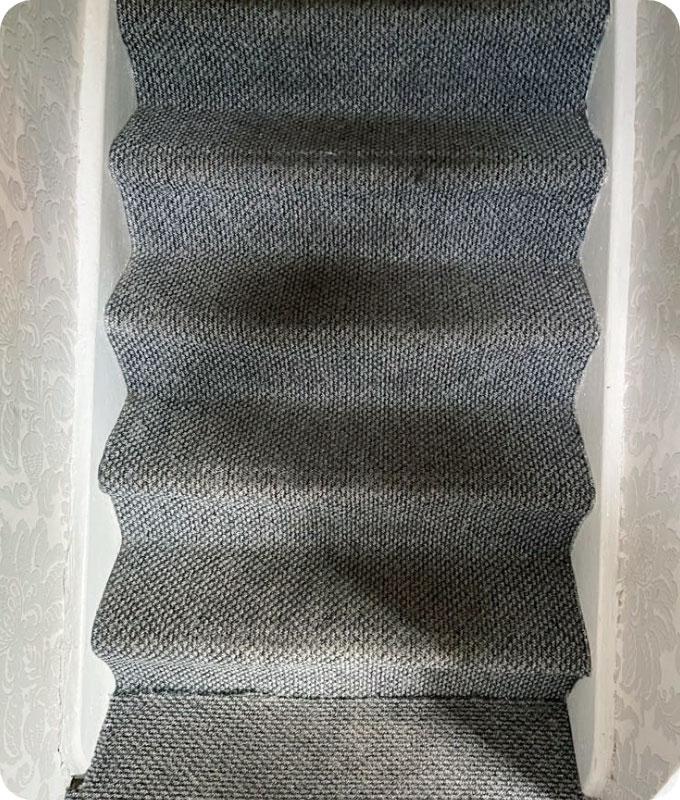
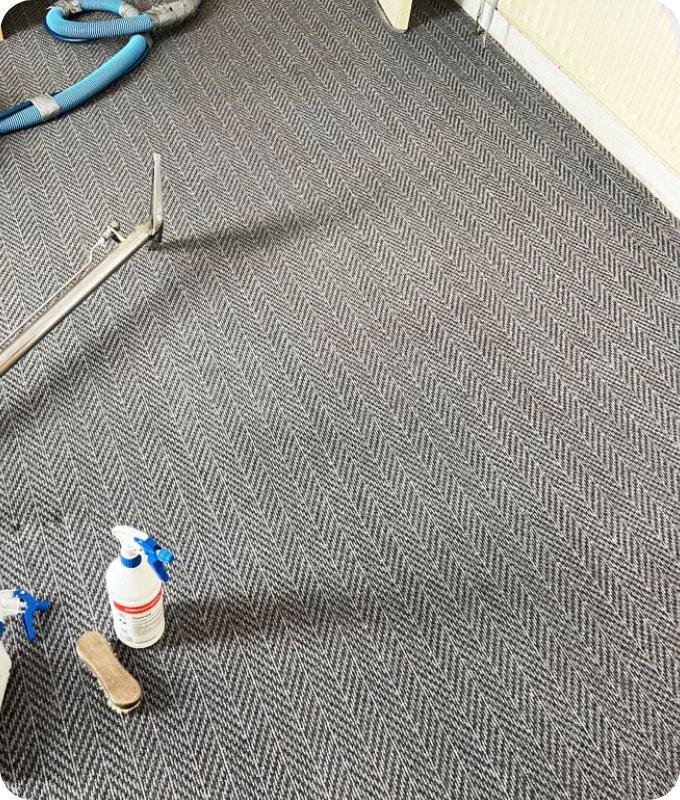
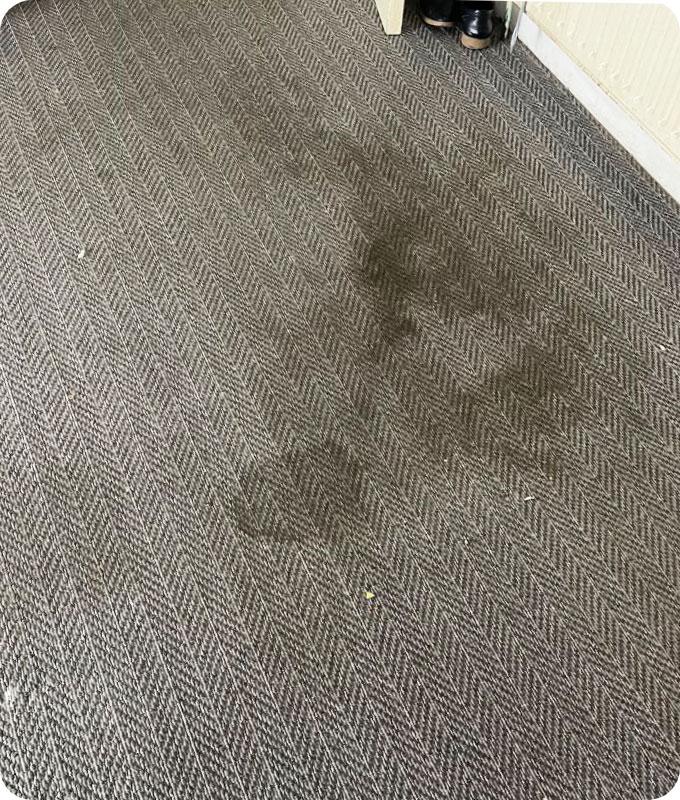
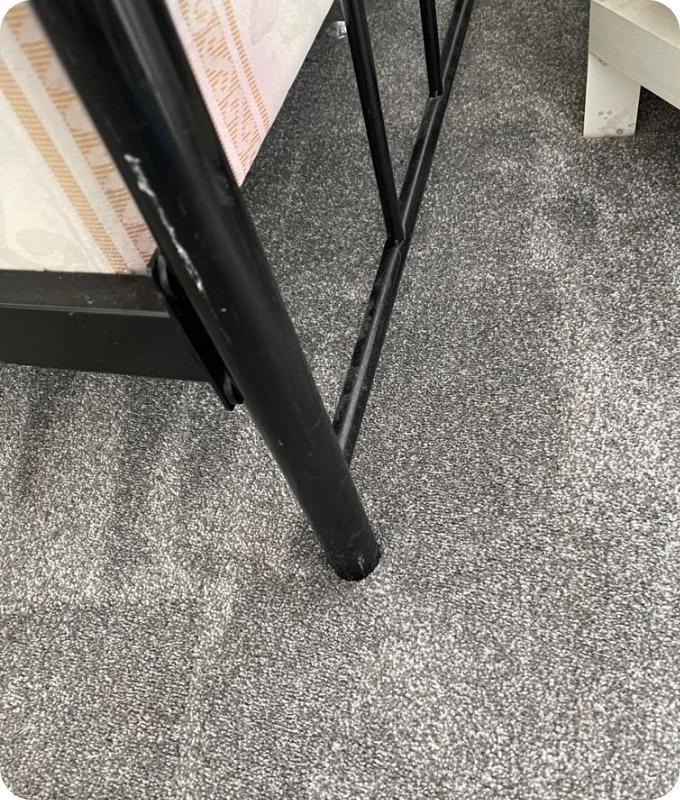
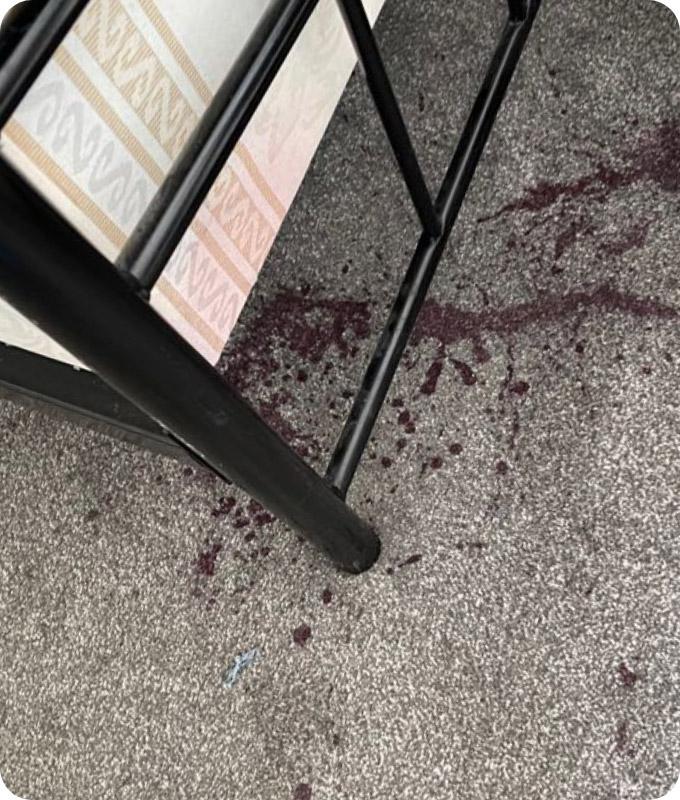
A spill turns into a stain at a predictable moment: when somebody reaches for the nearest cloth and rubs. Most of the marks that eventually need professional attention in Wokingham homes began as something a towel could have lifted in the first two minutes, and the harm done afterwards — spreading, crushed yarn, colour pushed down into the fibre — is what takes the work to undo. Telling the difference between soil sitting on a pile and dye bonded into it decides whether a mark lifts at all.
Three kinds of mark, three different chemistries
Tea, coffee, wine and fruit juice are tannin-based and answer to mildly acidic treatment. Milk, egg, blood and animal accidents are protein, and need an enzyme product working cool, because heat sets protein the way it sets an egg white. Food colouring, felt tip and certain medicines are dyes, and a dye has to be reduced or drawn out with heat transfer rather than washed away. Picking the wrong one of the three does not simply fail — a tannin remover on protein can fix the mark permanently. Background on fibre behaviour sits on our carpet and rug cleaning team.
Blotting, and why rubbing is the real culprit
Pressing a white towel into a fresh spill lifts liquid by capillary action while the tufts stay upright. Rubbing does the reverse: it drives liquid to the base of the yarn, fuzzes the twist and leaves a rough patch that catches the light differently even after the colour has gone. Working inwards from the outside edge keeps the ring from widening. Plain water, used sparingly and blotted repeatedly, deals with a surprising share of household accidents before anyone needs to make a phone call.
Marks that reappear after two days
A mark that comes back has not returned; it has risen. Liquid that reached the backing travels up through the tufts as the floor dries and leaves its contents at the tips. Deep spills consequently need extraction from the base, weighted towelling left overnight, or a short second visit once the area has dried out. Anyone who has watched a red ring resurface under a sofa has seen the effect, and the answer is moisture management rather than another dose of chemistry.
Open-plan rooms where everything happens at once
Much of the newer family housing around the town puts cooking, eating and garden access within the same few square metres, so grease, crumbs and outdoor grit all cross one strip of floor. Airborne cooking residue lands on the pile as a sticky film that traps soil, which is why households frequently pair floor work with the team covering Wokingham in the same week. Treating that strip once a year is far less effort than rescuing a pile that has already been walked grey.
Rented houses and the end of an agreement
Where a property is let, the condition of the floors is one of the first things an incoming inventory clerk writes down. A professional clean with a dated record behind it removes most of the argument about whether marks are wear or damage. Landlords preparing a property between agreements often arrange the whole package through local specialists, which covers the kitchen, bathrooms and appliances alongside the floors.
Equipment, neighbouring rounds and timing
The same vans work across the surrounding towns, so a customer living out towards the forest sometimes asks about vetted carpet cleaning in Crowthorne rather than a Wokingham slot, depending on which day suits. Machines are chosen for the property: a long hose run from the road where a driveway allows it, a portable unit where it does not.
What a booking includes
Pricing follows the number of rooms and their size, with stairs, landings and separate rugs quoted individually. Clearing small items, toys and floor-standing lamps in advance makes a visible difference to the finish, because the technician can work in continuous passes instead of stopping. Pets are usually better shut in one room until the floors are dry. The wider list of household work available locally is set out on fully insured home cleaning in Wokingham.