By March a house has been shut for five months. Heating has been running, windows have stayed closed, washing has been dried indoors, and the air has carried the same particles around the same rooms since October without ever properly leaving. The result is not dirt in the ordinary sense but a fine, even deposit on everything above eye level and below the furniture, a staleness in the fabrics, and condensation marks on the coldest glass. That is what a spring clean actually addresses.
What a closed winter leaves behind
The winter deposit is largely textile fibre, skin, cooking residue and combustion particles from heating, bound together by the moisture that has been circulating with it. It settles on the top of wardrobes and door frames, on lampshades, behind radiators and along the tops of picture frames, and none of those are on a weekly list. It is removed dry first, working downwards, because wetting a greasy deposit of that kind turns a light film into a visible streak.
Older terraces through KT1 have sash windows with a box frame, staff beads and a channel that collects grit, hair and dead insects all winter. The dark line along the inner sill is condensation residue mixed with that debris, and it wipes away easily once the channel has been vacuumed rather than mopped over. Painted frames want a barely damp cloth and immediate drying; the sash cords and the pulley recess are cleaned with suction alone.
Curtains, blinds and the mattress underneath it all
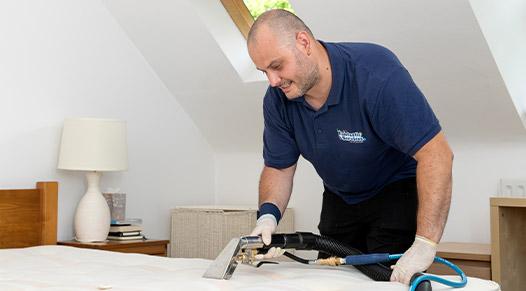
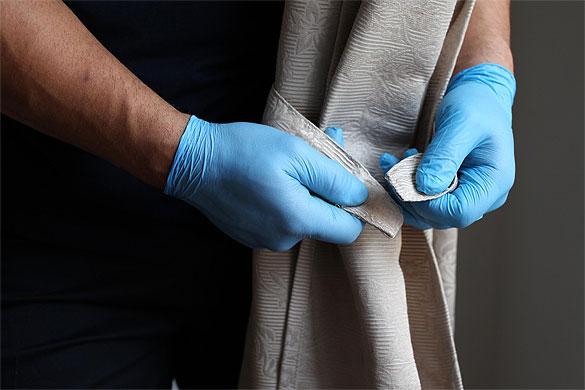
Soft furnishings are where the winter goes. Lined curtains hold an extraordinary quantity of dust in the heading tape and hem, venetian blinds hold it on every slat edge, and a mattress absorbs moisture every night for months. Vacuuming both sides of curtains, wiping slats individually and lifting and vacuuming a mattress properly makes a bigger difference to how a bedroom feels than anything done to the visible surfaces. What a full session covers as standard is described on how it works.
Room by room rather than task by task
A spring clean done as a series of tasks across a whole house leaves the house disrupted for days. Done room by room, each one taken from ceiling to floor and then finished and closed, progress is visible and nothing is repeated. Within a room the order is always high level, then joinery and glass, then furniture and fabrics, then floor. The identical sequence governs the equivalent work carried out under same-day deep cleaning services in Fleet, where the housing is newer but the method does not change.
Flats close to the river
Riverside conversions and new blocks near the water run humid, and flats with a single aspect struggle to cross-ventilate at all. A spring clean in one of those is as much about opening up window tracks, clearing trickle vents and cleaning extractor grilles as it is about surfaces, because those are what will keep the flat dry once the weather turns again. Comparable work in the suburban housing a little further out is handled by cleaning services team in New Malden.
When the clean is also a departure
Spring is the busiest season for tenancy endings around the town, and a thorough clean for your own benefit and a clean assessed against a check-in inventory are not the same specification. The second one covers appliance interiors, window tracks, tops of doors and inside cupboards as compulsory items, priced by property size rather than by time, and it sits under Kingston end of tenancy cleaning service.
How the day is quoted and what to prepare
A one-off session is priced on the number of bedrooms and bathrooms, with items such as an oven interior, internal windows or a fridge-freezer added individually, since those are the elements that lengthen the day. Clearing surfaces, floors and the tops of wardrobes beforehand is worth more than anything else in converting time into results. Once the reset is done, keeping it takes far less effort, and a regular arrangement through domestic cleaning across Kingston is usually enough to carry it through to autumn.