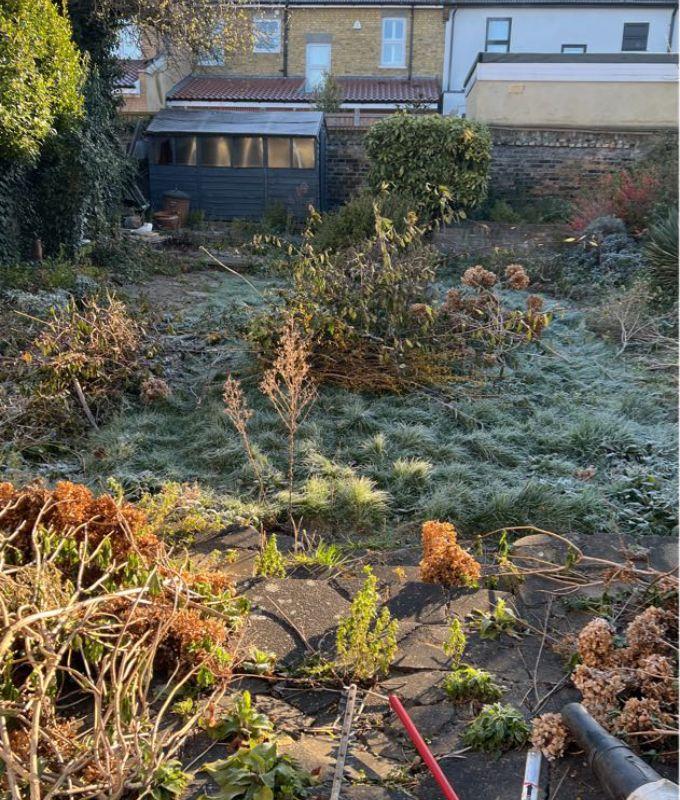
A garden maintenance round is easy to describe and difficult to run well. The same crew returns through the year, and the value sits in what changes between visits rather than in any single one of them: the cutting height coming down through April, the first cut of the rough grass in May, the bed edges recut before the growth closes over them. Across KT1, where plots run from narrow terrace gardens to riverside ground on free-draining gravel, no two rounds look alike.
What a scheduled visit actually contains
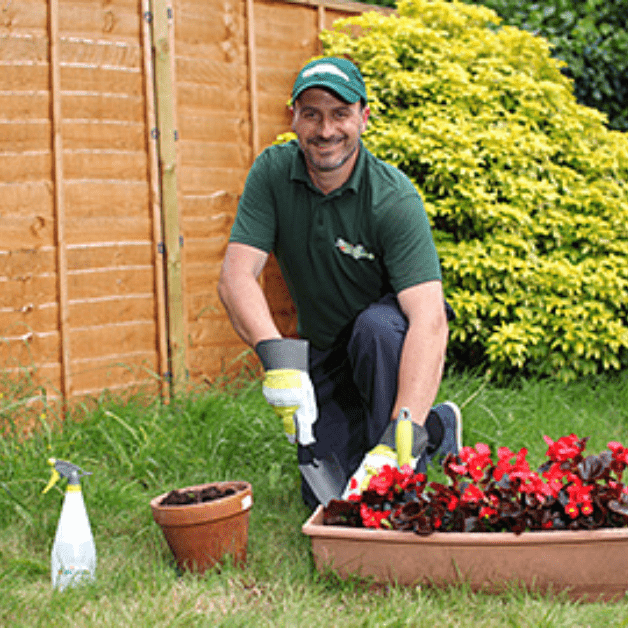
A standard visit is not simply a mow. Grass is cut and edged, paths and terraces are cleared of arisings, beds are hoed or hand weeded, anything flopping is tied in, and the obvious deadheading is done. Beyond that, the content changes with the month. A visit in March goes into bed preparation and edge recutting, one in July into watering checks and hedge trimming, one in October into leaves and cutting back. Agreeing that seasonal shape in advance prevents the round drifting into a mowing service.
How often is often enough
Grass growth follows a curve rather than a straight line, peaking sharply in late spring and slowing markedly in midsummer. A fortnightly interval works for most of the year and is plainly inadequate for six weeks in May and June, when a lawn can put on enough growth to need removing rather than cutting. Either the interval tightens through that window, or the cut height rises to compensate and the sward is allowed to grow longer. Insisting on a fixed interval all year is the commonest reason a maintained garden looks ragged in early summer.
River-terrace gravel and the summer it produces
A good deal of this ground is old river terrace: gravel and sand with a shallow topsoil over it. It warms early, drains fast, and can be worked in weeks when clay elsewhere is unworkable. The trade-off arrives in July, when the same soil has no reserve at all and everything shallow-rooted browns off within a fortnight of the last rain. Deeper planting positions, mulch every spring and a realistic choice of drought-tolerant species do more here than any watering regime.
Gardens that take water in winter
Low-lying plots near the river face the opposite problem in the cold months. Standing water deposits a fine silt that caps the surface and excludes air, and walking or working on saturated ground compacts it for years. The discipline is to stay off it: no digging, no machinery, no barrow runs until the ground carries weight again. Most established planting recovers from a period under water, so the instinct to rip everything out in February is usually premature.
Small courtyards and shared gardens
Converted houses across the district share rear gardens between flats, and those spaces need a different specification from a family garden - hard-wearing, quick to maintain, and designed so that no single household is expected to do the work. Frequent short visits suit them better than occasional long ones. Structural changes such as new paving, levels or a rebuilt boundary sit outside a maintenance round and fall to experienced landscaping in Kingston, which covers the construction side of a garden.
When the lawn needs more than a mower
A round keeps a lawn cut; it does not repair one. Thatch, compaction, moss and bare patches need a separate programme with its own seasonal window and its own machinery, which is set out in detail under our Kingston team. Terraces and paths that have gone green over the winter are likewise a different job, needing the equipment described under pressure washing specialists in Surbiton, and running it before the first mow of the season keeps the grit off freshly cut grass.
Setting up a round
Pricing is built from the time a visit realistically takes, the number of visits across the year and the plot size, rather than from a figure per cut, since a garden with fifty metres of edge takes far longer than one with ten. Before the first visit it helps to settle gate access and keys, where a vehicle can stand, whether an outside tap is available, and which areas are to be left uncut. Arisings normally leave with the crew. The range of maintenance formats is described on our garden maintenance team.