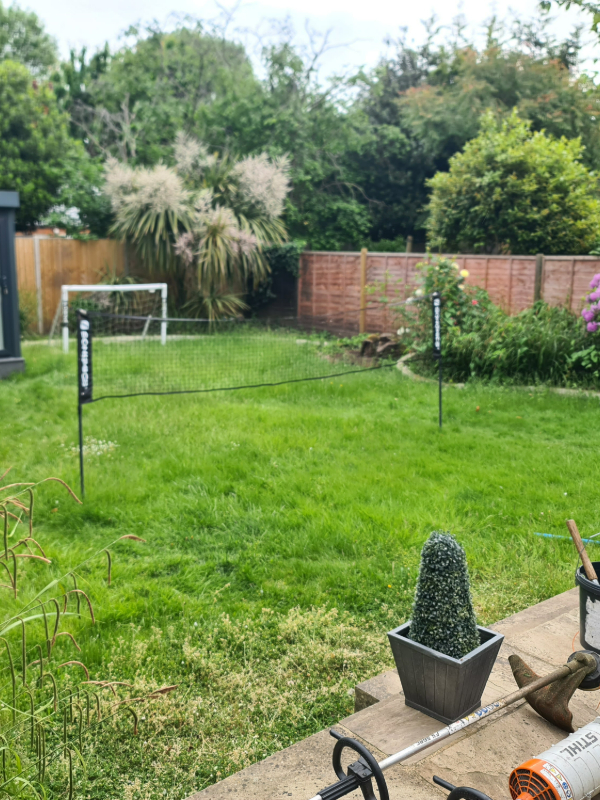
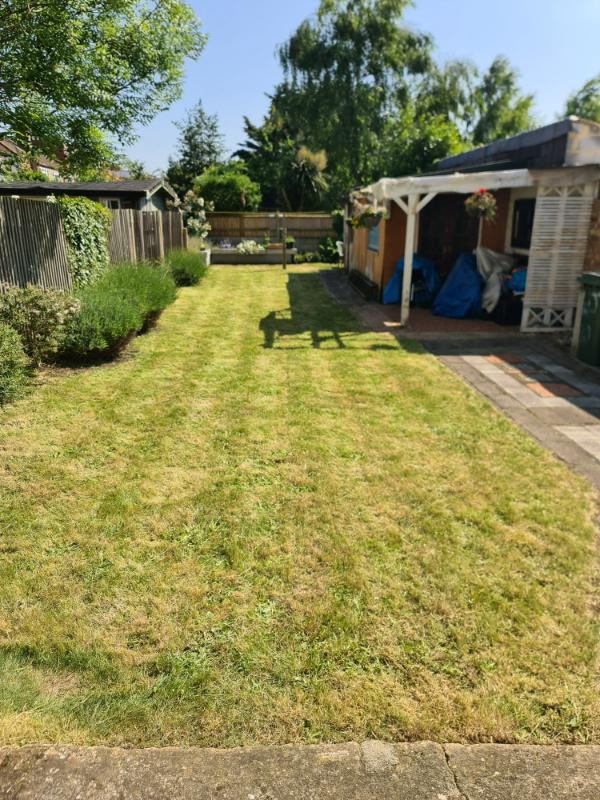
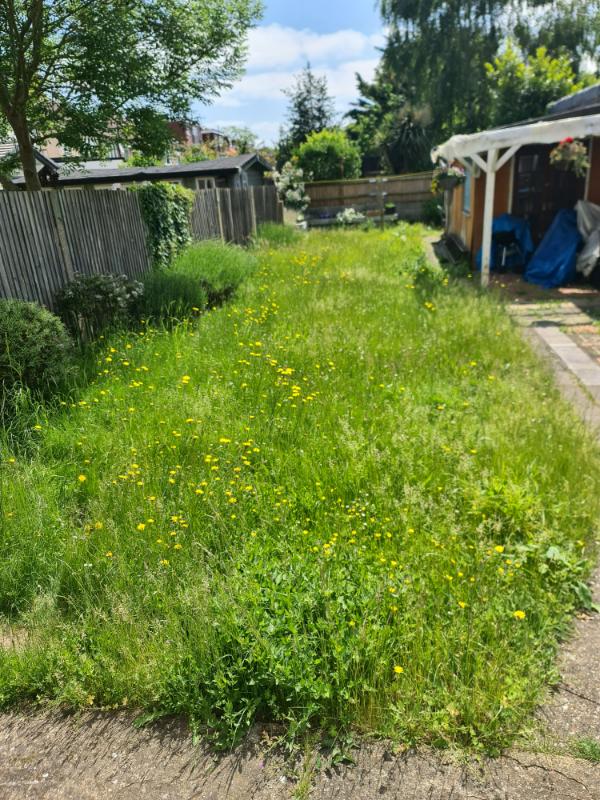
Grass in KT1 grows on a lot of gravel. The old river terraces drain quickly, and a lawn on that ground behaves quite differently from one on London clay: it greens up early, grows hard through May, then browns at the first serious dry spell while a clay lawn a few miles away is still standing upright. Getting a decent sward out of it comes down to cutting habits far more than to anything bought in a bag.
Cutting height is the biggest single lever
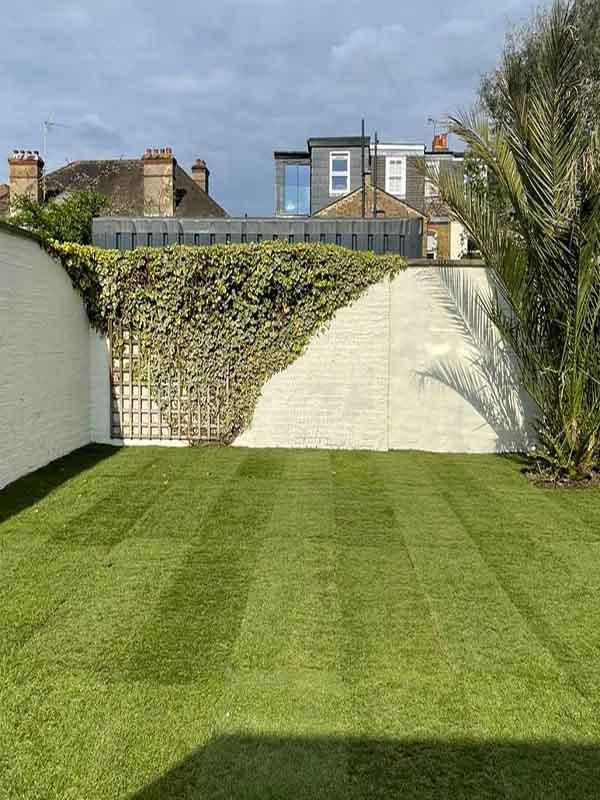
Every blade of grass is a solar panel, and cutting short removes the leaf area the plant needs to feed its own roots. A short-cut lawn responds by rooting shallowly, which is precisely the wrong strategy on free-draining ground. Raising the height by a notch or two produces a deeper root system, better drought tolerance and enough leaf density to shade out germinating weed seed. The close-mown stripe belongs on a ground maintained by a full-time team with irrigation; on a domestic lawn on gravel it is a slow route to moss and bare patches.
Frequency and the one-third rule
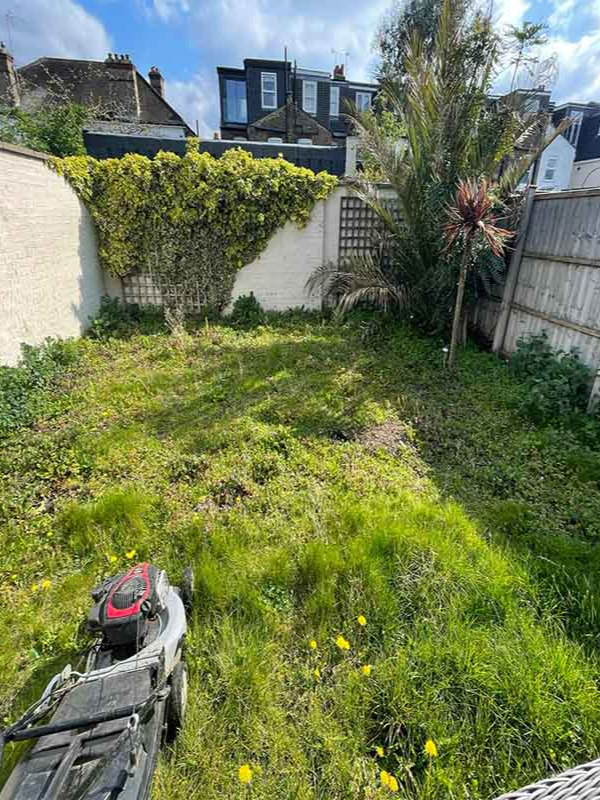
Removing more than about a third of the leaf in a single cut shocks the plant and produces the pale, strawy look that follows a long gap. In practice that means cutting more often during the flush and hardly at all in a dry August, rather than a fixed interval all year. If a lawn has got away, the fix is two or three cuts a few days apart with the height coming down in stages, not one pass on the lowest setting.
Clippings: collected or left where they fall
Short clippings dropped onto a dry lawn break down within days and return a meaningful amount of nitrogen to the sward, which suits this ground well. Long wet clippings do the opposite: they sit in clumps, exclude light and encourage disease. The practical rule is to collect when the grass is long or wet and to leave them when the cut is frequent and the weather dry. Through a hot spell, leaving clippings also shades the crowns slightly and slows the browning off.
Moss, shade and the north side of a wall
Moss is a symptom rather than a disease. It colonises where grass is weak, and the usual causes are shade, close mowing, compaction and surface wetness. Killing the moss without changing any of those simply clears space for the next generation. Raising the cut, thinning overhanging growth to let light in and dealing with compaction address the cause. Where a strip is permanently shaded by a wall or a building, grass is the wrong plant for it and a border or a path will always look better.
Watering, and what happens when it is restricted
Established lawns do not die in a drought; they go dormant, turn straw coloured and green up again within a fortnight of proper rain. Nothing needs to be done about that. Where watering is worthwhile - newly seeded or newly turfed ground - it has to be a thorough soaking that reaches below the root zone, applied infrequently. Light daily sprinkling encourages roots upwards to where the soil dries first and makes the problem worse. Where restrictions apply, raising the cut height is the single most useful response.
Feeding, and the seasons that suit it
A spring feed high in nitrogen drives leaf growth and colour. An autumn feed weighted towards potassium and phosphorus hardens the plant for winter and encourages roots rather than top growth, and applying the spring formulation in September produces soft growth that disease finds first. On sandy and gravelly soils nutrients leach quickly, so lighter and more frequent applications beat one heavy dose. Where a lawn is being replaced or a new one laid from scratch, ground preparation and levels are construction work, covered by landscaping specialists in Kingston.
What a lawn round covers and how it is priced
A lawn-focused arrangement typically includes cutting at an agreed height, edging against beds and paths, collection or mulching of clippings as agreed, and seasonal treatments booked separately because they depend on weather windows rather than on a diary. Pricing works from measured lawn area, the number of visits and access for machinery. Borders, hedges and the rest of the plot are handled as general maintenance through Kingston lawn mowing. Paths and patios that have gone green are cleaned with the equipment described under professional path and paving cleaning in Surbiton, and the different arrangements are compared on vetted garden maintenance.