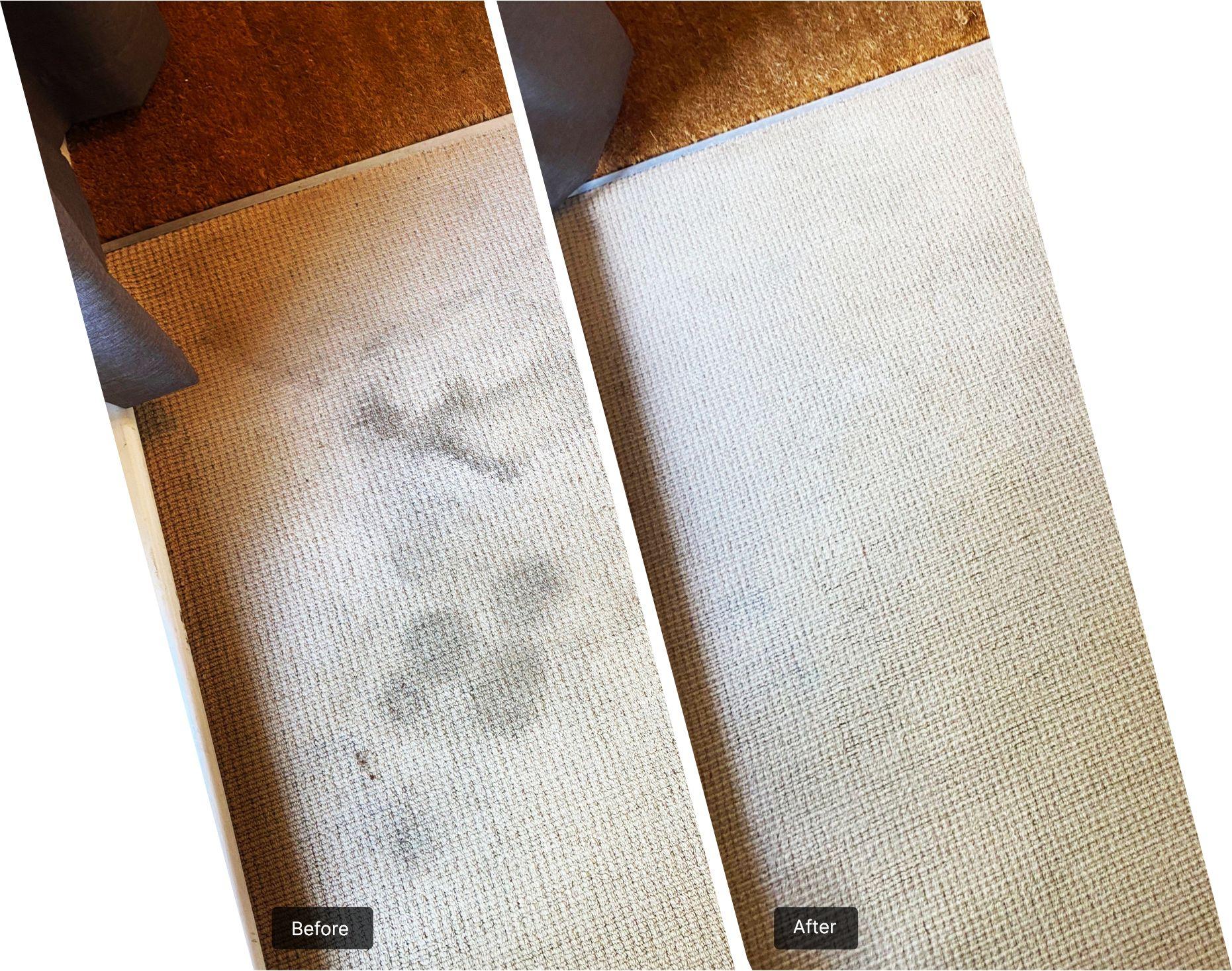
A house shared by four or five unrelated people wears its floors in a pattern nothing else produces. In parts of GU47 a good proportion of the rented stock is occupied that way, and the result is concentrated damage in the communal parts while the individual rooms stay comparatively untouched: the hall, the stairs, the landing and the kitchen doorway take the traffic of an entire household while each bedroom takes the traffic of one person. Any sensible maintenance plan for a property like that starts by acknowledging the imbalance.
Where the wear concentrates
The route from the front door to the stairs, the treads themselves and the strip of landing outside each bedroom door absorb several times the footfall of anywhere else in the building, and they are also the areas nobody feels personally responsible for. Individual rooms, by contrast, often need little more than a light maintenance clean at changeover. Spending the budget in proportion to that reality, rather than treating every room identically, gets more out of the same money and the same visit.
Common parts and who is responsible
In a licensable house in multiple occupation the management regulations place responsibility for the common parts on the person managing the property, and that covers keeping shared floors in reasonable condition. It is a practical point as much as a legal one, since the shared areas are what an inspection looks at and what a prospective tenant sees first. A cleaning schedule for the common parts written into the tenancy documents removes most of the arguments before they start.
Cooking smells held in soft flooring
Several people cooking different food in one kitchen produces a great deal of airborne grease, and it does not stop at the kitchen door. It settles on the carpet in the adjoining hall and on the stairs, where it forms a tacky film that traps soil and holds odour long after the cooking has stopped. A degreasing pre-treatment is the part that matters; a scented product over the top of it changes nothing for more than a day or two. Which pre-treatments are used on different soil types is described under professional carpet stain removal.
Working round people who are at home
Shared houses rarely empty, so the job is planned in stages: communal areas at a time when most people are out, individual rooms by arrangement, and the stairs done last so nobody is trapped upstairs. Wet floors and multiple occupants need clear communication rather than optimism. Low-moisture methods are frequently the right choice simply because the hall is back in use within the hour. Where a wider cleaning arrangement covers the property already, the timing is coordinated with a local professional.
Room-by-room changeovers
Occupancy in a shared house turns over one room at a time rather than all at once, which means a series of small handovers rather than one big one. Each still needs the floor dealt with, documented and dried before the next person moves in. Sequencing that behind the rest of the room preparation under end of tenancy cleaning across Sandhurst keeps each changeover to a single day.
After conversion or refurbishment work
Properties converted for multiple occupancy gain partitions, new door sets, fire doors and additional bathrooms, and the resulting dust settles into every soft surface in the building. Floors are cleaned once that residue has been removed, not before, which for a full conversion means post-renovation cleaning services in Woking comes first and soft flooring follows.
What a booking covers and how it is costed
A visit is priced on measured area with stairs by the flight, and communal areas can be booked separately from rooms so the spend follows the wear. Access arrangements matter more than usual: who will be in, which rooms are available, and whether there is somewhere to park. Clear the hall and landing of shoes, bags and bins beforehand, and expect a low-moisture option to be recommended where a stairway cannot be taken out of use for long. Comparable properties nearby are covered by our carpet cleaning in Yateley.