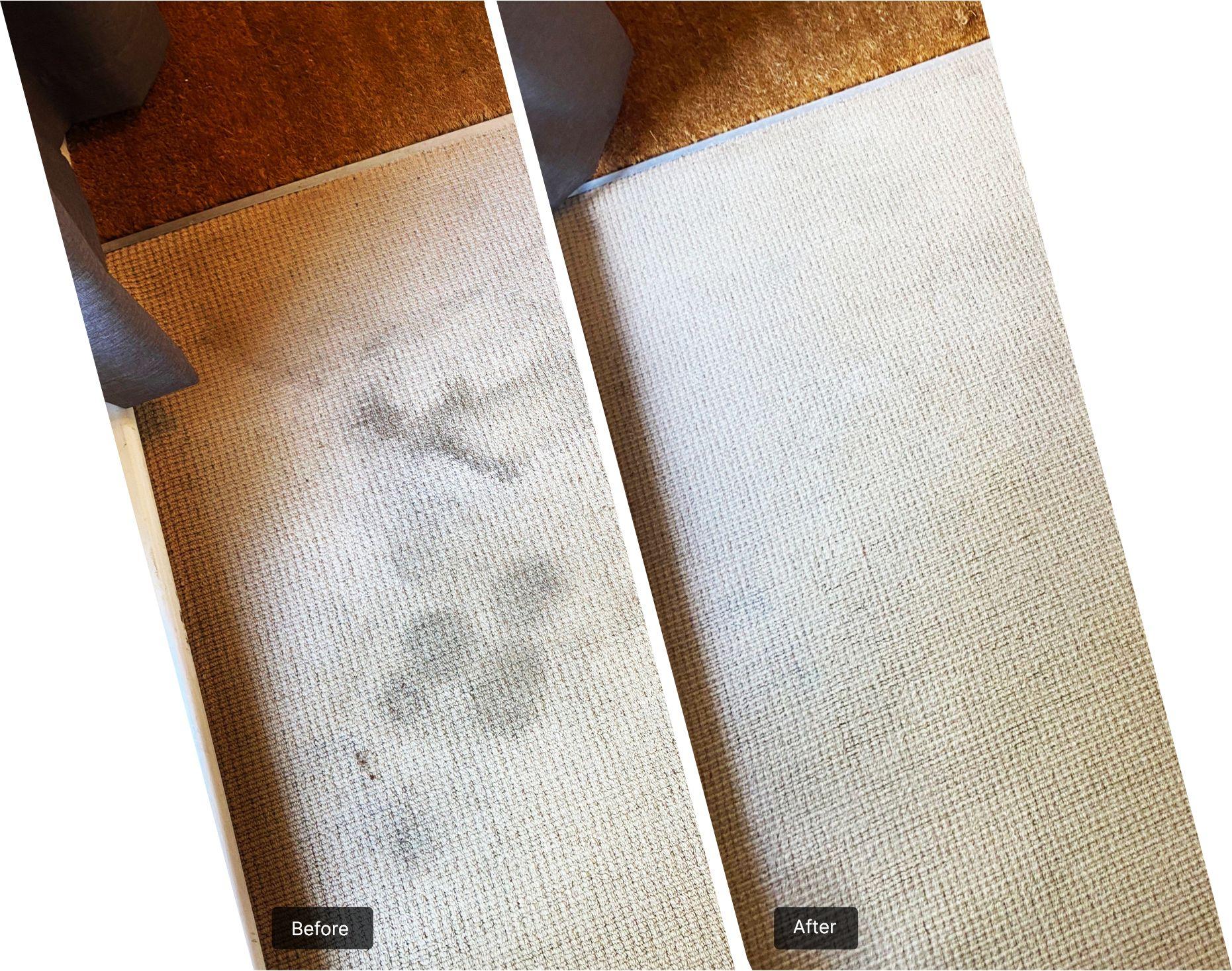
Fibre identification comes before any decision about equipment, and getting it wrong is how carpets are ruined. Wool, nylon, polypropylene and viscose respond to heat, moisture and alkalinity in completely different ways: wool felts and yellows if treated with a strongly alkaline product, polypropylene resists almost everything but wicks oily soil back to the surface as it dries, and viscose collapses into a matted patch if it is wetted at all. A burn test or a close look at the backing answers the question in a minute; assuming answers it badly.
The soil is mostly not what people expect
Well over half of what sits in a domestic carpet is dry particulate: skin, textile fibre, soot and mineral grit walked in from outside. Only a fraction is the sticky organic film that shows as a dark traffic lane. Because of that, the first stage of a proper job is slow dry vacuuming in several directions, often twice, and it removes more weight than the wet stage that follows. Skipping it turns dry grit into mud during extraction and leaves a carpet that looks worse dry than it did before.
Hot water extraction against low-moisture methods
Extraction injects heated solution under pressure and recovers it immediately, which rinses the fibre properly and is the right approach for synthetic pile with a real soil load. Low-moisture encapsulation applies a polymer that crystallises around the soil so it can be vacuumed out the following day, and that suits wool, loose-laid rugs and any situation where a short drying window matters. Neither is universally better. Choosing extraction on a wool twist over a felt underlay is how shrinkage happens, and that cannot be reversed.
Guildford water, and spots that come back
Supply drawn through the chalk of the North Downs is hard, and hardness matters here for a specific reason: minerals left behind as the carpet dries leave a slightly stiff, dust-attracting residue if the rinse stage is skimped. Any detergent left in the pile does the same thing, which is why a proper rinse pass with an acidic rinse to neutralise alkalinity is worth more than extra chemistry. Spots that reappear three days after a clean are almost always wicking from the backing rather than fresh soiling.
Rugs are a different job from fitted carpet
A hand-knotted rug has dyes that may not be fast, a foundation that can be cotton or silk, and fringes that are structural rather than decorative. It is cleaned off the floor, with the reverse dusted first, and dried flat and fast so that moisture does not migrate through to the face. Cleaning a valuable rug in place on a timber floor risks both the rug and the boards. Owners around Cranleigh and the villages south of the town are covered by local carpet cleaning across Cranleigh.
Drying, and the hours afterwards
A properly extracted carpet is damp, not wet, and should be dry within a few hours with air movement. Furniture goes back on protective blocks or foil tabs, because a dark-stained wooden leg on a damp pale carpet transfers colour permanently. Walking on a damp pile in outdoor shoes resoils it immediately. Steep, tall Guildford houses with several flights mean stairs often take longer than a whole room, since each tread and riser is worked individually.
Booking, access and pricing
Charges are worked out per room or per rug rather than by the hour, with stairs counted separately, so the count of areas matters more than the floor plan. Small movable furniture is best cleared beforehand; heavy items are usually cleaned around. Parking near the hill is constrained and permits help, as hose runs from the vehicle have a limit. Households wanting ongoing upkeep afterwards are served by cleaning services specialists in Guildford, while a full check-out standard is set out under local end of tenancy cleaning services in Guildford. The national overview sits at our main service page.