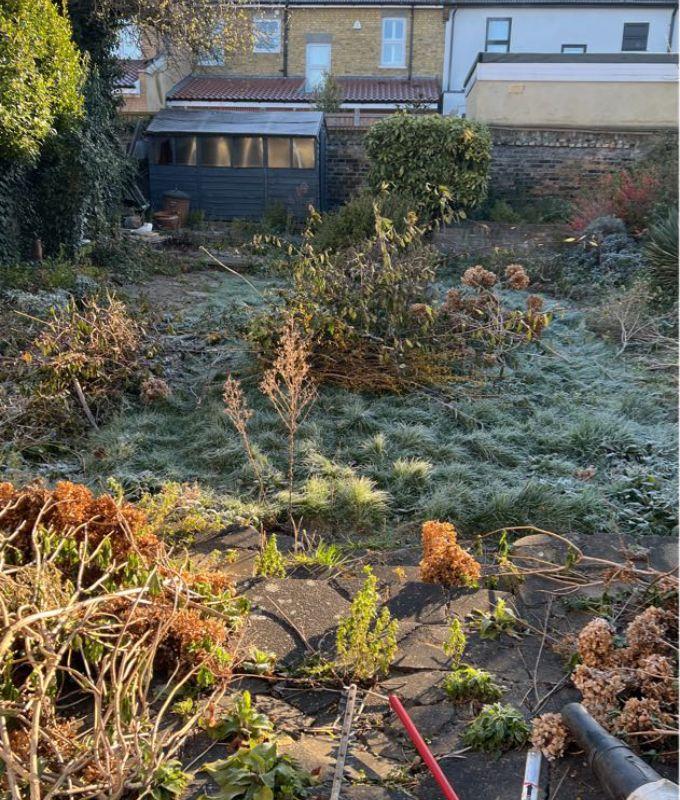
Shade is not one condition, and the commonest mistake made in a dark garden is treating it as though it were. Deep dry shade under an established tree and the cool damp shade behind a north-facing wall suit almost entirely different plants, and something chosen for one will sulk or die in the other. A good many Osterley gardens fall into shade for a different reason again: mature boundary planting put in fifty years ago that has simply grown up, and the ground beneath it has been in permanent gloom ever since.
Telling dry shade from damp shade
The test is what the soil is doing in June. Ground under a tree canopy or along the foot of a wall is dry because the canopy sheds rain outwards and the roots take whatever reaches it, so a bed can be bone dry a few days after heavy rain. Shade cast by a building, by contrast, often sits over soil that stays cool and moist all summer because the sun never reaches it. The first is the harder of the two and needs a different list of plants entirely.
Letting light in before changing the planting
Before anything is bought it is worth asking whether the shade itself can be reduced. Lifting the crown of a garden tree by removing its lowest limbs, thinning a congested canopy so light is dappled rather than blocked, and cutting an overgrown boundary back to its line often transform a bed more than any plant selection could. A pale-painted wall or fence at the back of a border reflects a surprising amount. Cutting dense growth back off a fence line also removes the covered run along it, and where something has already taken that up the matter goes to pest control services across Isleworth.
What actually thrives with little light
For dry shade the reliable performers are epimedium, the larger-leaved hardy geraniums, euphorbia, male fern, butcher's broom, vinca and hellebores, all of which will cope once established. Damp shade opens the list considerably: hostas, most ferns, brunnera, pulmonaria, tiarella and woodland bulbs. Whichever it is, planting goes in during autumn rather than spring, in generous holes with added organic matter, and gets watered through the whole of the following summer, because the competition for water is the real difficulty rather than the darkness. Gardens facing the same problem next door are covered by what the service covers.
The lawn in shade, and when to stop pretending
Grass needs light more than almost anything else in the garden, and no amount of feeding substitutes. A shade-tolerant mixture with a high proportion of fine fescue helps at the margins, and raising the cutting height gives the plant more leaf to work with, but a strip that sits in shadow for most of the day will never hold a decent sward. At that point a path, a planted bed or a gravel and fern corner is a better answer than a fourth attempt at reseeding.
Moss is a symptom rather than the problem
Moss colonises the space grass cannot hold, which is why treating it without changing the conditions turns into an annual ritual and the moss returns by the following spring. Where the shade cannot be reduced, the honest options are to accept it, since a mossy area under trees is neither unhealthy nor unattractive, or to change what is growing there. Scraping moss off a shaded bank simply leaves bare soil to wash away.
Paving, steps and timber in permanent shade
Hard surfaces that never dry take on a green film within a season, and on steps and a sloping path that becomes a genuine hazard between October and March. Timber decking in shade is worse still. Sweeping does very little, since the growth is in the surface rather than on it, and restoring it properly takes the equipment and the technique that come under our pressure washing service in Osterley. Keeping overhanging growth cut back off the surface slows the return considerably.
How work in a shaded garden is arranged
A shaded garden suits fewer, better-timed visits than a sunny one, because there is less growth to manage and the critical jobs are seasonal: autumn planting and mulching, a winter look at whether light can be improved, and watering through the first summers of anything new. Visits are charged by their length. Anyone planning to replant a dark bed is better off waiting until they have watched it across a full year, since the pattern of shade in June is nothing like the pattern in March. The wider round this fits into is described at professional garden maintenance.