Sand holds on to very little. Water passes straight through it, nutrients wash out behind the water, and the fine grit that makes up the topsoil across much of BS23 ends up on the doormat, in the hall and eventually in the carpet. Gardening on free-draining ground near the coast is not harder than gardening on clay, but almost every instinct developed on heavier soil turns out to be wrong here, starting with how often anything needs watering.
Water goes through, so the answer is structure
Irrigating a sandy bed more frequently treats the symptom. What changes the situation is organic matter: well-rotted manure, garden compost or composted bark worked in and then topped up annually. Humus holds many times its own weight in water and gives the soil something to grip with. A thick mulch laid on moist ground in spring does the other half of the job by cutting evaporation, and the two together reduce watering demand far more than any amount of hose time.
Feeding little and often
Nutrients leach out of sand at a rate that makes a single spring application of fertiliser largely pointless by midsummer. Slow-release granular feeds and repeated light applications hold a plant far better than one heavy dose, which mostly ends up below the root zone within a fortnight. Nitrogen goes first, so yellowing on older foliage part way through the season is usually a feeding problem rather than a disease, and it is worth ruling out before anything is sprayed.
Lawns on light ground
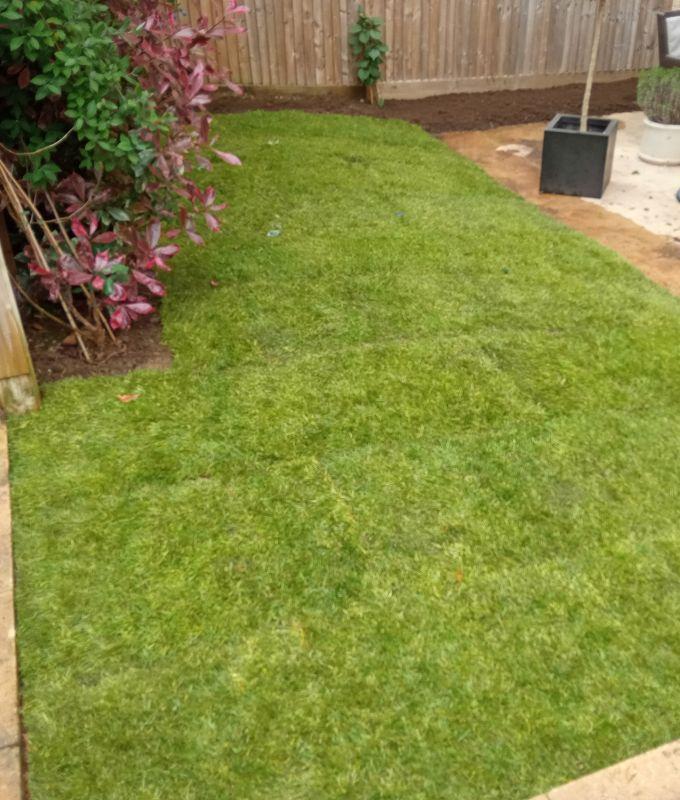
Turf on sand drains beautifully and browns off in the first dry fortnight. Raising the cutting height through summer shades the roots and makes a visible difference. Regular top-dressing with a loam-based mix gradually builds a better root zone, and overseeding in early autumn, when there is still warmth and reliable moisture, fills the thin areas before winter. Scalping a sandy lawn in a drought is the fastest route to a weed problem.
Planting that suits both the soil and the wind
Drought tolerance and salt tolerance overlap usefully here. Grey and silver foliage, waxy leaves and deep tap roots all indicate a plant that will cope. Autumn planting gives roots a winter to establish before the first dry spell tests them, which on this soil matters considerably more than it does inland. Anything planted in late spring will need watering through its first summer whatever the label claims, and a shallow soaking every other day does far less good than a thorough one twice a week.
The grit that ends up indoors
Sand tracks into a house relentlessly, and it is abrasive, so it grinds into the base of a carpet pile near a garden door and wears it from below. Vacuuming lifts the surface but not what has worked its way down, which is why the deeper treatment covered by steam carpet cleaning services in Weston-super-Mare makes a difference in a house with a well-used back door. Where a household wants the whole property kept on top of it rather than one room, that arrangement falls under Weston-super-Mare domestic cleaning.
Where construction rather than cultivation is needed
Terracing a sloping plot, laying a path that will not migrate on loose ground, or building retaining structures and raised beds to hold a better growing medium is design and build work rather than maintenance, and it sits with a local pro near you.
Setting up the visits
Work is priced by the time on site and the number of gardeners, with arisings charged by volume and taken away under the licensing rules covering commercial waste carriers. An outdoor tap, access to the rear without going through the house where possible, and a note of any irrigation system are the practical points to settle at the start. Comparable inland conditions are described on gardening throughout Clevedon, and the general scope sits on trusted garden maintenance.