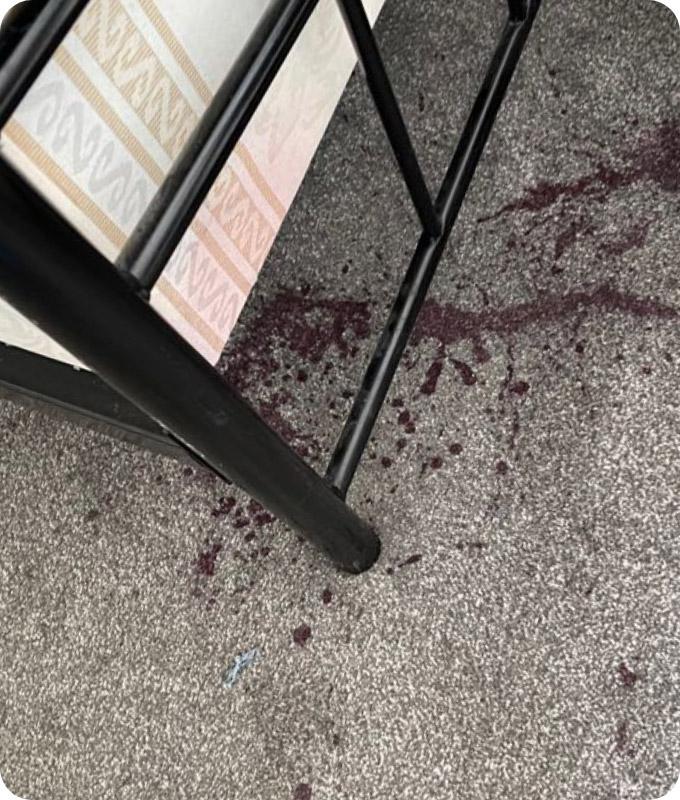
Warm weather brings a particular phone call. A carpet that has smelled of nothing all winter starts to smell of dog or cat the moment the heating goes off and the humidity rises, and nobody can find the source. That is not imagination and it is not a failure of housekeeping. Urine salts left in a floor are hygroscopic: they draw moisture out of the air, dissolve, and release ammonia and the bacterial by-products that came with them. Until the salts are removed, every humid day repeats the effect.
Why the odour returns with the weather
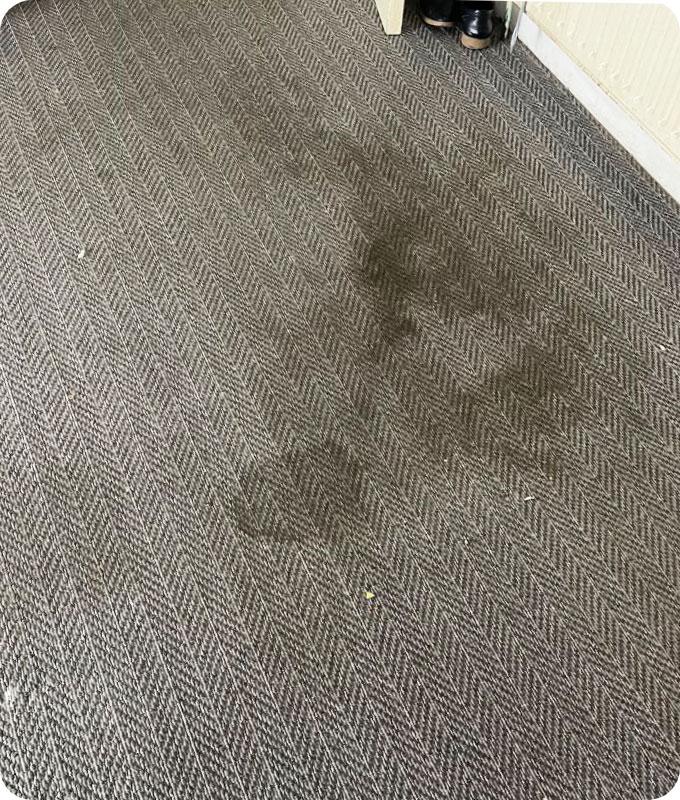
Fresh urine is mildly acidic and relatively easy to deal with. Left in place it breaks down, turns alkaline and crystallises into salts that bond to the fibre and to whatever is beneath it. Surface cleaning dissolves a little of the deposit, masks the rest with fragrance and leaves the bulk in the underlay and the boards. Two weeks later, or the first warm afternoon, it comes back. Anyone who has repeated that cycle three times is dealing with a contamination problem rather than a cleaning one.
Finding it before treating it
Guesswork wastes money. A handheld ultraviolet lamp in a darkened room shows deposits as a dull fluorescence, marking out the actual extent, which is almost always larger than the visible stain because liquid spreads sideways as it soaks. A moisture meter or a probe confirms depth and whether the backing and underlay are involved. Mapping the affected areas first means treatment volume matches contamination volume, rather than under-dosing the worst patch and over-wetting the clean carpet around it.
Treating every layer, not the top one
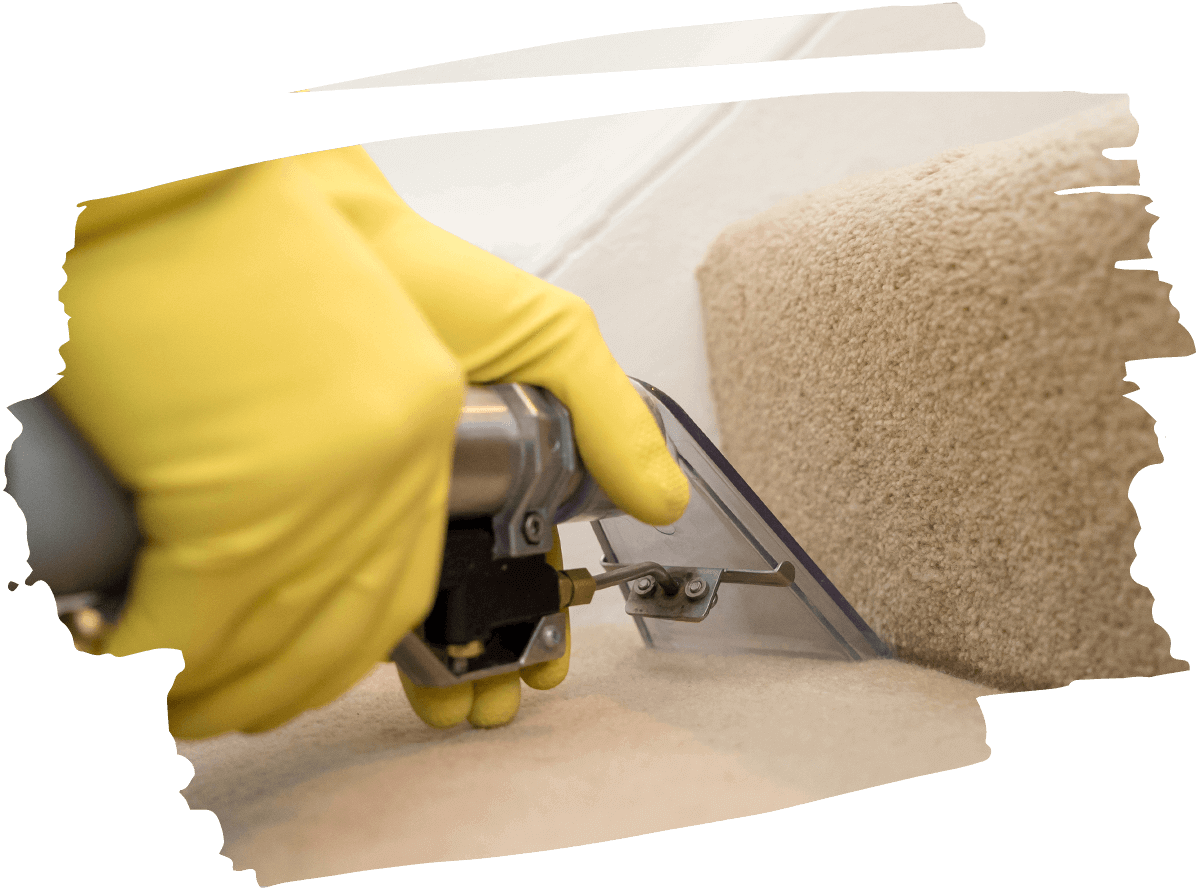
Where contamination has gone through, the work is done in layers. The carpet is flushed with a sub-surface tool that floods and recovers rather than skimming, enzyme or oxidising treatment is applied at a volume matched to the deposit and left to work for hours rather than minutes, and the underlay is lifted and replaced where it is saturated. Exposed boards or screed are cleaned and, if necessary, sealed. Nobody can honestly promise a guaranteed result on a floor that has been soaked repeatedly over years, and that should be said before the work rather than after. Specialist odour treatments sit among the options listed under the service in detail.
Hair, dander and a vacuum that cannot cope
Pet hair weaves itself into a pile and resists suction, especially on a cut pile with any length to it. A rubber squeegee or a stiff brush drawn across the surface lifts the mat of hair so a vacuum can take it, and a machine with a sealed body keeps the fine dander from blowing straight back out through the exhaust. Households finding the routine unmanageable often fold it into a wider arrangement through cleaning services throughout Camberley.
The kitchen end of the same problem
Odour is rarely confined to one source. Cooking grease drifts into soft furnishings and into any carpet within reach of a kitchen doorway, where it forms a sticky film that holds soil and holds smell. Dealing with the floor while an oven is still carrying baked-on deposits treats half the cause, which is why the two jobs are often paired, with the appliance side handled through a local pro near you.
Pets and the end of a tenancy
Where a tenancy has permitted animals, the check-out is where contamination becomes expensive. Inspectors increasingly carry ultraviolet lamps, and an odour that returns after the report is signed can still generate a claim. A documented specialist treatment, carried out while the property is empty and dried properly, is far cheaper than a replacement floor. Handovers in the next town along, including those for weekend end of tenancy cleaning in Farnborough, are approached the same way.
What a contamination visit actually involves
Expect an inspection stage before any figure is discussed, because the extent cannot be judged from a doorway. Pricing reflects the number of affected areas, their depth and whether underlay has to come out, so it is quoted on inspection rather than by room. Animals should be out of the property for the day, and the treated rooms need airflow for several hours afterwards. A follow-up check a week later is normal on severe cases. The same protocol is applied for professional rug cleaning in Farnborough.