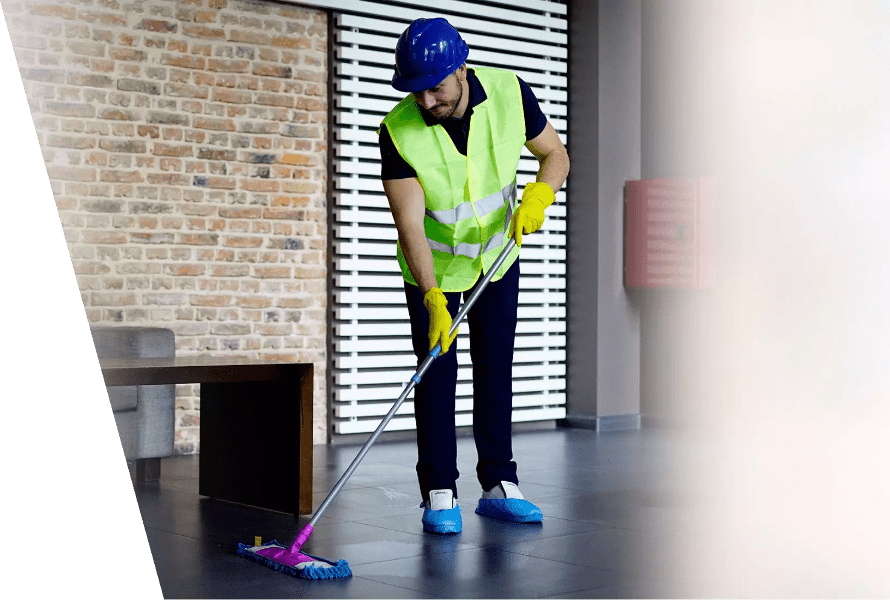
Repair work following water ingress is a recognisable category of building project in OX14, and it produces a clean unlike any other. Low-lying ground near the river means a proportion of local properties sit in an area where surface water and river levels are a live consideration, and when a house has been stripped back, dried and rebuilt, the residue left behind is a mixture of construction material and whatever the water brought in. Silt, plaster, tanking slurry and the remains of ruined floor coverings all have to be dealt with together.
Silt is not ordinary dirt
Fine river silt behaves differently from building dust. It is heavy, it holds moisture, and when it dries it forms a hard skin that bonds to porous surfaces. Sweeping simply breaks the skin into flakes and redistributes it. It also frequently carries contamination from drainage, which means the affected area is handled with appropriate protection and the waste is bagged rather than swept into a general pile. Surfaces that held silt need a sanitising wash after the physical removal, not instead of it.
Cleaning around the drying process
A dried-out property has usually spent weeks with dehumidifiers and air movers running, and that equipment redistributes anything loose across the whole building. It also means the fabric is still giving up moisture when the rebuild starts. Cleaning too early gives a result that is undone by the next phase of drying; cleaning too late means residue has been baked onto surfaces by warm dry air. The workable point is after the moisture readings are stable and after the final wet trades, but before anything is reinstated.
Tanking, replastering and the salts they leave
Where walls have been tanked or a damp-resistant render applied, the hacked-off material behind it is often carrying salts drawn out of the masonry over years. Those salts attract moisture from the air, so residue left on a floor or in a skirting gap will reappear as damp-looking patches on a surface that was dry the previous day. It needs removing thoroughly and rinsing, not just sweeping, and the same applies to the void under any suspended floor that was opened during the works.
What survives and what does not
Not everything can be recovered, and an honest assessment saves money. Carpet that was submerged is generally beyond salvage; carpet that only took traffic and airborne residue during the rebuild usually responds well to hot-water extraction, which is the work covered by carpet cleaning services in Abingdon. Solid timber often survives where laminate does not. Upholstery depends entirely on how far the water reached. Deciding this before the clean is booked keeps the scope realistic.
Reinstatement and the jobs that follow
Once a property is clean, a list of small reinstatement tasks usually remains: skirting to refix, a door to ease after it has swollen and dried, shelving to rehang, a curtain track to put back. These rarely justify the main contractor returning and are the sort of work handled by trusted TV wall mounting in Oxford. Where a property is being returned to a tenant or relet after the rebuild, the fuller standard described under our end of tenancy cleaning service in Abingdon applies on top of the construction clean.
The same approach in other towns
Rebuild and refurbishment programmes are handled the same way elsewhere in the region, with the local housing stock changing the detail. Comparable work is covered by experienced after builders cleaning in Wantage across the Vale, by after builders cleaning prices in Coventry further north in the West Midlands, and by Rugby after builders cleaning specialists on the Warwickshire side, where terraced and post-war stock brings its own access considerations.
Practical points for the appointment
Quotes reflect the number of rooms affected, the floor type and whether sanitising treatment is required, since that is additional rather than standard. Power and a water supply need to be live, and drying equipment should be finished with and removed before the visit. Keeping the schedule of works to hand helps, because knowing which walls were rebuilt tells the team where salts are likely. The national description of construction dust removal sets out standard inclusions.