Shared houses make up a large slice of the CV1 rental market, and the refurbishment cycle in them is relentless. A landlord takes a four or five bedroom house back over the summer, fits new fire doors, replaces a bathroom, splits a reception room, redecorates throughout, and needs every room ready for a September start. The cleaning job that follows is not one clean - it is five or six small ones plus communal areas, all with different finishes, all needing to look equally new to somebody choosing a room from photographs.
Fire doors and the detail around them
Rooms in licensed shared houses get self-closing fire doors with intumescent strips and smoke seals in the rebate. Those seals must not be painted, packed with filler dust or scrubbed with anything that lifts them, because they are the part that works. Cleaning around new door sets means dry extraction along the strip, careful removal of decorator's caulk from the frame, and leaving the closer and the hinges alone. The same applies to the fire-stopping around new services and to intumescent collars on soil pipes.
Six rooms, six different finishes
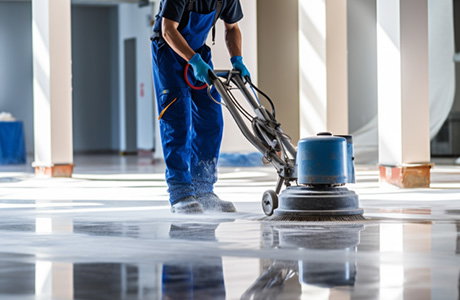
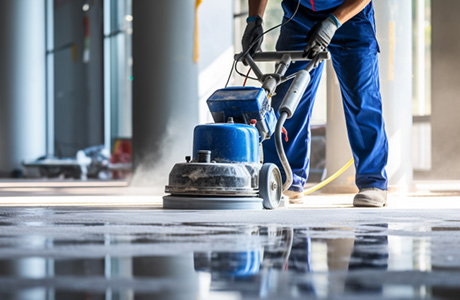
In a converted shared house it is common to find laminate in three rooms, carpet in two, vinyl in the bathroom and tile in the kitchen, all laid at different times by different fitters. Each has a correct product and a correct amount of water. Vinyl seams lift if they are flooded, laminate swells at the joints, and new tile grout is still curing and will absorb anything strong. Working room by room with the right solution is slower than one bucket for the whole house, and it is the difference between a finish that lasts a tenancy and one that fails by Christmas.
Communal parts take the heaviest load
Halls, stairs, landings and shared kitchens carry every trade, every delivery and every piece of waste that leaves. They also get the least attention because nobody thinks of them as a room. Skirting along a hallway, the underside of a handrail, the tops of door frames and the landing window reveals are where a rushed clean shows first, and they are the surfaces a prospective tenant walks past on the way to look at a bedroom.
Turnaround pressure and phased handover
When a house is being let room by room, the property rarely finishes all at once. Two rooms may be ready while a third is still being boarded. Splitting the work into a first clean of the completed rooms and a final pass over the whole house is more efficient than waiting, and it lets viewings start earlier. A dust barrier at the stair head keeps the finished floor from being contaminated by whatever is still happening above.
Work across the wider area
Crews cover the towns north and south of the city on the same rota. Terraced refurbishments in the service in full and the smaller projects around trusted after builders cleaning in Bedworth tend to be single-family rather than shared, while historic constraints come into play with jobs in after builders cleaning team in Warwick, where the building itself dictates the method. The general description of the service, including what sits outside it, is on after builders cleaning services nationwide.
Scope and what needs deciding first
For a multi-occupancy property the scope has to be listed room by room rather than described as "the house", and it should say whether wardrobes and drawer units are cleaned internally, whether windows are included on both faces, and whether the yard or bin store is part of it. Charging runs on crew hours, so the number of rooms and the state the trades left matter more than floor area. Mattresses and beds supplied by the landlord are treated separately from construction cleaning and should be flagged at booking rather than assumed.