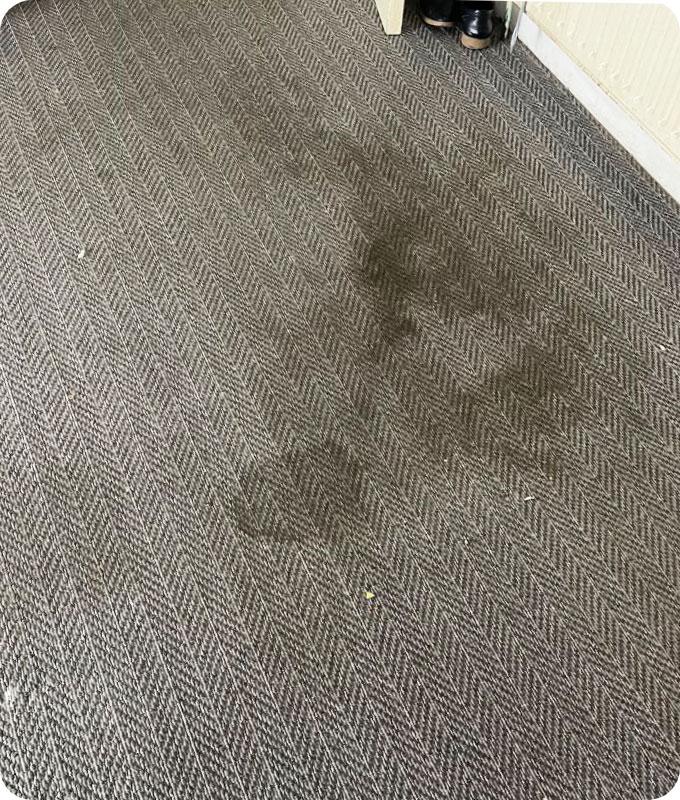
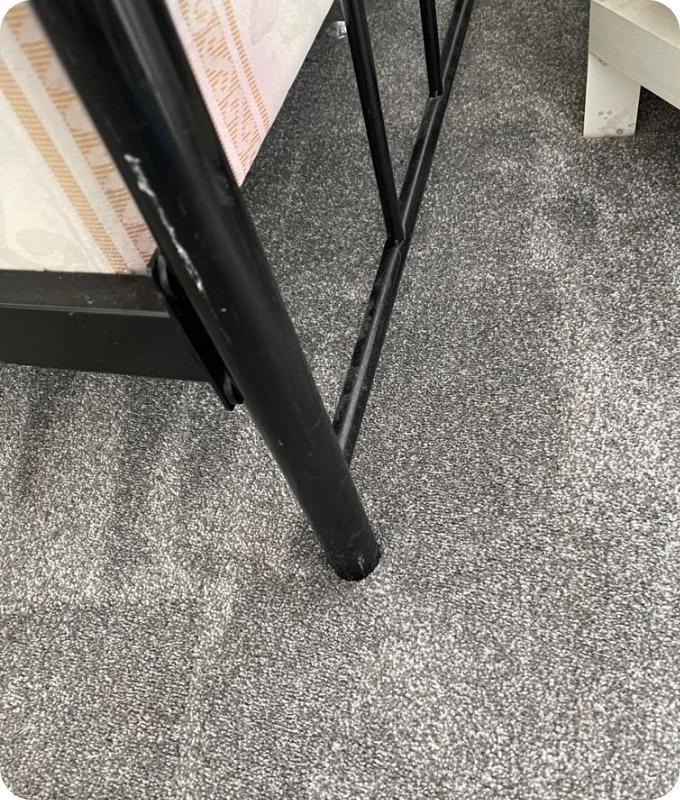
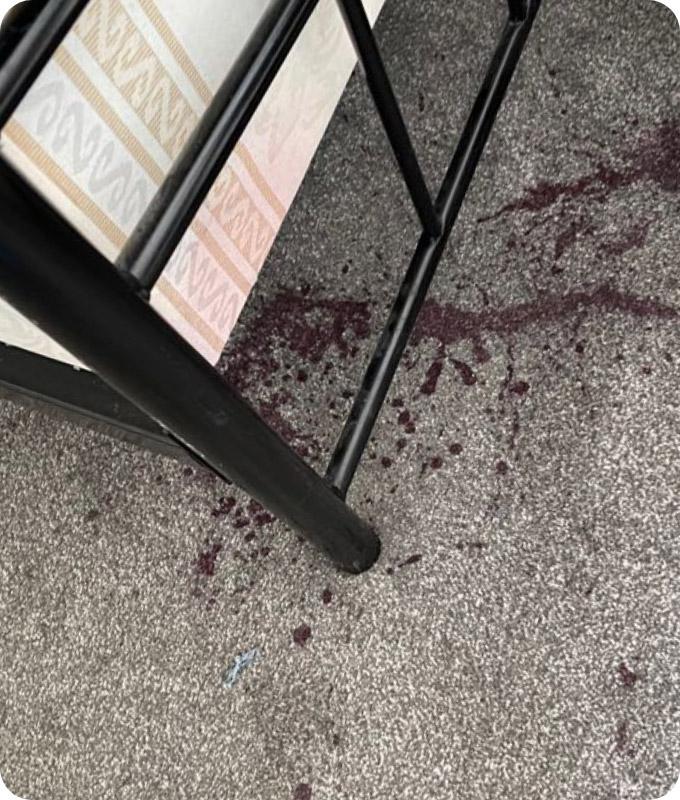
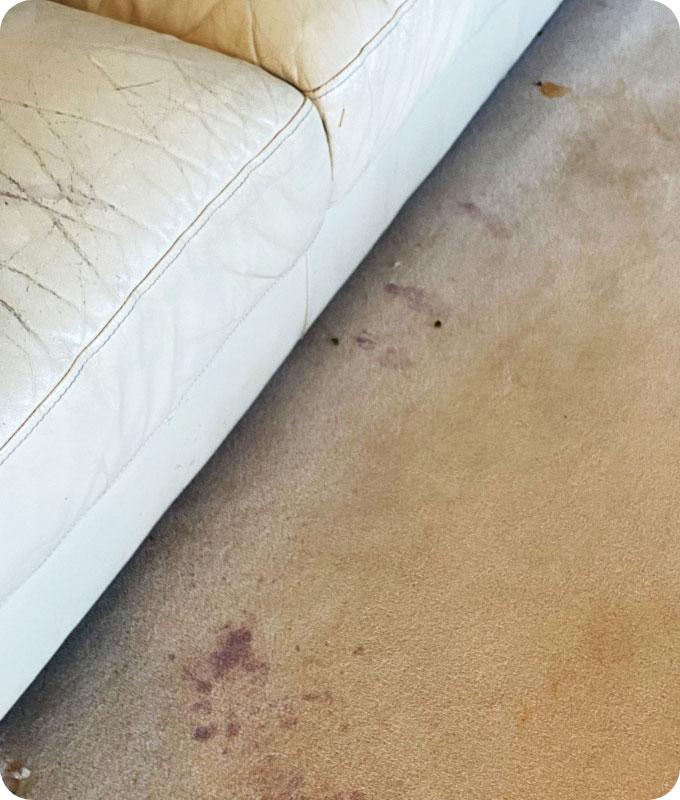
A surprising share of end-of-tenancy disagreements are not about how well something was cleaned. They are about whether it was a cleaning job at all. Across west London the rental stock swings from mansion flats to interwar semis to purpose-built blocks, and in every one of them there is a set of marks, stains and failures that look like dirt, cannot be cleaned, and end up being argued over because nobody drew the boundary at the start.
Damage that has been mistaken for neglect
Heat rings on a worktop, bleach spots on a bath mat surface, a scorch on a windowsill, a carpet burn, biro on wallpaper: all of these are changes to the material and none of them respond to any product. So are chips in enamel, crazing in old glaze and the yellowing of a plastic toilet seat. Identifying them during a walk-through and recording them separately protects everybody, because a team that quietly works around them leaves the tenant to discover the problem at check-out.
Fair wear and tear, described honestly
Deposit schemes expect a property to age. Carpet pile flattening in a doorway, a shine on the arm of a landlord's sofa, hairline crazing in a kitchen splashback and paintwork softened by five years of daylight are all normal deterioration for the length of the let and the number of occupants. What is never covered by that principle is accumulated soil: grease, scale, hair, food residue and dust. The line is not how bad something looks but whether cleaning would have prevented it.
Work that belongs to another trade entirely
A slow shower trap, a toilet that rocks on its fixings, a dropped door catching the carpet, a curtain pole pulling out of plasterboard and a blown extractor motor all turn up during handover cleans, and none are within scope. Flagging them in writing is genuinely useful to a landlord facing a void, and far better than leaving them to surface at the inspection. Hard external surfaces sit outside domestic scope too, and machine treatment of paving and steps is covered by experienced decking cleaning in West London.
What is inside the specification, room by room
Appliance interiors, cupboard and drawer interiors, window interiors with frames and runners, light switches and fittings, radiators and the space behind them, skirtings, door tops and frames, descaled sanitaryware, and floors treated appropriately for their material. It is a long list, it is not a difficult one, and most failures are omissions rather than technique. Anything requiring access equipment beyond a step ladder, or external glass at height, is a separate arrangement.
Properties that will not be empty on the day
Where a tenancy overlaps with a move, the work is compromised from the outset, since nobody cleans under a wardrobe that is still there. Full household moves out of the area are what removals throughout Hanwell and, for loads heading in the other direction, removals prices in Ladbroke Grove exist to handle. Getting furniture out first is not a nicety; it is the difference between a complete clean and a partial one.
Where a recurring arrangement makes more sense
Landlords holding several properties often find that a maintained flat checks out better and re-lets faster than one restored in a single day, and that ongoing upkeep is described under West London cleaning services team. Carpet between tenancies still needs periodic extraction whatever the routine, which is covered by local carpet cleaning across Hammersmith.
How a booking is put together
Quotes are built from property size, number of bathrooms and the condition described at the point of booking, not from an hourly rate, and an accurate description is what stops a quote moving on the day. Utilities live, property empty, keys arranged in advance, and the check-out appointment set afterwards. Comparable work further west in Hampton is set out on deposit-back cleaning in Hampton, and the national scope sits on experienced move-out cleaning.