Every building job leaves two kinds of residue, and confusing them costs money. There is waste - offcuts, broken plasterboard, packaging, the pallet the tiles came on - and there is dirt, which is what remains once the waste has gone. In Romford, where much of the work is rear extensions and loft conversions on interwar semis, a cleaning crew arriving before the first category has been dealt with can only work around it.
What a cleaning visit will and will not remove
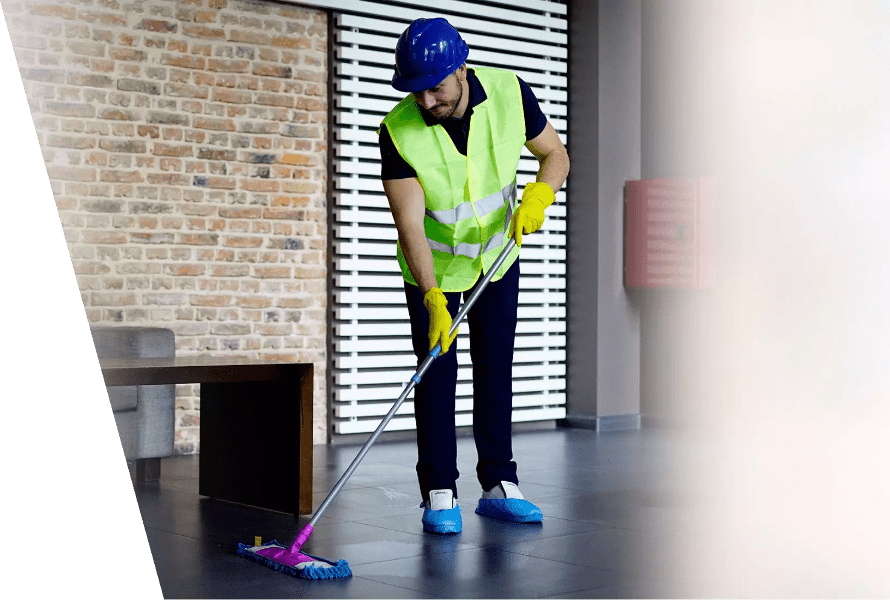
A post-construction clean takes away dust, splashes, marks and the general grime of occupation by trades. It does not take away rubble, timber, old units or a bath sitting in the front garden. That material is controlled waste, and moving it carries a duty of care about where it ends up, which means a licensed carrier and a proper transfer note. Bulky removals of that sort are handled by affordable man and van services in Havering rather than folded into a cleaning booking.
Packaging is the volume nobody plans for
Appliance cartons, polystyrene end caps, shrink wrap, plasterboard banding and the cardboard from twenty boxes of tiles fill a hallway faster than rubble does. Pallets and steel banding are worth setting aside at the same time. Flattened and separated the rest is mostly recyclable; left loose in a room it prevents any sensible cleaning of the floor beneath. Clearing it first, and getting it off site, is the step that turns a two-day clean into a one-day clean.
Interwar semis and the side return
The standard semi here has a side passage, and that passage becomes the route for every bag, board and barrow during the works. By completion the path is coated in dried mortar, the fence panels are splashed, and the gully at the back is half full of sand. Gullies are lifted and cleared, because a blocked one announces itself during the first real downpour, and hard surfaces are swept and washed after the interior rather than before, so the traffic does not undo the work. Fence panels splashed with mortar are brushed dry once the deposit has gone chalky, because wetting a feather-edged board drives the residue into the grain and leaves a permanent grey streak.
Flats above shops on the main routes
Above the shopping streets there is a good deal of residential conversion, reached by a single stair from the pavement. There is nowhere to stage materials, loading has to be quick, and the stair is shared with people who had no say in the works. Sheeting goes down before anything comes in, the handrail is wiped at the end of each day rather than at the end of the job, and rubbish is never left on a landing overnight. The broader approach to this kind of work is set out on our national after builders cleaning service.
What the dust does to floors and fabric
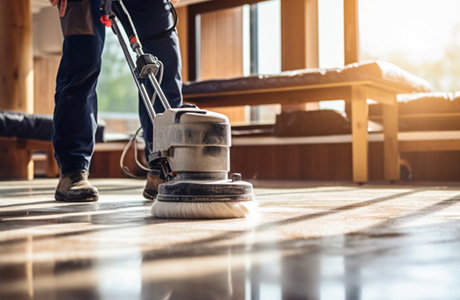
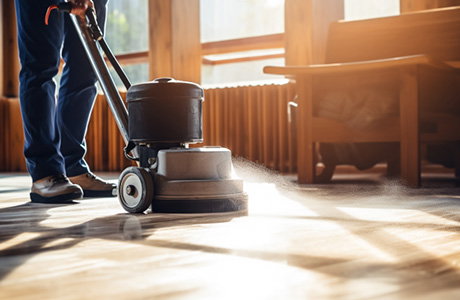
Brick and screed dust is abrasive. Walked across new vinyl or existing hardwood it acts like a fine sandpaper, and the damage is cumulative rather than dramatic, showing as a dulled path from the door to the kitchen. Vacuuming precedes every wet stage for that reason. Fitted carpet holds the same grit deep in the pile where a domestic machine cannot reach it, and extraction by the local team is the only reliable way to lift it.
Ordering the work so nothing is paid for twice
The sequence that saves money is simple: waste out, snags fixed, then clean. Fixing comes second because drilling, filling and touching up paint all create fresh dust, and small jobs of that kind, from a door that will not latch to sealant that needs renewing, sit with handyman specialists in Romford. Only when the property is finished and empty does a final clean make sense, and the same order applies in neighbouring towns, including what the service covers.