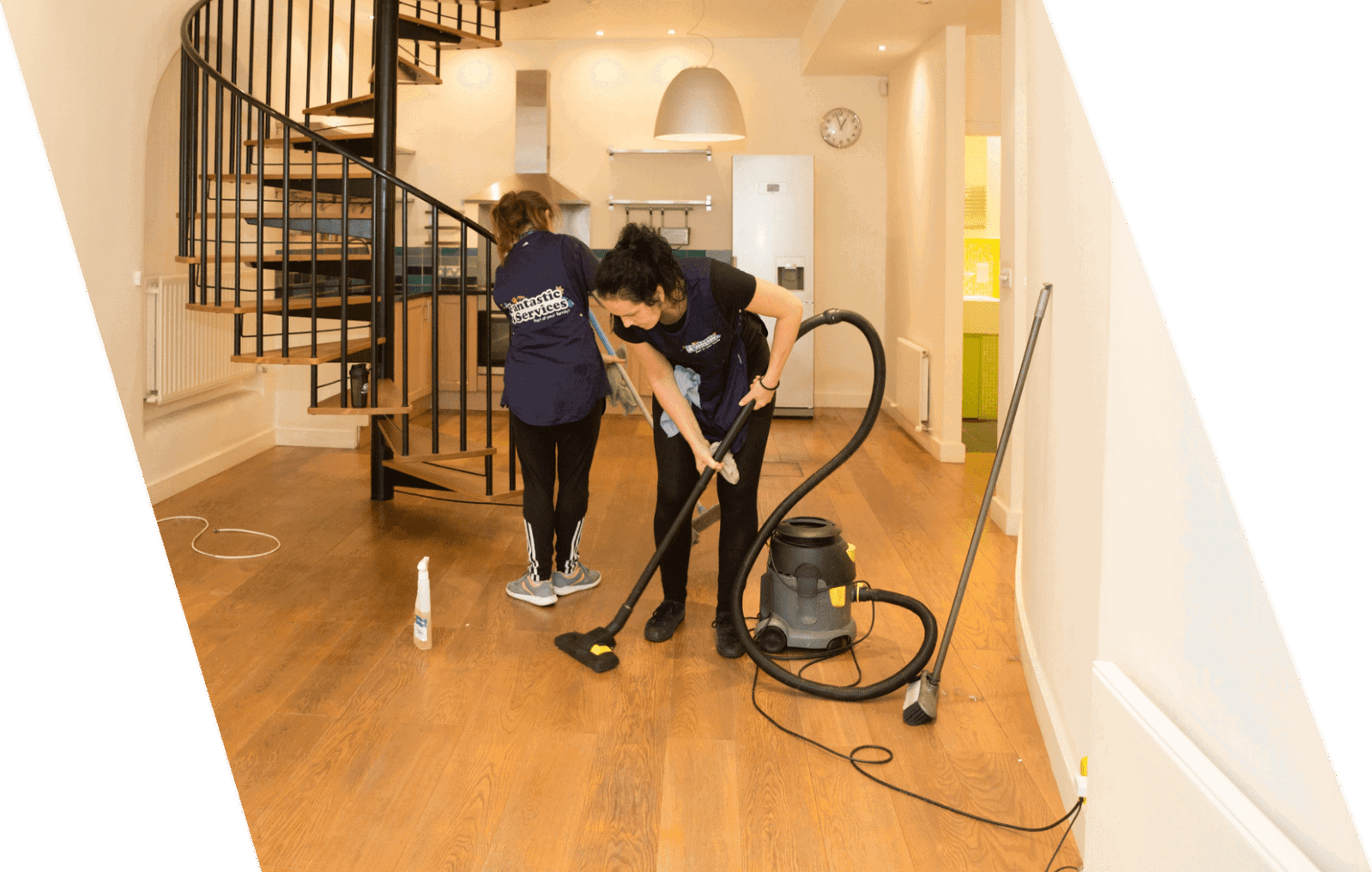
Two jobs collide on the last day of a tenancy, and in RM1 they very often collide badly. The van is loading, the cleaners have arrived, and both teams need the same rooms at the same time. Sequencing is not an administrative detail here — it determines whether the property passes its inspection, because every surface cleaned while furniture is still moving through the house has to be cleaned again.
The order that actually works
Everything leaves first. Then the property is cleaned from the top floor down and from the far room towards the front door, so that finished rooms are never walked back through. Carpets are extracted before hard surfaces are polished; kitchens are finished before floors; the hall and the threshold are the last things touched because everyone has been crossing them all day. Reversing any part of that sequence costs an hour somewhere else.
Suburban semis and the loft problem
The interwar estates that dominate this part of the borough gave almost every house a loft, a side passage and a garage, and all three are on the inventory. Lofts used as storage during a tenancy are supposed to be emptied and swept, and the hatch surround is where the argument usually starts. A side passage full of leaf litter and a garage floor with a decade of oil on it are the other two items that appear in a check-out report and surprise the tenant.
Flats above the high street
A different kind of property sits over the shops: single-stair access, no lift, windows onto a busy street that carry a traffic film, and extraction from ground-floor businesses that can leave a greasy deposit on rear glazing. Moving furniture out of one of those flats needs a loading arrangement rather than a parking space, and the clean cannot begin until the stair is clear.
Matching the removal to the property
The scale of the move dictates how it is planned. A three-bedroom house with garage contents and a loft to empty is a full removal of the type organised by house removals services in Romford, booked as a whole day rather than squeezed around a handover. A household relocating a few miles along the district is served by crews working out of removals cover across Chadwell Heath or removals specialists in Dagenham, where the run is short and the day is governed by access at both addresses rather than by mileage. Agreeing the same gap between the van leaving and the cleaners arriving each time is what stops the two trades tripping over one another.
Protecting what has been cleaned
If any furniture has to return to the property after the clean, floor protection goes down and the route is planned. Cleaners routinely lay matting on a hall floor and cover a finished stair carpet for exactly this reason. Keys are the other loose end: a set left with an agent who closes at midday is the single most common cause of a job starting three hours late.
Soft flooring and how it fits the day
Extraction on carpets and stairs is a separate operation with its own machine and its own drying window, and that is how fully insured rug cleaning in Romford is scheduled — first thing, with windows open, so the pile is dry by the time an inventory clerk walks in. Regular housekeeping across a portfolio of properties is a different arrangement entirely and is organised more like local cleaning services across Havering.
What the appointment covers
The work follows the fixed room-by-room specification on fully insured check-out cleaning, carried out in an empty property with utilities connected. Costing is based on the number of bedrooms and bathrooms and whether the property is furnished, rather than on hours. Fridges and freezers should be off and open overnight. The same specification applies across the boundary in the neighbouring boroughs, which is why end of tenancy cleaning services in Leyton works from an identical list despite a very different housing stock.