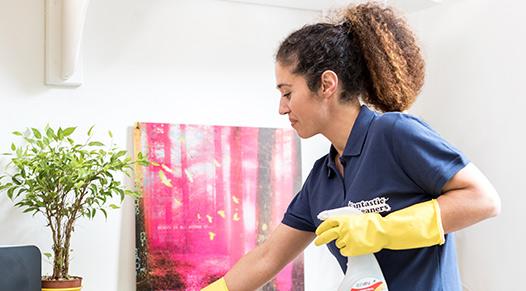
An aerosol furniture polish will make an old table look immediately better and cause a problem that lasts for decades. Most of them are silicone-based, and silicone does not sit on a surface waiting to be wiped off; it migrates into the finish, builds a hazy film over repeated applications, and later interferes with any attempt to repair or refinish the piece. In the stucco terraces and garden-square houses of W8, where a good deal of the furniture predates the plumbing, that matters.
Dusting timber that has a real finish
Antique furniture is generally finished with shellac, wax or an oil, none of which behaves like a modern lacquer. Shellac dissolves in alcohol, which rules out most surface sprays and any cleaner with a solvent in it. The routine that keeps such a piece right is dull by comparison: a soft, dry, lint-free cloth for the dust, a lightly waxed cloth occasionally rather than wax applied directly, and a proper buff afterwards. Wax applied too often builds up and attracts exactly what it is meant to repel.
Rings, bloom and heat marks
A pale ring under a glass is moisture trapped in the finish; a white bloom across a whole surface is the same thing on a larger scale, often after a humid spell. Neither is dirt, and neither responds to cleaning. Attempting a remedy with a household product usually removes finish along with the mark. The correct response during a routine visit is to leave it alone and report it, so somebody who restores furniture can look at it. Where the line falls between cleaning and restoration is one reason the work is separated by task on fully insured professional cleaners.
Veneer, marquetry and where furniture stands
Thin veneers are held down with animal glue that softens with heat and moisture, which is why a side table against a radiator or in a south-facing window lifts at the edges and eventually blisters. A cleaner cannot fix that, but noticing it and mentioning where a piece is standing is worth more than a perfect dusting. Loose sections of marquetry are never wiped over, because a cloth catches the edge and takes the piece with it.
Leather, gilding and the frames on the wall
A leather desk top is dusted dry and treated rarely, with a product intended for the purpose rather than an improvised one. Gilded frames and gesso are the most fragile things in most of these houses: water-gilding lifts on contact with any moisture at all, so frames are dusted with a soft brush held clear of the surface, working into a vacuum nozzle, and never with a cloth. If a section of gesso is loose, the area is left entirely.
Fitting this into a weekly round
None of the above takes long, but all of it needs to be known in advance, which is why a household with pieces of this kind benefits most from the same cleaner returning rather than a rotating one. A short written note of which surfaces are original and which are modern removes almost all of the risk. The ordinary weekly work around those pieces — floors, kitchen, bathrooms, beds and glass — is the substance of Kensington domestic cleaning specialists.
Letting a house that is furnished
Houses here are frequently let furnished, which puts antique pieces into an inventory alongside the appliances and makes their condition a matter of record. A schedule of condition photographed at the start is the only sensible protection for both sides, and at the end the assessment is item by item rather than impressionistic, which is the discipline Fantastic Services applies.
What a routine visit is built around
Hours are the unit and the brief should name its exclusions as clearly as its inclusions: which pieces are not to be touched, which products are provided by the household, which rooms are locked. Deeper and less frequent work — the insides of appliances, glass, high-level dusting on a cycle — is scoped separately and described under trusted domestic cleaning in Kensington.