The part of a small repair that goes wrong in a Kensington flat is rarely the repair. It is the grey film that settles on a silk lampshade, the smear of plaster dust ground into a stair carpet on the way out, and the fine grit that gets into the runners of a sash window and stays there. Drilling a single hole in a lime-plastered wall releases a remarkable quantity of dust, and in a portered mansion block or a stucco house divided into flats, the route to and from the job matters as much as the work itself.
Containment starts at the front door
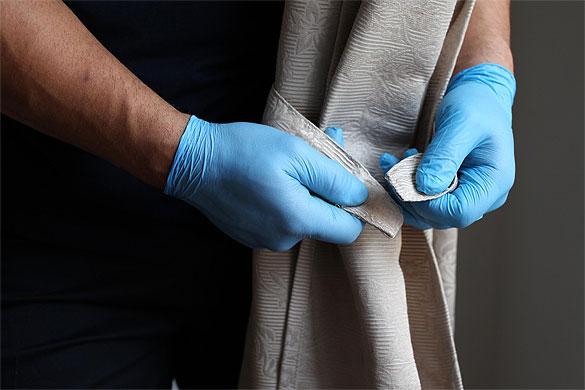
Protection is laid before any tool comes out of the bag: a self-adhesive fleece over a timber floor, a breathable board over anything polished, a sheet over the run of communal stair carpet, and a tacky mat at the threshold of the room. Doorways into the rest of the flat are closed and taped, with a zipped opening where access is needed. None of this is elaborate, but it has to be continuous, because a single unprotected metre is where the dust travels.
Cutting and drilling with the dust captured
An extractor connected to a shroud at the bit removes most of the dust at the point it is made, which is far more effective than cleaning afterwards. The right class of filter matters where old plaster, paint or board is involved, since fine mineral dust passes straight through a domestic vacuum and is blown back into the room. Chasing, cutting board and sanding filler all belong to on-tool extraction rather than an open blade and an open window, and slow drilling with a sharp bit makes less dust than fast drilling with a blunt one.
Old finishes are less forgiving than they look
Lime plaster, distemper and traditional oil-painted joinery all behave differently from modern equivalents. Masking tape left on old paint pulls the surface off when it is removed, so low-tack tape is used and lifted the same day. Marble and limestone hearths and cills stain from water and from acidic cleaners, and a dropped tool leaves a chip that cannot be filled invisibly. Anything original that cannot be replaced is boarded rather than sheeted, because a sheet transmits an impact and a board absorbs it.
Working within building rules
Mansion blocks here generally set contractor hours, require sign-in at the desk, restrict which lift may be used and insist on protection of common parts. Waste cannot be left in the communal bin store and must be taken away under the duty of care that applies to anyone carrying another person's waste. Booking the lift and the working window at the same time as the appointment avoids arriving to find the service lift out of use. Similar constraints govern the work described under shelf and curtain fitting in West London.
What the clean-down actually involves
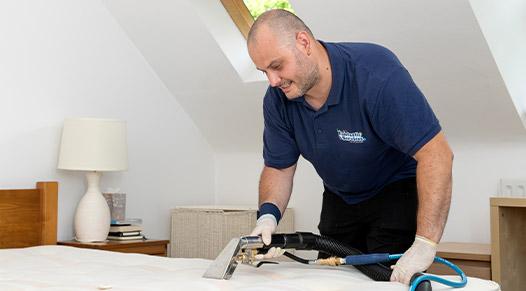
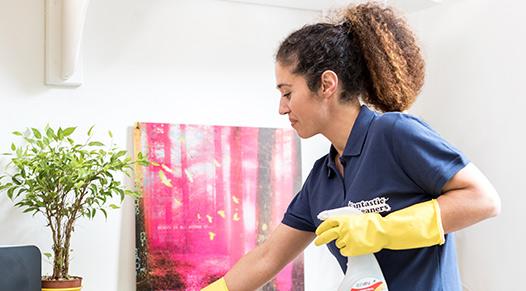
Finishing a job means vacuuming with a fine filter rather than sweeping, wiping horizontal surfaces from the top down, lifting the protection by rolling it inwards so the dust stays inside it, and taking a last look at the reveals and the tops of skirtings where dust settles unseen. Where a larger project has finished and dust has reached every surface in the flat, that is a separate and much bigger undertaking handled under after builders cleaning team in Kensington. Opening up a void can also disturb what is living in it, and any evidence found is a matter for pest control for period property in West London; damp plaster exposed behind a fitting needs fully insured mould remediation in Kensington rather than a cover panel.
How a visit is organised
Time on site is what is charged, and protection and clean-down are a genuine part of that time rather than an extra. Before the appointment, clear the immediate working area, move anything irreplaceable out of the room entirely, and confirm the block's access arrangements and permitted hours. Say in advance if there are delicate finishes, antique floors or particular sensitivities about noise. Details of the other trades available are set out under our main service page.





 As a member of the Fantastic club, you can get £30 OFF for 10 different services within 1 year.