Top-floor flats in SW15 gain heat from three directions at once - through the roof above, through glazing that faces the afternoon sun, and from the stair core that has been warming all day. By late July the bedroom under the eaves is several degrees above the rest of the flat at midnight, and the portable cooler bought in a hurry is doing almost nothing.
Why a portable unit usually disappoints
These machines work by moving heat out of the room, and the exhaust hose is the only route it has. A hose flopped over a windowsill with the sash open around it lets the hot air come straight back in, along with more warm air drawn from outside, so the unit runs continuously and the room barely shifts. The unit is not underpowered; the installation is.
Making a panel that seals the opening
The fix is a panel cut to the shape of the open window, with a collar for the hose, so the only path between inside and out is the hose itself. In a sash opening that means a board sized to the gap with the lower sash raised, held by the sash itself and sealed at the edges. On a side-hung casement it means a panel in the leaf opening with a closing arrangement that still lets the window be shut and locked when the machine is away. The panel wants to be rigid, light enough to lift in and out, insulated rather than bare board, and stored flat over winter so it still fits next year. Security is part of the design: an opening that cannot be locked while the panel is in is not acceptable on a flat with a stair or a flat roof nearby.
Condensate, noise and the neighbours
A cooler pulls water out of the air, and depending on the model it either evaporates it or collects it in a tray that needs draining at the least convenient moment. A continuous drain to a suitable point is possible in some models. Noise travels through a light partition or an open window into a neighbouring flat, so a unit against a party wall in a converted house is worth repositioning. Fixing anything to the outside of the building - a condenser, a bracket, a duct through a wall - is almost always prohibited by the lease and by the appearance of the elevation.
Shading before cooling
Keeping heat out costs nothing to run. Closing blinds on the sunny side before the room warms, and keeping internal doors shut so the flat does not equalise, makes more difference than most people expect. Opening windows on two sides during the cool hours and closing them by mid-morning is the traditional method and still the effective one.
Power supply and what not to do
These units draw a substantial current and should not share an extension lead with anything else, run under a rug, or feed from a kitchen circuit that is already loaded. Where a room genuinely lacks a socket in a sensible position, adding one properly is notifiable electrical work and is a job for experienced electrical services in Earlsfield, not a trailing lead through a doorway.
The same window in other seasons
The opening that carries a hose in August is usually the one that runs with condensation in winter, especially in a room where a door stays shut. Where the sill and reveal already show dark speckling, that needs treating before it spreads into the plaster, and it is the work covered by mould removal across Putney.
A flat ventilated by open windows for weeks is a flat with an open door as far as insects are concerned, particularly at height where flying insects concentrate on warm elevations in the evening. Where something has already established inside, it is properly handled by the service in full.
Arranging the work
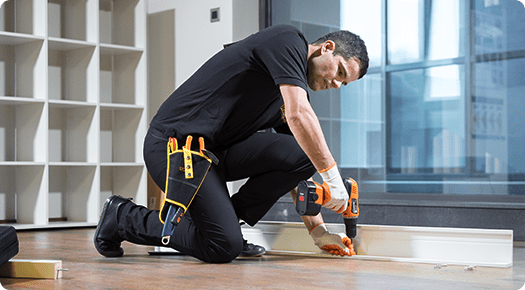
A panel is made to measure on site, so the visit needs the unit present with its hose, the window clear, and a decision on whether the panel will be painted. Charging is by time. Neighbouring districts with the same top-floor problem are covered on Tooting handyman team, and the wider list of jobs is set out on nationwide handyman services.









 As a member of the Fantastic club, you can get £30 OFF for 10 different services within 1 year.