A rear extension on a TW3 semi almost always ends the same way: the builders sweep through, the skip goes, and the house looks finished until the first bright morning shows what is actually on every surface. Plaster fines are far lighter than the rubble that gets swept, so they stay airborne long after the last trowel has left and settle again over the following days. A site tidy and a handover clean are two different jobs with different equipment, and treating them as one is why so many Hounslow extensions still feel gritty a week after completion.
Where fines settle in an interwar semi
Houses built here between the wars come with deep skirtings, picture rails, panelled doors and sash boxes, and every one of those is a ledge. Dust also drops into radiator fins, sits along the top edge of internal doors, coats the inside of trickle vents and drifts through a loft hatch that was opened once to run a cable. Working from a list of surfaces rather than by eye is the only reliable way these get covered, because none of them is visible from standing height and all of them release again the moment the heating comes on.
Dry before wet, ceiling before floor
Sequence matters more than products. Residue comes off dry first, with soft brushes and filtered extraction, because plaster and cement fines turn to a grey slurry the instant they meet water, and slurry spreads where powder would have lifted. Only then does anything get washed, working downwards so later stages never undo earlier ones. That ordering runs through the wider method set out on fully insured builders clean, and it is the first thing abandoned when a clean is rushed to fit a handover date.
Carpets hold what hard floors give up
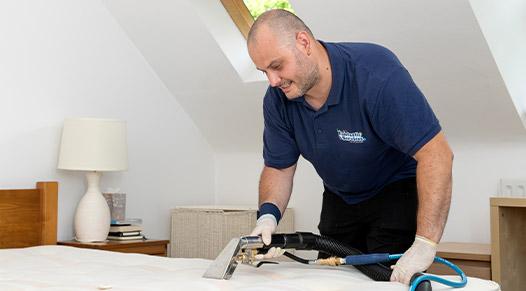
A tiled or engineered floor can be vacuumed and damp-mopped to a finish in one pass. Carpet cannot. Building fines work down to the base of the pile and stay there, and domestic vacuuming lifts little more than the top layer; the rest comes back up under footfall for weeks. Where rooms stayed carpeted through the works, a separate visit for carpet cleaning throughout Hounslow using hot water extraction is the honest answer rather than another hour of vacuuming. Rugs that were rolled and stacked need shaking out and treating as well.
Small faults that only appear once surfaces are clear
Dust hides a surprising amount. With it gone, a door that catches on new flooring, a loose newel post, silicone that has pulled away from a worktop and sockets sitting proud of the plaster all become obvious. None of that is cleaning work, and a team should say so rather than fudge it — those fixes belong with handyman throughout Hounslow, usually as one short visit once the decorator has finished for good. Listing them at handover is far more useful to a householder than finding them a fortnight later.
Offcuts, packaging and what the skip left behind
Extensions leave bulk: plasterboard offcuts, an old boiler casing, flat-pack wrapping, a bath that came out whole. Much of it is too large for a cleaning van and too awkward for a car, and fly-tipping carries a duty-of-care liability that falls on the householder rather than whoever moved it. Clearance by a licensed carrier is covered by Isleworth man and van services, and it is worth arranging before the clean rather than after, so that rooms are genuinely empty when the team arrives.
Access and timing on a Hounslow street
Much of the borough runs controlled parking, and the kit for this work is heavy — extraction units, ladders, water containers, steps. Somewhere to unload within a short carry changes how long the job takes by a measurable amount, so a suspended bay or a visitor permit arranged in advance earns its keep. Constraints differ further out: the same working pattern applies to fully insured builders clean in Shepperton, where streets are wider but properties often sit a long way back from the kerb.
What a booking covers and how it is measured
Pricing follows the size of the area treated and the state it is in, not a flat figure per house, because one refitted bathroom and a whole-house refurbishment are not comparable. A walk-through or a clear description of the works makes a quote accurate. Water and power need to be live, the building work genuinely complete including any touching-in of paint, and windows openable. If decorators are due back, waiting costs less than cleaning twice.