Occupancy, not age, is what finishes a carpet in Hounslow. TW3 holds a large stock of interwar semis and terraces converted into flats or let room by room, and a floor covering crossed by six or seven adults every day reaches the state a family home takes five years to reach in a single winter.
Traffic lanes arrive on a predictable timetable
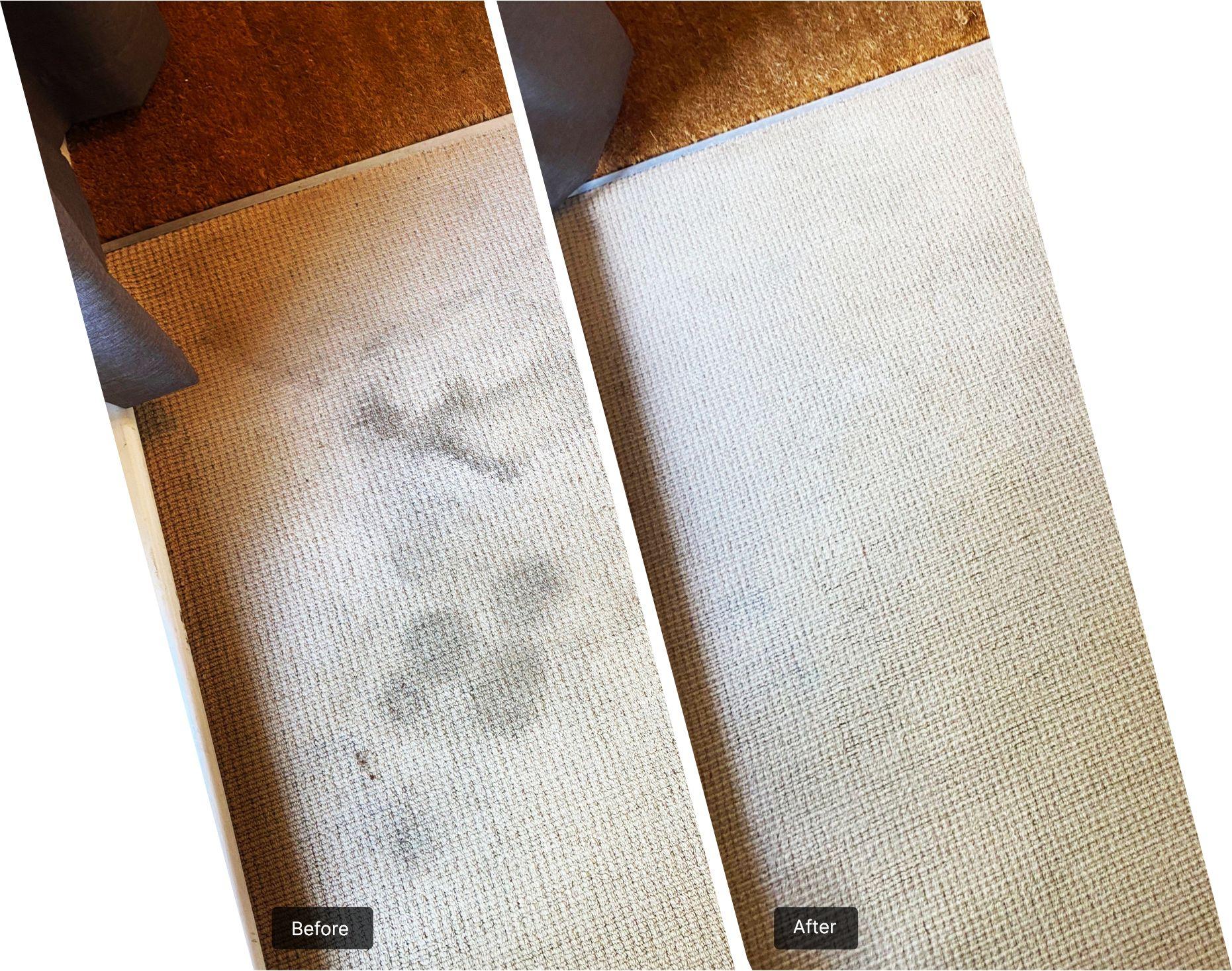
In a shared house the wear is never even. It forms a corridor from the front door to the stairs, another from the kitchen to whichever room holds the television, and a dark patch at every door threshold where people pause and turn. Those lanes are not simply dirtier; the pile in them has been walked flat, so light reflects differently and the lane reads darker than the soil alone justifies. Restoring the appearance means lifting and resetting the pile as much as removing what is caught in it.
Cleaning the lanes more often than the rooms
The economical approach in high-occupancy housing is interim maintenance rather than one heroic annual rescue. A quarterly pass over the corridors, landings and thresholds using a low-moisture method keeps the abrasive load down, and the full restorative clean then happens once a year or between tenancies instead of every six months. Over a three-year tenancy cycle that sequence costs less and leaves the carpet in better condition at the end of it.
Road film is a different contaminant from grit
Properties along the arterial corridors that run through this part of west London pick up a fine, oily airborne deposit quite unlike garden soil. It is greasy rather than granular, it bonds to synthetic fibre, and it will not respond to vacuuming at any suction. It also darkens a pile evenly rather than in patches, so a room can look uniformly tired without any identifiable mark on it, and the difference becomes obvious only when a test patch is cleaned beside an untouched area. A solvent-boosted pre-spray with proper dwell is what releases it, followed by a thorough rinse, since leaving emulsified oil in the pile simply gives the next fortnight of dust something to stick to.
Communal parts, fire doors and wet floors
In converted houses the shared hall and staircase belong to everyone and are used by everyone, including delivery drivers. Cleaning them means agreeing a window when the route can be kept clear, propping nothing that should not be propped, and drying fast enough that a fire door is not wedged open for hours. Signage at both ends of the run and air movers positioned to push air along rather than across the flight are the practical measures.
Where the wider household routine fits
Floors rarely fail in isolation. Kitchens shared by several people, bathrooms in constant use and communal bins all contribute soil that ends up in the pile, and tackling the carpet without addressing the rest produces a short-lived result. A standing arrangement of the sort provided by Hounslow professional cleaners keeps hard floors and thresholds under control between visits, while households wanting a fixed weekly slot usually set that up as professional home cleaning in Hounslow.
What a landlord booking should specify
An instruction that says only carpet clean leaves too much open. It is worth stating which rooms are included, whether furniture will be present, whether the staircase and communal hall form part of the job, and who provides access. Fibre type matters as well, because the polypropylene loop common in rental refurbishments tolerates alkalinity that would felt a wool twist, and the difference in approach is explained on how our carpet and rug cleaning works. Pricing follows room count and staircases, with any heavily contaminated area identified before work begins rather than discovered halfway through. Where a tenancy is turning over, the neighbouring work described on our nearby specialists shows how extraction is timed against a check-out inventory, and comparable riverside stock a short distance away is covered by Twickenham rug cleaning.