A pergola is not garden furniture. It is a load-bearing structure holding several hundred kilos of wet plant several metres in the air, and unlike a fence it is almost never inspected, because the thing that would show the problem is hidden under the thing causing it. In RG1 gardens the typical example is fifteen years old, carries a rose on one side and a mature wisteria on the other, and has not had a post checked since it went up.
The post is what fails, and it fails at the ground
Timber rots where air, water and soil meet, which is a band a few centimetres either side of the ground line. Everything above stays sound and everything below stays wet and stable, so the failure is invisible until the post is pushed. Testing is simple: a firm shove at chest height on each upright, and a probe with a screwdriver at the base. Softness that takes the blade in easily means the post has gone whatever the surface looks like. Posts set in concrete without a drainage gap below fail faster than posts set in a galvanised shoe raised clear of the soil, which is why a rebuild puts metal between timber and ground.
What is actually hanging up there
Dry summer growth misleads. The same structure after a night of rain in September, with a full canopy of leaf, carries a great deal more weight, and wind loading on a solid mass of foliage turns a pergola into a sail. A wisteria adds girth every year and will crush and lift the timber it is tied to; a rambling rose piles deadwood in the middle of its own mass until the top is a mattress. Reducing that load is as much a structural job as a horticultural one.
Tying in, and the ties that do the damage
Stems are trained onto a structure rather than allowed to wind round it, and the ties matter. Wire and plastic-coated wire cut into expanding stems within two seasons; soft tie material and a figure-of-eight loop leave room to move. Every tie on a mature plant is checked annually and the tight ones cut off and replaced, which is a slow job and the one most often skipped. Where a stem has already been girdled, the constriction is released and the growth above it watched for the following year.
Keeping timber alive under a plant
A structure cannot be treated while it is covered, so the maintenance cycle has to be planned around the planting. The practical approach is to untie and lower one side at a time in the dormant season, clean and treat the exposed timber, let it dry and tie back in, then do the next section the following winter. A pergola clothed on all four sides for twenty years, treated once at installation, is usually beyond that and needs replacing, and a rebuild with new footings is work for professional paving and patio laying in Bracknell.
Arches, obelisks and the smaller structures
Free-standing supports fail differently. An obelisk racks sideways under a clematis because nothing triangulates it; an arch over a path spreads at the feet until the crown drops. Both are cured by bracing rather than by heavier timber. Anything within reach of a path is also a trip and head hazard once a rose grows out, so clearance over the walking line is checked at every visit rather than once a year.
Where planting meets the building
Climbers allowed to reach the eaves cause the problems people blame on the plant. Growth lifts tiles, blocks a gutter with leaf litter and holds damp against a wall, and the first sign is usually water running down a wall rather than anything visible in the garden. Keeping climbing growth below the gutter line is ordinary pruning; clearing what has already collected up there is a job for local gutter cleaning services in Reading.
What a visit involves
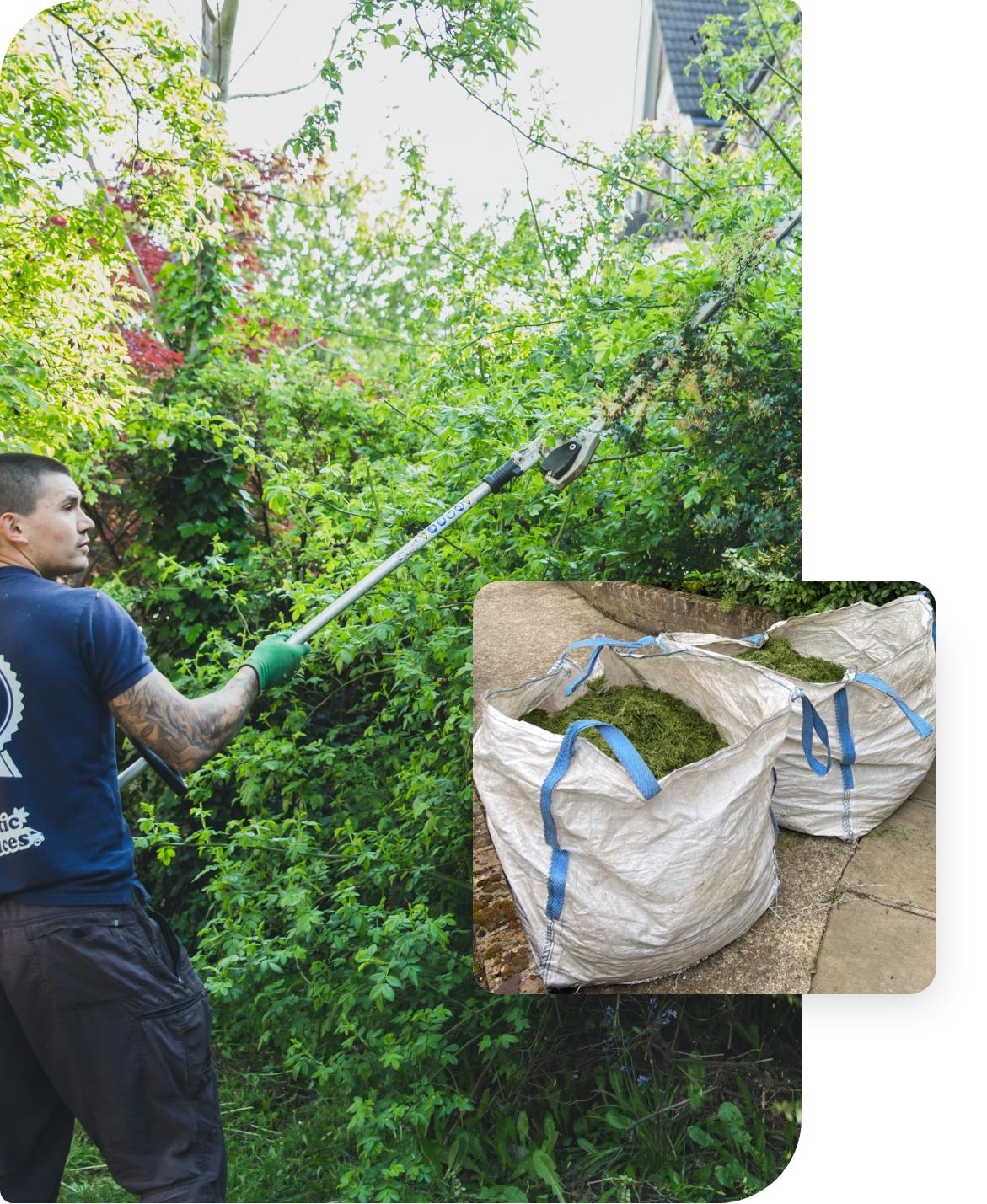
Structure work is quoted by duration and by the number of uprights, and it is best combined with the winter pruning that has to happen anyway, so the plant comes down once rather than twice. Access is the practical constraint, since a pergola in the middle of a lawn needs a platform and a spotter rather than a ladder leaned on the plant. Routine upkeep of the beds and lawn around it is covered by professional garden clearance in Reading, and the way regular visits through the year are arranged is set out on garden maintenance services UK.























 Get the app


