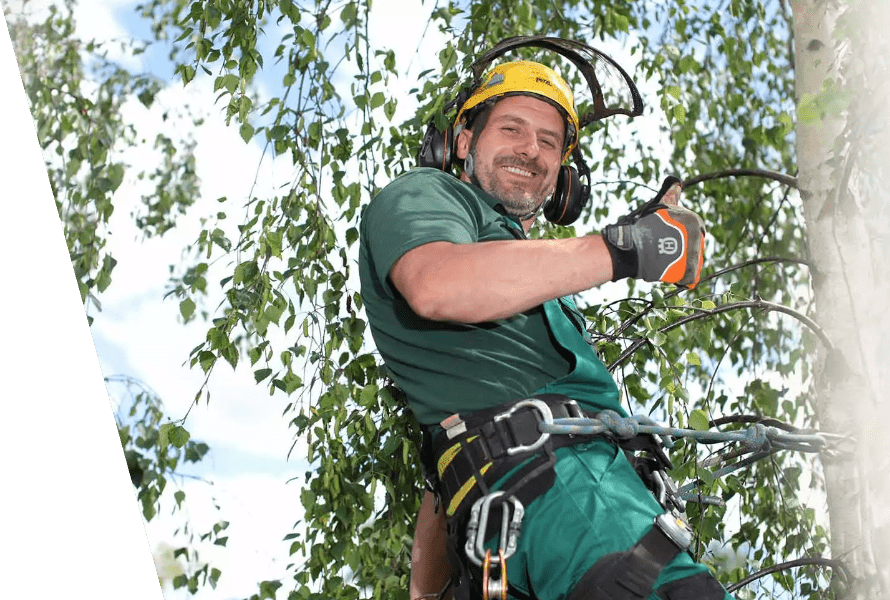
Reading has substantial mature tree cover — street planting through the older RG1 roads, large garden specimens across the suburbs, and significant tree stock along the Thames and Kennet corridors. A lot of it is now at the age where it needs managing rather than admiring: limbs extending over roofs and boundaries, crowns casting far more shade than the garden was designed for, and storm damage after winter gales.
Check the tree's legal status first
This is the single most important step and the one most often skipped. Many trees in and around Reading are protected by Tree Preservation Orders, and any tree above a certain size within a conservation area is protected regardless of whether it has a specific order. Carrying out work on a protected tree without consent is a criminal offence and can carry a substantial fine, even where the work was sensible. Reading Borough Council holds the records. Any competent arborist will check the status before quoting and will handle the application where consent is needed — six weeks' notice is typically required for conservation-area work.
The work itself
Crown reduction shortens the overall size of the canopy while keeping its natural shape, and is what most gardens actually need rather than topping, which is damaging and produces weak regrowth. Crown thinning removes a proportion of the internal branches to let light through without changing the outline. Crown lifting removes the lower limbs to clear a path, drive or lawn. Deadwooding takes out dead and hanging material, which is straightforward safety work. Felling and stump grinding are the last resort where a tree is dead, dangerous or genuinely in the wrong place.
Safety, insurance and competence
Tree work at height with a chainsaw is among the more hazardous trades there is, and it is not a job for a general gardener. Arborists working on these jobs are qualified for the equipment they use, work with appropriate rigging and ground support, and carry public liability cover appropriate to the risk — which matters a great deal if a limb comes down over a neighbour's conservatory. Ask to see it; a legitimate firm will expect the question.
Timing
Nesting birds are protected between roughly March and August, so major works are usually scheduled outside that window or preceded by a nesting check. Most deciduous species are best pruned in the dormant season, though there are important exceptions. Storm damage and genuinely dangerous limbs are dealt with whenever they occur.
What follows the work
Tree work produces a large volume of arisings and a garden that suddenly has much more light in it, which changes what will grow underneath — experienced hedge trimming in Reading covers the replanting and ongoing maintenance side, and a local professional if you want a different team on a routine visit pattern. Where the reduction is part of a wider redesign of levels, paving or planting, that is our landscaping in Bracknell.
Coverage and booking
The same arborists work across Berkshire and Oxfordshire, so tree surgery cover across Oxford runs on the same basis. Quotes are given after a site visit rather than over the phone, because the price depends on the species, size, access and what has to happen to the arisings. Services, qualifications and how consents are handled are set out on nationwide tree surgery services.
Waste, stumps and what happens afterwards
A reduction or felling produces a substantial volume of material, and what happens to it affects the price. Chipping on site and taking the chip away is standard; leaving the chip for use as mulch reduces the cost and is often the sensible option in a large garden. Logs can be cut and stacked for firewood if you want them. Stumps can be left, ground out below surface level, or fully excavated — grinding is the usual choice and needs machine access to the stump, which is the constraint in a walled or terraced garden.
All work is carried out to recognised arboricultural standards, and the team clears the site before leaving. Site visits and quotes are arranged online.