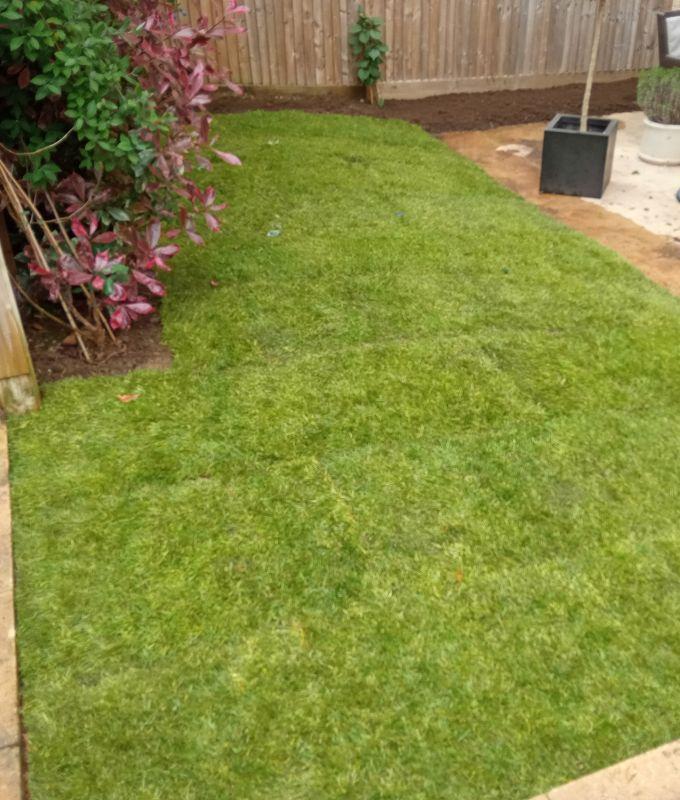
The line where a lawn meets a border does more for the look of an Oxford garden than the state of the grass itself. A crisp edge reads as care even when everything behind it is loose, and a broken one makes a well-kept plot look neglected. It is also the part of routine maintenance most often left until last and then rushed, which is why so many city gardens have beds that have crept a foot into the lawn over a decade and a lawn that has seeded itself two feet into the beds.
Why the edge moves in the first place
Grass advances by stolons and rhizomes running horizontally into cultivated soil, which is softer and richer than the ground it came from. Meanwhile the vertical face of a spade-cut edge dries, crumbles and gets trodden on, and each recut takes a little more turf away to find a clean line. Do that twice a year for ten years and the bed has gained the width of a plank. On the heavy ground north of the city the face also slumps after a wet winter, which speeds the whole process up.
Cutting a new line properly
A fresh edge starts with a line rather than an eye. A string run between pegs for a straight edge, or a hose laid out and left for a day for a curved one, gives something to cut to. The tool is a half-moon edging iron rather than a spade, because its straight blade leaves a flat face; a spade's curve produces a scalloped line. The cut is made vertically to the full depth of the blade, and the strip of turf is lifted out cleanly, not chopped. The face is left vertical, not battered back, and the spoil goes into the bed rather than being left as a ridge that the mower then scalps.
Keeping it without losing ground every year
Once cut, an edge is maintained with long-handled shears or a trimmer held vertically, which removes the overhanging grass without touching the face. Recutting with an iron is then needed perhaps every second or third year rather than every spring, and the bed stops migrating. The clippings that fall into the gap are lifted, because they build up into a ledge that supports the very growth being cut.
Where a permanent edge earns its keep
Some edges are not worth cutting repeatedly. A mowing strip of brick or paving laid flush with the turf lets a mower wheel run along it, removes the need for a trimmer altogether and stops the bed moving, and it pays for itself in a large plot or where the household cannot easily do the work. Steel or aluminium strip does the same for a curved line at less depth. Both are installed on a proper base rather than pressed into soil, and laying them is construction rather than maintenance, which puts it with garden makeovers services in Oxford.
Edges against walls, paths and trees
Not every boundary is turf against soil. Grass against an old stone wall is cut by hand because a mower cannot reach the last few centimetres and a trimmer will chew the mortar joint. Grass running up to the trunk of a tree is a different matter again: the answer is a mulched circle rather than any tool near the bark. Where roots have lifted the turf into ridges along a lawn, the cause sits above ground, and reducing or removing the tree responsible is work for professional crown reduction in Oxford.
What this looks like in a visit
On a regular round, edging is the last twenty minutes and it is what the household notices. On a one-off restoration it is the first job, because everything else is judged against the line it establishes. Work is quoted on the metre run for a full recut and by duration when it forms part of general upkeep, with the length of the edge, not the area of the lawn, deciding the time. Clearing stored items, pots and hoses off the line beforehand makes a real difference. The wider seasonal upkeep of an Oxford plot is covered by gardening services across Oxford, and the way a maintenance round is arranged through the year is explained on garden maintenance services nationwide.