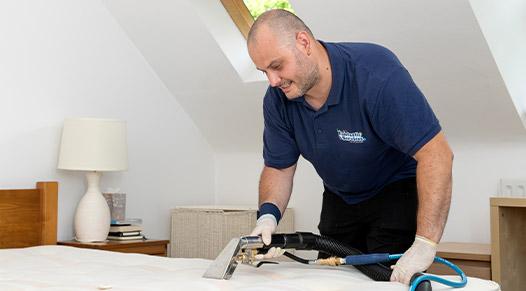
Most of the housing across RM10 was built between the wars with solid ground floors, and that construction detail governs everything about how a carpet down there should be treated. Concrete laid straight onto the ground, with no damp-proof membrane worth the name by modern standards, holds moisture and gives it back slowly. A pile cleaned wet on a floor like that can take twice as long to dry as the identical carpet upstairs on boards, and the difference shows up as odour, not as a wet patch.
Solid floors and the moisture already in them
An old screed sits in equilibrium with the ground beneath it. Add water from above and it has nowhere to escape except upwards through the backing and the pile. That is why moisture control on a ground-floor room here means using the least water that will do the job, then extracting far beyond the point at which the surface feels dry. A probe reading at the backing tells more than a hand on the surface does.
Salts, tide marks and the smell at skirting level
Where ground moisture has been rising for years, mineral salts collect at the edges of a room and leave a chalky bloom or a faint tide line along the skirting. Cleaning redistributes those salts unless the edges are treated and extracted deliberately, and any odour sitting in the backing will return as the floor dries. Rooms with this history need the underlay checked, because saturated felt underlay is often the real source of the smell. The wider household list for the area is on Dagenham cleaning services team.
Original underlay under a newer carpet
A surprising number of floors here have a fairly recent carpet laid over underlay that has been in place for decades. Old rubber crumb breaks down into a powdery black residue that transfers to the backing, and felt that has been repeatedly damp compacts into a hard board. Neither can be cleaned; both change what a clean can achieve. Spotting it early means the householder gets a realistic picture rather than a disappointing one, and the construction and backing notes on the carpet and rug cleaning service set out what each type can take.
Through traffic from a back garden
Long rear gardens on these plots mean a back door in constant use, and heavy clay soil tracked across a kitchen and into the hallway. Keeping the ground outside the door in order reduces the amount that comes in, which is why some households arrange our team in the area around the same time as the indoor work. Inside, a mat run of a few paces catches most of what survives the doorstep.
Drying a ground-floor room properly
Ventilation beats heat. Opening opposite windows to create a cross-draught moves saturated air out of the room, whereas a closed room with the heating on simply raises the humidity and stalls the drying. Where the weather does not allow open windows, an air mover directed across the surface at a low angle does the same work. Furniture stays off the floor, or on protective blocks, until the backing is genuinely dry.
Turnover between tenancies
Ex-local-authority houses in the district change hands regularly, and the floors are almost always the deciding factor in whether a property looks cared for. Where a full preparation is needed rather than the floors alone, that scope belongs with Romford end of tenancy cleaning service, and ongoing housework once someone has moved in is covered by domestic cleaning for landlords in Dagenham.
What a visit involves and how it is costed
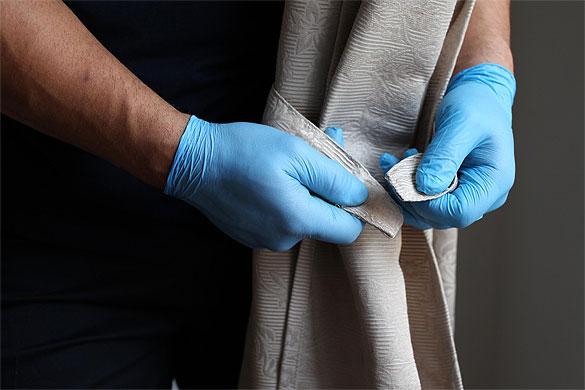
Costing works by room and measured area, with stairs quoted by the flight and any heavy pre-treatment agreed before it is applied rather than added afterwards. A survey at the door establishes fibre, backing and floor type, because all three change the method. Neighbouring rounds mean a household on the boundary sometimes takes a slot listed for carpet cleaning cover across Hornchurch, and the household services available a little further west sit on Chadwell Heath home cleaning.