

TL;DR — House Rewiring Cost At A Glance
- Rewiring a 2-bed costs £3,500–£5,500, a 3-bed £5,500–£8,000, and a 4-bed £8,500–£12,000 in 2026, with London running 15–25% higher.
- A partial rewire of specific circuits typically costs £2,000–£6,000, depending on scope.
- Price depends on property size, age, access, the number of circuits and the finish specified.
- A rewire includes new cabling, sockets, switches, a new consumer unit and full testing — it is disruptive and takes days.
- The work is notifiable under Part P and must be done by a registered electrician, who issues certification.
- Rewiring before other renovation (plastering, decorating, flooring) avoids paying twice for making good.
Get a fixed price for a rewire — check prices and book online or call to arrange a survey with a registered electrician.
 Add to Preferred Sources
 How Much Does House Rewiring Cost In 2026?
Rewiring a house costs £3,500–£5,500 for a 2-bed, £5,500–£8,000 for a 3-bed and £8,500–£12,000 for a 4-bed across most of the UK. In London and the South East, add roughly 15–25%. A partial rewire — replacing specific circuits rather than the whole installation — typically costs £2,000–£6,000, depending on how much is done.
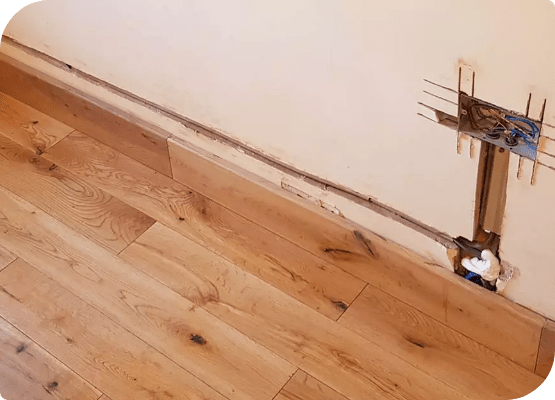
A full rewire is one of the larger electrical jobs a home will ever need. It replaces all the fixed cabling, sockets, switches and light points, fits a new consumer unit, and finishes with full testing and certification. It is disruptive — floors come up and walls are chased — and takes several days to a couple of weeks. The price reflects the scale, the property's age and condition, and how much making good is involved.
The work usually runs in two stages. The first fix installs the cabling, back boxes and mounting points while walls and floors are open; the second fix fits the sockets, switches, light fittings and consumer unit, followed by testing and certification. Understanding these stages helps when coordinating a rewire with other trades during a renovation.
| Property size | Rest of UK | London & South East |
|---|---|---|
| 2-bed house / flat | £3,500–£5,500 | £4,200–£6,800 |
| 3-bed house | £5,500–£8,000 | £6,500–£10,000 |
| 4-bed house | £8,500–£12,000 | £10,000–£15,000 |
Figures include VAT where applicable and reflect 2026 market rates. Your exact price depends on the property and your postcode — get a fixed quote here.
House Rewiring Cost By Property Size
Property size and the number of circuits are the clearest guide to a rewire budget. These are typical full-rewire prices, including a new consumer unit and testing:
| Property size | Estimated time | Rest of UK | London & South East |
|---|---|---|---|
| Studio / 1-bed flat | 3–5 days | £2,500–£4,000 | £3,000–£5,000 |
| 2-bed house / flat | 5–7 days | £3,500–£5,500 | £4,200–£6,800 |
| 3-bed house | 7–10 days | £5,500–£8,000 | £6,500–£10,000 |
| 4-bed house | 10–14 days | £8,500–£12,000 | £10,000–£15,000 |
| 5+ bed house | 14+ days | £12,000–£18,000+ | £14,000–£22,000+ |
A partial rewire — for example replacing an old lighting circuit or the kitchen ring — sits well below these figures, usually £2,000–£6,000 depending on the number of circuits and access.
What Affects The Cost Of Rewiring A House?
1. Property Size And Number Of Circuits
The main driver. More rooms means more cabling, sockets, switches and light points, plus more testing. A large or extended home costs proportionally more.
2. Age And Condition
Older properties with buried cabling, thick walls and no loft or floor access take longer to strip out and rewire. Homes with rubber, lead or aluminium cabling almost always need a full rewire rather than a partial one.
3. Access And Occupancy
An empty property is quicker and cheaper to rewire than an occupied one, where the electrician works room by room around furniture and daily life. Solid floors and inaccessible ceilings add time.
4. Specification And Extras
The number of sockets, downlights, outdoor points, smart switches and data cabling all add up. A higher-spec finish costs more than a like-for-like replacement. Adding extras such as garden power, an EV charger supply, extra kitchen circuits or a home network during the rewire is far cheaper than retrofitting them once the walls are closed up, so it is worth deciding on these before work starts.
5. Your Location
London and the South East run roughly 15–25% higher than the North of England, Wales and Scotland, reflecting higher labour rates and older housing stock.
6. Making Good
A rewire involves chasing walls and lifting floors. Plastering, filling and redecorating afterwards is a significant cost, which is why rewiring before other renovation work is the sensible order.
What's Included — And What's Not
| Typically included in a full rewire | Usually charged separately |
|---|---|
| Removing old cabling and fitting new circuits throughout | Plastering, filling and redecorating after chasing and lifting floors |
| New sockets, switches and light points | Premium fittings, smart switches, extra downlights or data cabling |
| A new consumer unit with modern protection | Any structural or builder's work needed for access |
| Full testing, an Electrical Installation Certificate and Part P notification | Temporary accommodation if the property must be vacated |
Can You Do It Yourself?
No. A full or partial rewire is notifiable work under Part P and must be carried out by a registered electrician, who designs the circuits, installs and tests them, and issues certification. It is complex, safety-critical work at the origin of the installation.
Rewiring is notifiable work in England and Wales — it must either be done by a registered electrician or notified to Building Control for inspection and sign-off, which is slow and costly for a DIY job. Done without either route it's extremely dangerous and may invalidate home insurance. Uncertified wiring also causes serious problems at resale. Where a homeowner can help is with the non-electrical side — clearing rooms, lifting carpets and arranging the making good — which can reduce the electrician's time on site.
How To Save Money On Rewiring
- Rewire before other renovation so plastering, flooring and decorating happen once, not twice.
- Rewire an empty property where possible — it is quicker and cheaper than working around occupants.
- Consider a partial rewire if only certain circuits are failing, rather than the whole house.
- Clear rooms and lift carpets yourself to cut the electrician's time on site.
- Agree the spec up front — deciding socket and light positions early avoids costly changes mid-job.
- Get 2–3 detailed quotes and compare the number of points, the consumer unit and what making good is included.
How To Hire A Good Electrician For A Rewire
Confirm the electrician is registered with a Competent Person Scheme (NICEIC or NAPIT), carries public liability insurance, and will issue an Electrical Installation Certificate with Part P notification. Ask for a detailed, itemised quote covering the number of points, the consumer unit and testing, check reviews or references, and agree a clear schedule given the disruption involved.
With Fantastic Services, you get vetted, insured and registered electricians, transparent pricing and online booking — arrange a survey and get a detailed quote for the work.
Book a professional house rewiring service today
Frequently Asked Questions
How Much Does It Cost To Rewire A 3-Bed House?
In 2026, rewiring a 3-bed house costs £5,500–£8,000 across most of the UK and £6,500–£10,000 in London. The final price depends on the property's age, access and the specification of sockets, lights and fittings.
How Much Does A Partial Rewire Cost?
A partial rewire — replacing specific circuits rather than the whole installation — typically costs £2,000–£6,000, depending on how many circuits are done and how easy the cabling is to reach.
How Long Does It Take To Rewire A House?
A studio takes around 3–5 days, a 3-bed house 7–10 days, and a large house two weeks or more. An occupied property takes longer than an empty one because the work is done room by room.
What Are The Signs A House Needs Rewiring?
Warning signs include frequent fuse blowing or tripping, flickering lights, discoloured or scorched sockets, a burning smell, and old rubber, lead or fabric cabling. An EICR will confirm whether a rewire is needed.
How Often Should A House Be Rewired?
Most installations need rewiring roughly every 25–30 years, though it depends on the quality of the original work and the cabling used. An EICR every 10 years helps track when a rewire is approaching.
Is Rewiring Notifiable Under Part P?
Yes. Rewiring is notifiable work in England and Wales and must be carried out by a registered electrician or signed off by Building Control. The electrician tests the installation and issues the relevant certificate on completion.
Can You Live In A House During A Rewire?
It is possible but disruptive, as power is switched off room by room and floors and walls are opened up. Where practical, moving out or vacating the areas being worked on speeds up the job and lowers the cost, because the electrician is not working around daily life.
