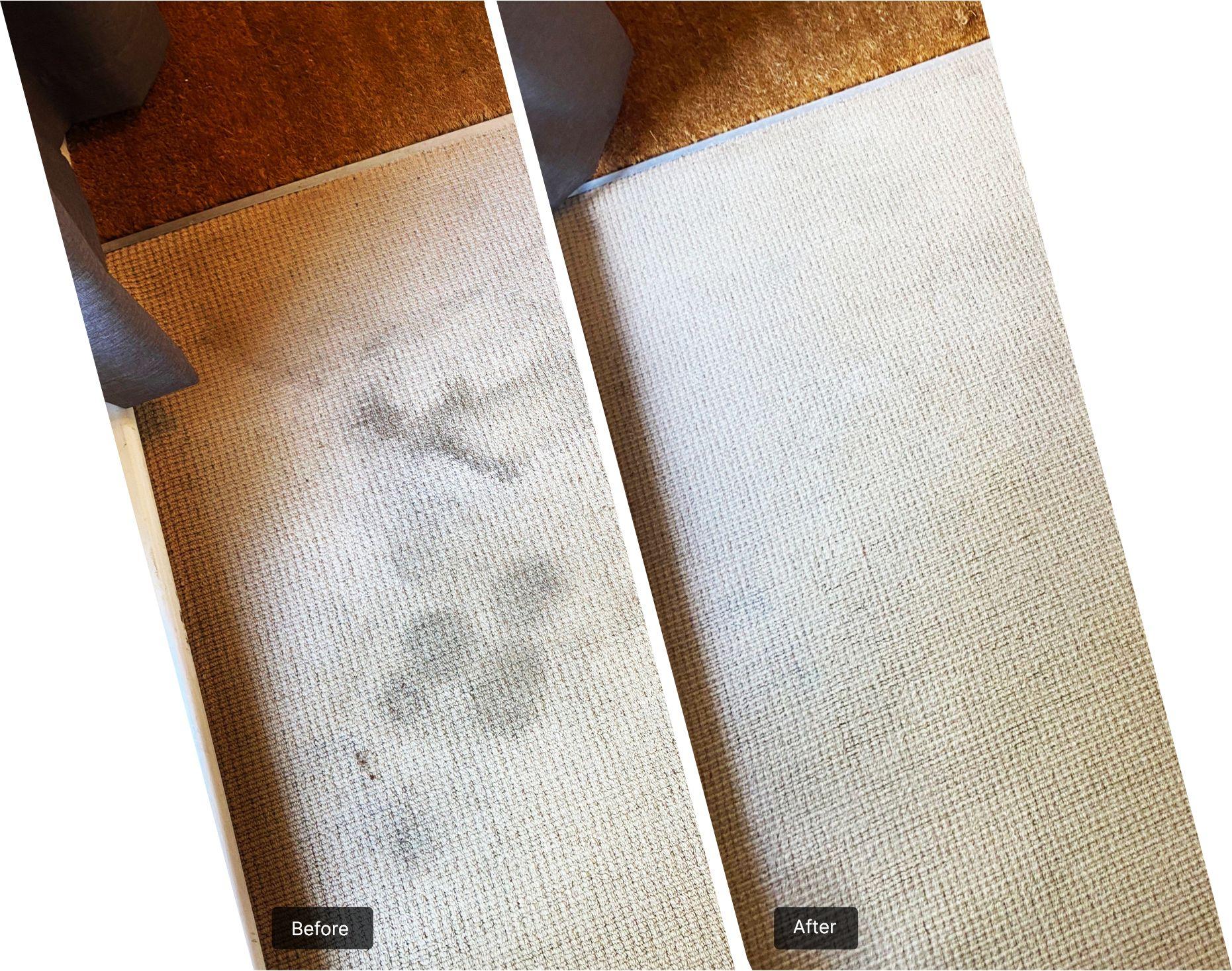
No two streets in this part of the capital have the same floors. A survey across South East London in a single week might take in a Georgian terrace with a hall runner over boards, a 1930s semi with wall-to-wall wool, an interwar estate maisonette with concrete underfoot and a riverside apartment with acoustic underlay over a screed. The service is nominally identical in each. The method, the moisture and the drying plan are not.
Reading a property before quoting it
A proper survey answers four questions: what the fibre is, what the backing and underlay are, what the sub-floor is, and how the room will dry. Fibre identification changes the chemistry, backing changes the moisture limit, sub-floor changes the drying time, and ventilation changes the sequence. Quoting a whole house without those answers is guesswork, and guesswork is how floors get damaged.
Sequencing a whole house so nothing is walked on twice
Work starts at the furthest point from the front door on the top floor and finishes at the threshold, so the technician never crosses finished work. Each room is vacuumed, treated, agitated, extracted and groomed before the next begins, rather than pre-spraying everything and coming back, because dwell time that runs too long dries the product into the pile and makes it harder to remove than the soil was.
Old floors, and what a clean cannot do
There is a point at which a pile is worn rather than dirty. Yarn that has lost its twist, a backing that has delaminated, or a seam that has opened will look no better after treatment, and it is fairer to say so at the survey. The honest version is that cleaning restores appearance and removes soil and allergens; it does not restore structure. Households sometimes decide, on that basis, to replace one room and clean the rest.
Repairs that are worth doing first
A loose gripper, a lifted threshold strip or a door that catches on the pile all cause damage that no cleaning schedule will offset, and they are quick to put right. Small jobs of that kind are handled through professional handyman services in South East London, and it makes sense to have them done before the floors are treated rather than afterwards.
Hard water across the region and what it leaves
Supply across the area is hard, so the final rinse is acidified to neutralise alkaline pre-treatment and prevent scale binding into the yarn. Skipping that leaves a slightly tacky residue that re-soils quickly, which is the usual explanation when a floor looks tired within a month of being cleaned. The chemistry is unglamorous and it is the main reason results differ between contractors. Method notes by fibre type are collected on nationwide carpet and rug cleaning services.
Coverage, neighbouring rounds and scheduling
Rounds run across the whole region rather than a single district, so a household near the river may find a slot listed for carpet cleaning prices in Bermondsey lands sooner than a local one, while somebody further south arranges housework through fully insured weekly cleaning in Crystal Palace. Travel between jobs is what determines how many properties can be covered in a day, which is why appointments are grouped geographically rather than offered at any hour on any date. A morning slot in one district often means an afternoon slot two miles away.
What a booking covers
Charges follow the number of rooms and their measured area, with stairs by the flight and rugs measured individually. Clearing small furniture, floor lamps and toys in advance shortens the visit and improves the finish, because the technician can work in unbroken passes. Parking and access are agreed when the appointment is made, since permit bays and controlled zones affect where equipment can stand and how long the hose has to be. Details of the other domestic work available are set out on trusted cleaning services in South East London, and the full regional list sits on local specialists.