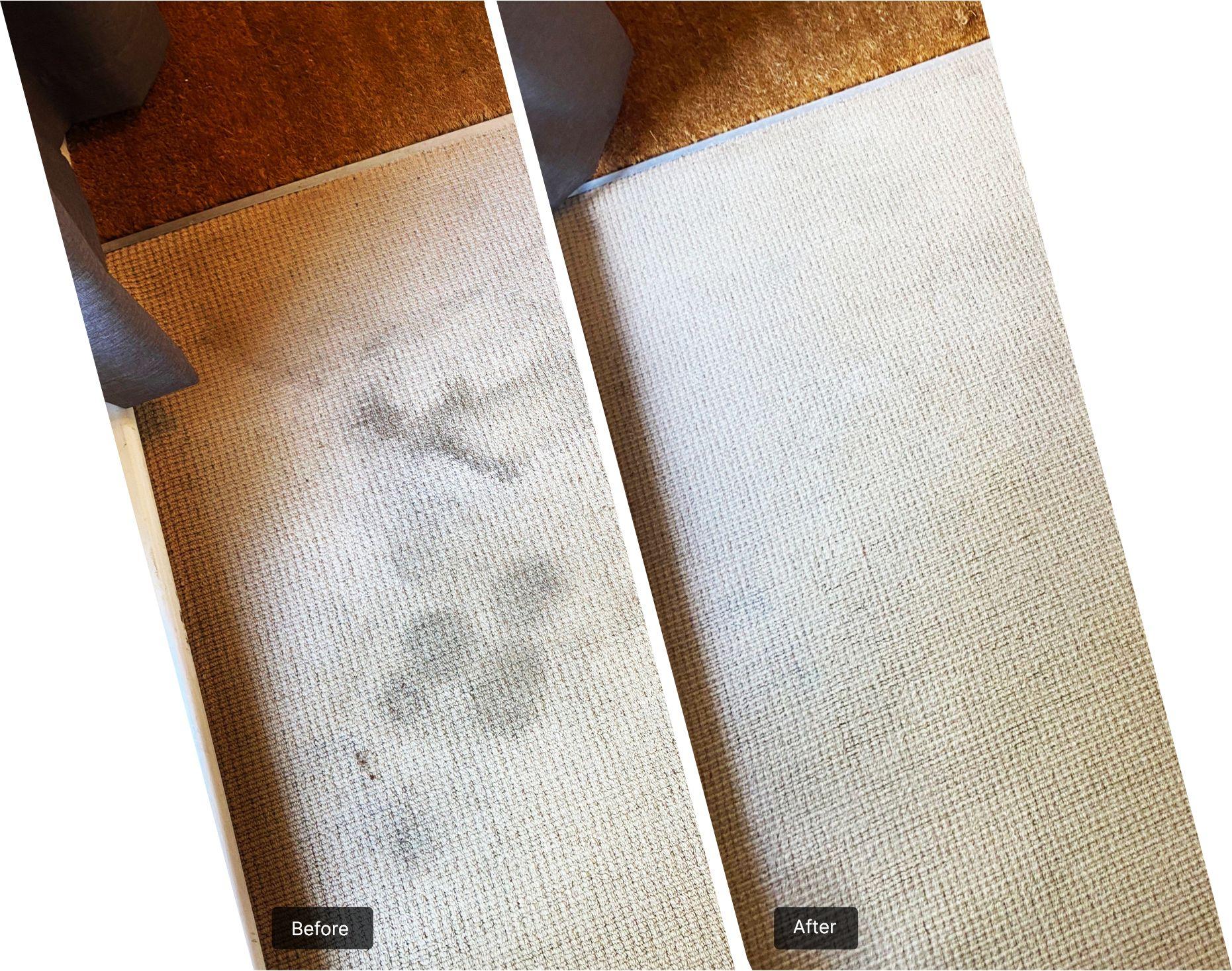
Move a sofa that has stood in the same position for three years and the carpet beneath it tells the story plainly: four deep wells where the feet stood, a paler rectangle that has never seen daylight, and a pile that has been held flat so long it has taken a set. In SW1X, where flats are often used part of the year and furniture is rarely rearranged, indentation is one of the most common complaints raised once a floor has been cleaned.
What a furniture leg does to a tuft
Under sustained load the fibre in a tuft is compressed and the crimp that gives a carpet its resilience is squeezed out of it. Wool has a genuine memory and will usually come back; nylon recovers well; polypropylene and polyester have far less elasticity and may keep the mark permanently. The depth of the well matters less than how long the weight has been there, and a small hard foot concentrates far more pressure than a broad one.
Bringing a crushed pile back
Recovery relies on moisture, warmth and mechanical lifting rather than on force. A light misting, gentle heat and then working the tufts with a stiff brush or a pile rake along the grain will raise most marks on a resilient fibre, and the area is groomed afterwards so it dries standing upright. A blunt implement pressed into the pile does the opposite of what is wanted, and an aggressive scrub leaves a fuzzed patch that is more visible than the dent was.
Very heavy pieces leave something different
A bookcase, a piano or a stone-topped console deforms the backing as well as the pile, and once the backing has taken a permanent set the surface will not level out. Those marks can be softened but not erased. Spreading the load across a board or a wide pad before the furniture goes back is the only real answer, and it is worth doing when a room is already cleared.
Loop pile takes it differently
A cut pile flattens; a loop pile distorts. Under a castor or a narrow foot, the loops of a Berber or a contract weave are pushed sideways and can be pulled proud of the surface, and a snagged loop that is then caught by a vacuum head will run in a line across the floor. That damage is mechanical and no amount of grooming restores it, though a pulled loop can be trimmed level rather than pulled out, and a run can sometimes be stopped by bonding the ends. Castor cups are worth more on a looped carpet than on any other construction, and a chair that is rolled across the same metre daily will eventually mark it whatever is done.
Prevention while a flat is in use
Cups under legs, felt pads on anything that is moved regularly and a habit of shifting large pieces a few centimetres every few months will keep a carpet even. Rotating a loose rug periodically does the same thing for the floor beneath it. None of this is elaborate; it simply has to be done before the mark has been there for years rather than after.
Flats that stand empty for months
An unoccupied property is not a clean one. Fine dust settles continuously and settles hardest on undisturbed pile, air goes stale, and wool carpet under a bed or behind a long curtain is exactly where clothes moth larvae find an untroubled habitat. A property opened up before a return or a let is better vacuumed thoroughly and ventilated first, then cleaned, with furniture moved so the margins are genuinely reached. Ongoing upkeep between stays sits within domestic cleaning team in Knightsbridge.
Preparing for a visit
Areas are counted as rooms, halls and stairs, with indentation recovery treated as part of the work rather than as a separate promise, since the outcome depends on fibre and on how long the load has been in place. Furniture that needs moving is best identified in advance so enough hands arrive. Broader household work is arranged through flexible cleaning services in Knightsbridge, seating through a local pro near you, the adjoining district on the carpet cleaning team in Belgravia, and the general method on nationwide carpet and rug cleaning services.