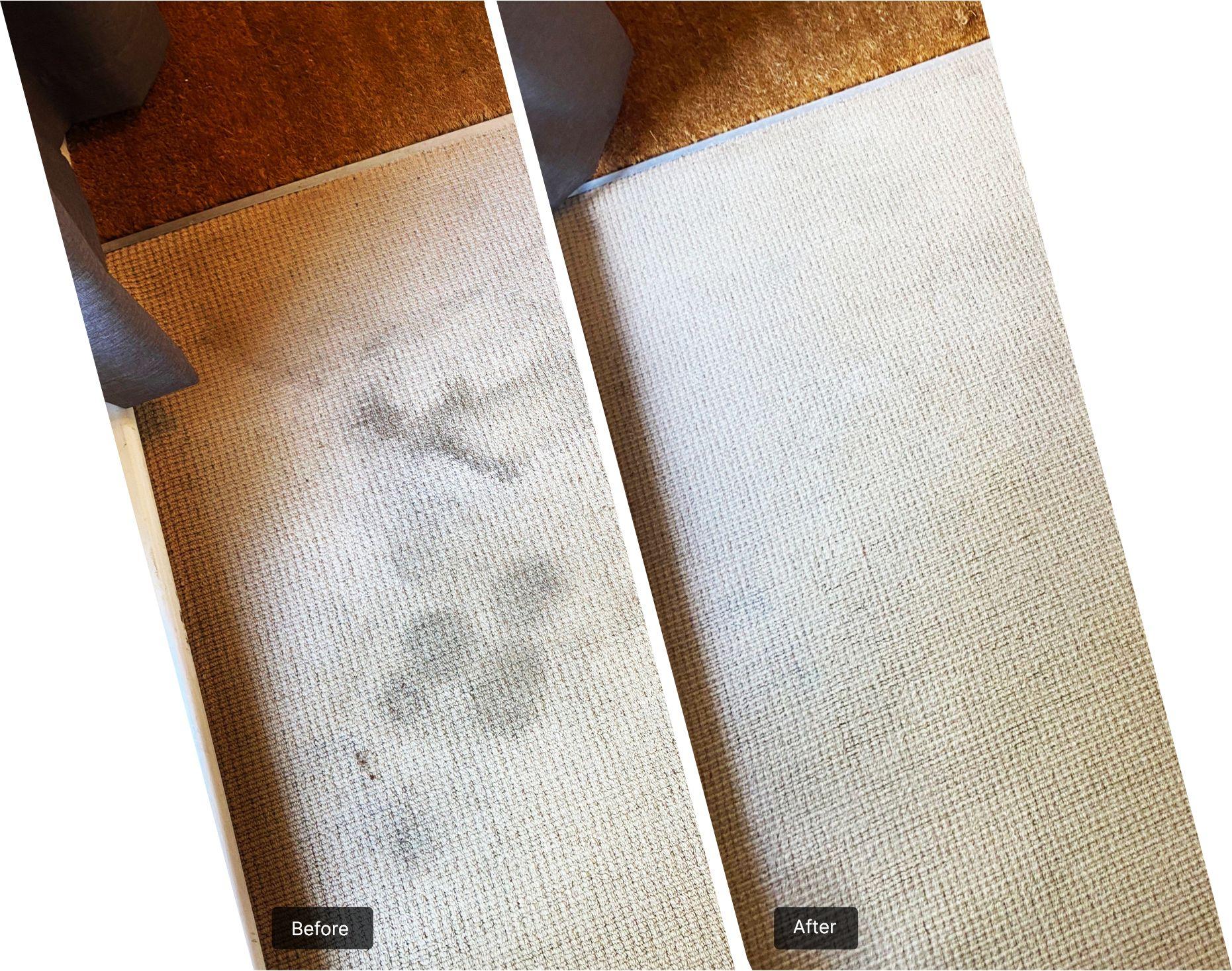
Large loose rugs, rather than fitted carpet, are what most Hoxton households actually need cleaning. Warehouse and light-industrial conversions here tend to have concrete, resin or engineered timber underfoot and a single sizeable rug defining the living area, and that rug is doing all the work a whole floor of carpet would do elsewhere. It also brings its own risks, because a rug can be hand-knotted wool, machine-woven polypropylene, viscose, or a blend of all three in one piece.
Testing for dye bleed before anything gets wet
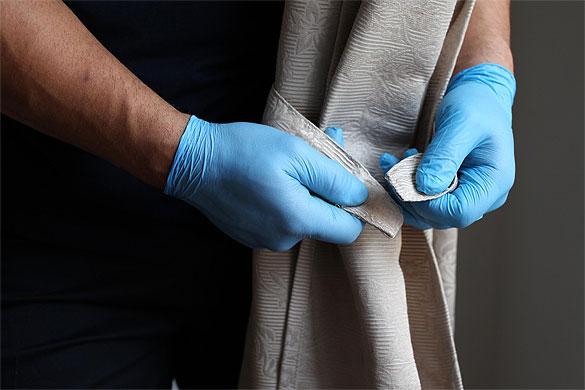
Hand-made rugs, particularly those with strong reds, indigos and oranges, are frequently coloured with dyes that were never fully fixed. Wet one of those without checking and the colour migrates into the pale ground next to it, which is permanent in practice. The test takes a minute: a damp white cloth pressed firmly against each colour in turn, with any transfer onto the cloth meaning the rug cannot be wet-cleaned in place. Where bleed shows, the options are a low-moisture method with controlled drying or washing off site in a controlled bath with an acid-set rinse.
Why a rug is better cleaned off the floor
A rug traps soil in its foundation, and in a hand-knotted piece a startling quantity of grit sits between the warp and weft where no vacuum reaches. Cleaning from the surface alone leaves that in place. Off-site washing begins with dusting, a mechanical process that shakes and beats dry soil out of the back before any water is involved, and that stage removes more weight of dirt than the wash itself. Fringes, which are the rug's foundation threads rather than a decoration, are cleaned by hand and dried straight.
Concrete floors change the drying maths
A rug left lying on a concrete or resin slab dries only from the top, and a cold slab holds moisture against the backing for far longer than a suspended timber floor would. Anything cleaned in situ is lifted onto blocks with air moving underneath it, and the floor beneath is dried before the rug goes back down, otherwise the outline of the rug reappears on the slab as a dark shadow.
Distortion, curling and the shape a rug should hold
Over-wetting a flat-woven or kilim rug pulls it out of square, and it will not simply relax back. Drying under tension, face down on a clean surface with weight at the edges, is how a rug keeps its shape. A rug that already sits with curled corners on a hard floor usually needs an underlay rather than a cleaning intervention.
What arrives from the yard and the street
These conversions often open onto shared yards, loading areas and old service entrances, where algae and ground-in oil turn the surface black in wet weather and ride indoors on shoe soles. Cleaning those surfaces, covered by fully insured path and paving cleaning in King's Cross, cuts the load reaching the rug considerably. Households further north deal with the same problem on garden paths and patios through vetted pressure washing in Muswell Hill.
Sofas in an open-plan space
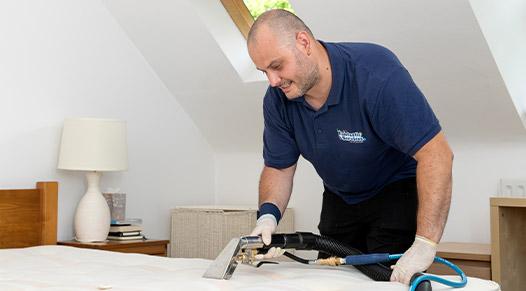
With one room doing every job, a fabric sofa absorbs cooking vapour, spills and body oils continuously and shows it on the arms and seat fronts first. Fabric takes a fraction of the water carpet does and considerably more hand work, and that side of it is covered by experienced armchair cleaning in North London. Fitted carpet elsewhere in the building falls under carpet cleaning throughout North London.
Arranging a collection or a visit
Rugs are quoted by size and construction rather than by room, and anything requiring off-site washing is collected, receipted and returned, so it helps to know in advance how long the space will be without it. Lift access and loading restrictions need confirming before collection day. General upkeep of the rest of the flat runs through home cleaning services in Hoxton and our Hoxton team, and the reference on fibres and methods is local rug cleaning.