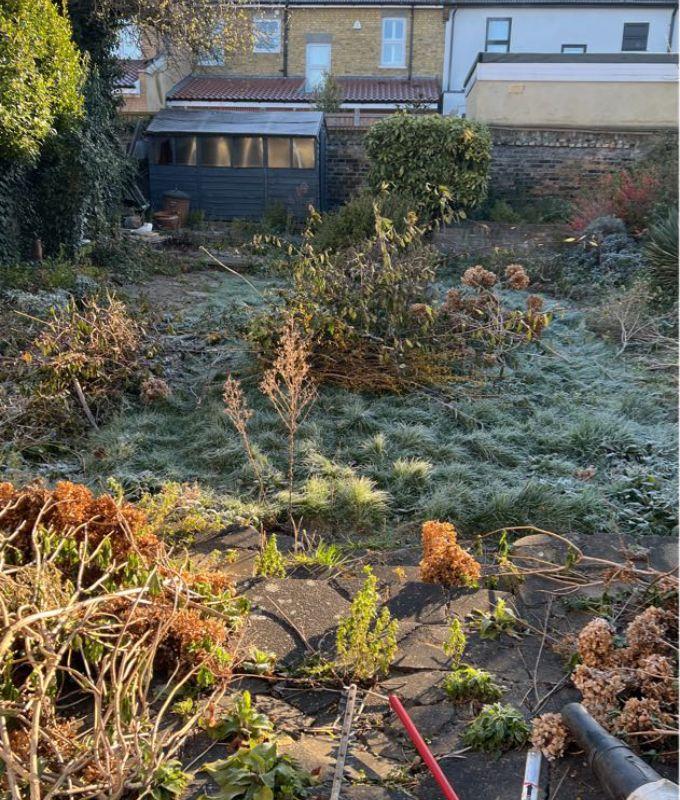
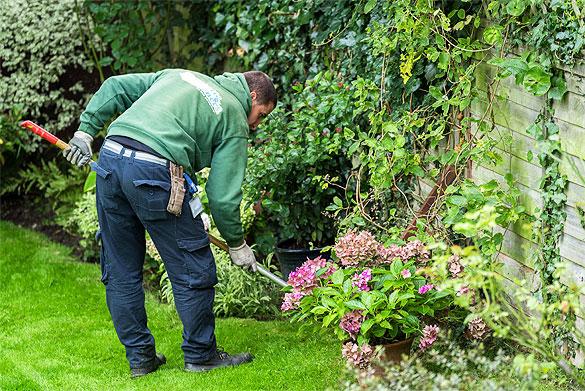
Gardens in HP1 sit on chalk, and a great many plant failures blamed on bad luck here come back to that single fact. Topsoil is often thin over a chalk and flint subsoil, drainage is rapid, and the pH is firmly alkaline. Shrubs sold as reliable on a general nursery bench - rhododendron, camellia, most heathers, blueberries - turn yellow between the leaf veins within a season and never properly recover. Gardening that works locally begins by accepting the ground rather than fighting it.
Why the leaves go yellow and feeding does not fix it
Lime-induced chlorosis is not a shortage of iron in the soil. The iron is there; alkalinity locks it into a form roots cannot take up. Sequestered iron buys a few weeks of green and then the symptom returns, because nothing about the chemistry has changed. On chalk there are two honest options: grow the plant in a container of ericaceous compost where the growing medium can be controlled, or replace it with something that genuinely prefers a high pH. Lavender, rosemary, ceanothus, box, hellebores, dianthus and campanula all thrive in it.
Thin soil, fast drainage and a dry July
Chalk sheds water quickly and holds very little in reserve, so a fortnight without rain tells on shallow-rooted planting long before it shows on clay a few counties over. The improvement is cumulative rather than dramatic: organic matter added every year, mulch laid thickly in spring while there is still moisture underneath to trap, compost worked into planting positions, clippings left where the sward can use them. Five seasons of surface mulching achieves more than one heavy dig, which mostly succeeds in bringing flint to the surface.
Gardens that run uphill
Much of the town is built across valley sides, and a good number of plots step up or down from the house in terraces. Mowing a bank is the most frequently requested and most frequently underestimated job on such a plot. Beyond roughly one in three, a wheeled mower stops being safe and the work moves to a brushcutter with the operator traversing the face rather than climbing it. Materials go up by barrow or by hand, which is why a tonne of mulch on a terraced garden consumes a morning that the same load on flat ground would not.
Retaining walls, steps and what sits behind them
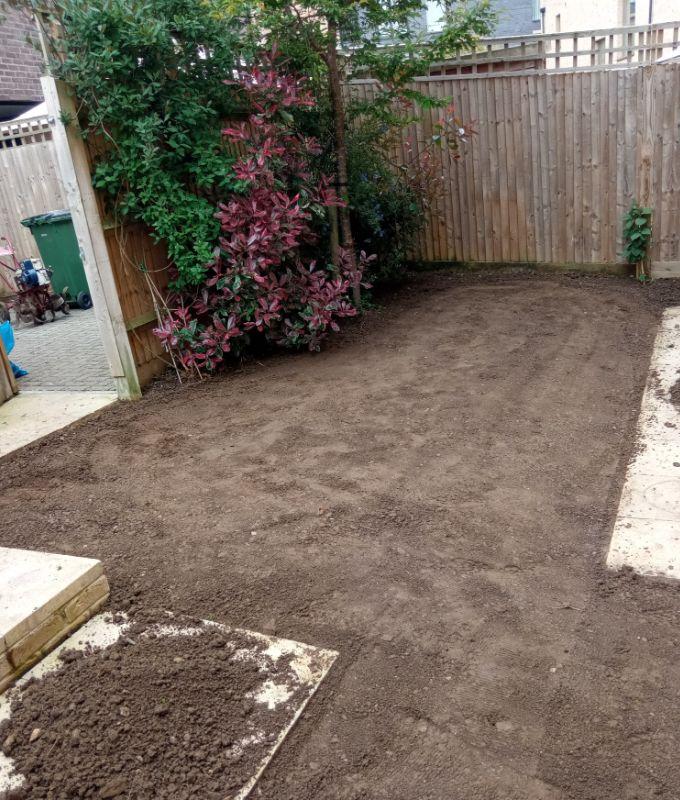
Terraced gardens depend on structures doing quiet, continuous work. Old sleepers rot from the buried face outwards, brick and dry-stone retainers rely on weep holes that silt up over a decade, and the first symptom is usually a bulge or a step that has dropped rather than a visible crack. Clearing those drainage holes and keeping ivy off the face counts as maintenance. Rebuilding a wall that has started to move does not, and construction of that kind belongs with Hemel Hempstead turfing, where the groundwork and drainage behind the face are part of the job.
The green film on a shaded flight of steps
North-facing terraces grow a surface film that turns treacherous from October onwards, and on chalk sites the run-off carries a pale silt that settles into the texture of the slab and makes it worse. Brushing improves matters for a fortnight. Genuine removal needs pressure, the right nozzle for the surface and some control over where the dirty water ends up, so it is treated as separate work under Hemel Hempstead pressure washing service rather than squeezed into the end of a gardening visit.
How the ground changes on the way out of town
Soil conditions shift quickly at the edge of the Chilterns, and advice written for chalk does not travel far. Heavier, slower-draining ground and a different set of drainage problems begin to appear around trusted garden maintenance in Luton, while the river gravels produce another pattern again in fully insured hedge trimming in Abingdon. Crews cover the whole area, but the plan is always written for the plot in front of them. Comparable packages of work are described on garden maintenance for rented property.
What a first visit on a chalk plot covers
An initial visit is diagnostic as much as practical. A spade goes in to find how deep the topsoil runs before flint and chalk appear, the aspect and slope are noted, and existing planting is assessed for what is struggling because of the pH rather than because of neglect. Pricing follows crew size and hours on site, with terraced access adding time that a flat plot would not need. Useful things to have available: an outside tap, a route wide enough for a barrow, and some idea of where a previous owner planted what.