Chalk sits close to the surface across much of Hemel Hempstead, capped in places by clay-with-flints, and it sets the terms for everything planted here. Soil over chalk is shallow, alkaline and sharply drained on the valley sides, while the heavier flinty clay on the plateau holds water and works like a different garden altogether. Knowing which of the two a plot has determines the plant list before a single design decision is made.
Alkaline soil and what will not grow in it
The frustration people arrive with is usually a plant that yellows between the leaf veins and never recovers. Chalk locks up iron and manganese, so ericaceous plants - rhododendron, camellia, pieris, most heathers, blueberries - cannot take them up whatever is applied to the surface. Adding sulphur or ericaceous compost to open ground is a treadmill rather than a fix, because the underlying chalk simply buffers it back. The productive response is to change the list, not the soil: hellebores, box, viburnum, philadelphus, cistus, lavender, bearded iris and most of the Mediterranean shrubs thrive on chalk without encouragement. Where an acid-loving plant is genuinely wanted, a container with its own medium is the honest solution.
Digging in flint
Excavation on clay-with-flints is slower than the same work on sand, and worth allowing for. Flint nodules blunt and break hand tools, wear bucket teeth, and make trench sides unreliable, so post holes and drainage runs take longer and need more care. The nodules themselves are a resource rather than a nuisance - graded flint makes excellent decorative surfacing, gabion fill and drainage material, and using it on site rather than carting it away reduces both disposal and import volumes. Where chalk is reached directly, footings sit on very good bearing ground, but the cut face must be covered quickly because exposed chalk softens and slumps in rain.
Water on and off a chalk slope
The Gade and Bulbourne valleys mean many gardens sit on a gradient, and run-off during heavy rain arrives from above rather than falling where it lands. Directing it is a design task: a gravel-filled channel across the head of a garden, a shallow swale following a contour, or a level change absorbed by a planted bank all intercept water before it reaches a patio door. Soakaways work well in chalk but must sit clear of any building foundation, and on the flinty plateau they may not percolate at all, in which case attenuation and a slow release are needed instead.
Open-plan frontages and how boundaries came to matter
The new town layout left a great many front gardens deliberately open, with grass running to the pavement and no dividing line at all. Households wanting definition now have to work within whatever covenant applies to the estate, which can restrict walls and fences at the front. Low hedging, a change of surface, a kerbed planted strip or a raised bed all establish a boundary that reads clearly without breaching a restriction on structures. It is worth checking the deeds rather than assuming, because reinstatement after the fact is expensive.
Hedges on chalk, and what they need
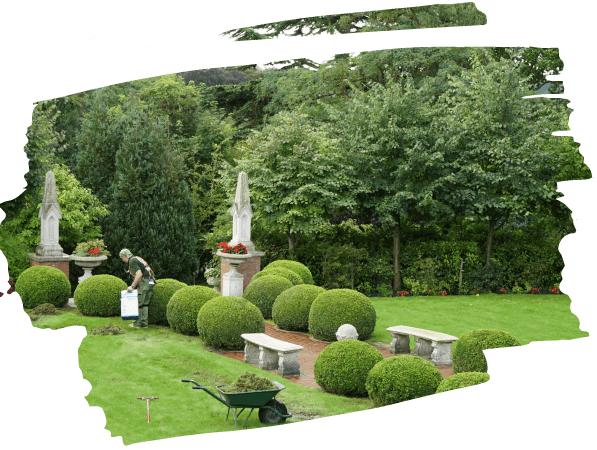
Hornbeam, beech, yew, hawthorn and field maple are all at home on this ground and give a boundary that lasts decades rather than the eight or ten years of a fence panel. Bare-root stock planted between late autumn and early spring establishes far better and costs a fraction of container-grown, though it needs a prepared trench rather than individual holes, and watering through its first two summers. Formative pruning in the first three years is what produces a dense base; a hedge left unpruned until it reaches height stays thin at the bottom permanently. That ongoing cutting and shaping is what professional garden clearance in Hemel Hempstead covers.
Scheduling the work through the year
The calendar matters more on chalk than most people expect. Hard landscaping runs best in settled weather because chalk and flinty clay both turn greasy and unworkable when wet. Bare-root planting is a winter job, turf goes down best in autumn, and nesting season restricts hedge cutting between March and August. A site visit establishes which soil a plot has, where run-off arrives from, and what the access will take, and pricing follows the elements involved rather than a flat rate. New paving and flint surfacing green up on shaded north-facing slopes and are restored by professional driveway cleaning in Hemel Hempstead. Comparable schemes on gravel and clay to the west run under trusted landscaping in Reading, and design stages are outlined under landscaping and garden design services UK.






















 Get the app


