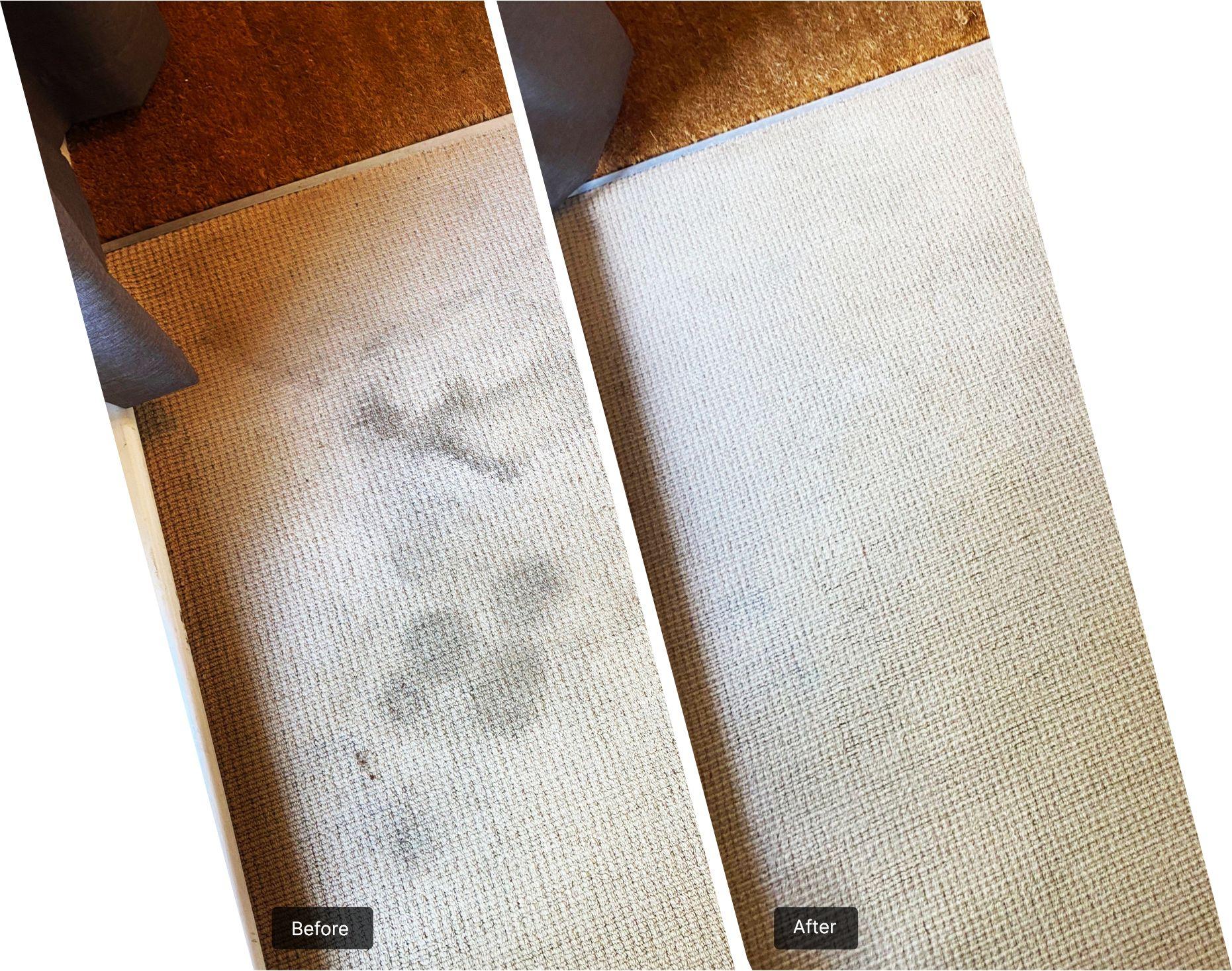
Beach sand is the defining carpet problem of a seaside town, and it is not an ordinary dirt. The grains are hard, rounded by the tide and extremely mobile, so they travel to the base of the pile within days and sit against the backing where no domestic vacuum can reach them. A BS23 carpet within walking distance of the sands can hold a startling weight of it while still looking presentable, and the household is usually unaware until the first extraction pass shows what comes out.
Why sand behaves unlike ordinary soil
Most household soil is a mixture of fibres, skin cells, grease and fine mineral dust, held partly by static and partly by oils. Sand is pure mineral, it has no adhesion, and gravity takes it straight down through the pile. That makes it easy to remove if the right equipment reaches it and impossible if it does not — and while it sits there, every footstep abrades the fibre against it. The pebbled coastline a few miles north produces far less of it, which is why carpet cleaning team in Clevedon is planned around damp rather than grit.
Getting it out before any water is applied
Dry removal does most of the work here. That means a machine with strong airflow and a rotating brush set correctly for the pile height, moved slowly, in several overlapping passes running in different directions, with a crevice tool along every edge. Introducing water to a carpet full of sand simply turns it into a slurry that is harder to extract. The order of operations and the reasoning behind it are covered on the full service.
Holiday lets and a two-hour turnaround
Seasonal lets change over on a fixed day with a narrow window, and a carpet that is still damp when the next guests arrive is a complaint waiting to happen. That drives the method: low-moisture systems, encapsulation for maintenance cleans, and full extraction scheduled for the gaps between bookings rather than between them. Planning the deep clean for the shoulder season and lighter maintenance through the summer is far more practical than trying to compress the wrong method into a changeover.
Sun-facing rooms and fading
Seafront properties get a great deal of light, and ultraviolet degrades dyes and weakens fibre over time, particularly on the side of a room nearest a large window. Fading is not soiling and cleaning will not reverse it, though removing the general soil often makes a faded area look better by evening out the contrast. Distinguishing the two at the survey stage prevents a householder paying for a result that was never achievable.
Decking, paths and the route in from the beach
Most of the sand arrives on feet, and the route matters. An outdoor tap or a rinse point, a long mat inside the door and a hard surface that is swept rather than sandy all cut the load substantially. Where a garden path, decking or a side return has become a reservoir of sand and algae, tidying and maintaining that ground is separate work, handled under the gardening team in Weston-super-Mare.
Turning a whole property round at once
Where a let is being prepared for a season or a house is going on the market, doing floors, soft furnishings, kitchen and bathrooms in a single planned day is more efficient than piecemeal visits, and it means the drying period only interrupts the property once. That combined specification is quoted as our local team.
Booking a seaside property in
Pricing is per room or by measured area with stairs and landings itemised separately, and a property with heavy sand loading may need two dry passes before extraction, which is quoted as time rather than hidden. Rooms should be cleared of small items; light furniture is moved and stood on protectors. Expect a few hours of drying with good ventilation. Tenancy check-outs in the city work to a documented standard and are arranged as Bristol end of tenancy cleaning service.