In a listed or conservation-area house the risk at the end of a tenancy runs in both directions. The property has to be handed back to the standard recorded at the start, but a good deal of what is in it - waxed boards, lime plaster, unlacquered brass, hand-made quarry tile, original glass - will be permanently marked by the products and machines that make short work of a modern bathroom. Getting a GU7 house through an inspection is largely a matter of knowing what not to do.
Surfaces that punish the wrong product
Old materials are mostly porous, mostly soft and mostly alkaline-sensitive. Limestone and marble etch on contact with acid, so the descaler that works on a chrome mixer will dull a stone surround in seconds. Unsealed terracotta absorbs detergent and then blooms white as it dries. Unlacquered brass and iron ironmongery discolour under alkaline cleaners and must be worked dry and separately. In every case the safe starting point is the mildest thing that could possibly work, tested somewhere that does not show.
Steam is not universally safe
Steam is genuinely useful on modern tile and grout, and it is a poor idea on much of what a period house contains. Heat and moisture drive into hairline cracks in old glaze, lift wax off timber, soften animal glue in furniture joints and swell the face of lime plaster. On painted joinery with a build-up of old layers it can blister the top coat cleanly away. Where steam is used at all in this stock, it is used briefly, at a distance, and never on anything unsealed. The same caution governs work on the comparable housing covered by the end of tenancy cleaning team in Farnham, where conservation-area frontages are the rule rather than the exception.
Sash boxes, shutters and the dust they keep
Original windows hold decades of dust in places nobody looks: the pulley stiles, the parting bead, the pocket where a shutter folds back into its casing. An inventory clerk opening a shutter that has not moved in a year will find a pale line of debris along the hinge. The work is slow and mostly dry - soft brush, narrow nozzle, then a barely damp cloth on the painted faces - because forcing water into a sash box swells the timber and the window stops running.
Floors laid before mops existed
Waxed boards, flagstones and quarry tiles all behave differently from a modern sealed floor. Wax is stripped by anything alkaline and by hot water, which leaves a patchy dull finish that only rewaxing corrects. Stone is porous and will absorb a strongly coloured cleaner. Gaps between old boards swallow water and then release it into the void beneath. The method is a vacuum along the joints first, then a damp mop with a neutral solution and minimal water, dried behind. Carpeted rooms in the same house are extracted separately under Godalming carpet cleaning service.
Range cookers and open fires
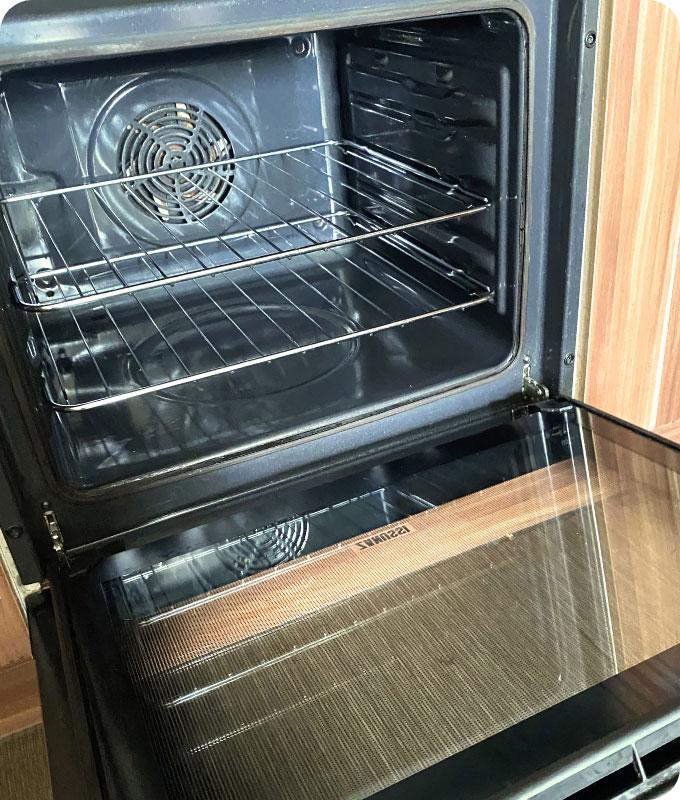
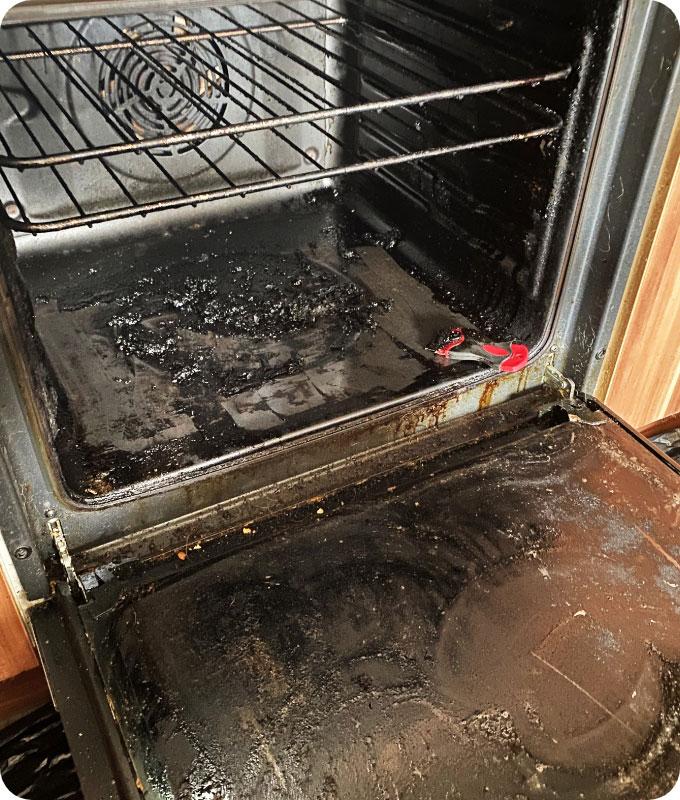
A cast-iron range does not go into a dip tank and will rust if it is left wet. Enamelled doors, cast trivets and the flue plate each want different treatment, and the whole thing needs drying and lightly oiling afterwards. A conventional oven in the same house is a different proposition and is usually handled through fully insured hob and extractor cleaning in Godalming as its own visit. Open fireplaces need the hearth and the lower flue brushed rather than washed, since soot turns to a stain the moment water touches it.
Arranging the day around an old house
Access tends to be the limiting factor: narrow lanes, no off-street parking, and in some cases a conservation restriction on where a vehicle can stand. Equipment gets carried, so knowing in advance about a third floor or a spiral stair changes how a team is sized. Pricing runs on property size and specification rather than the clock, and unusual fabric should be described at the point of booking. A household continuing in the property afterwards usually moves onto a regular arrangement through our specialists in the area, and the national scope sits under move-out cleaning.