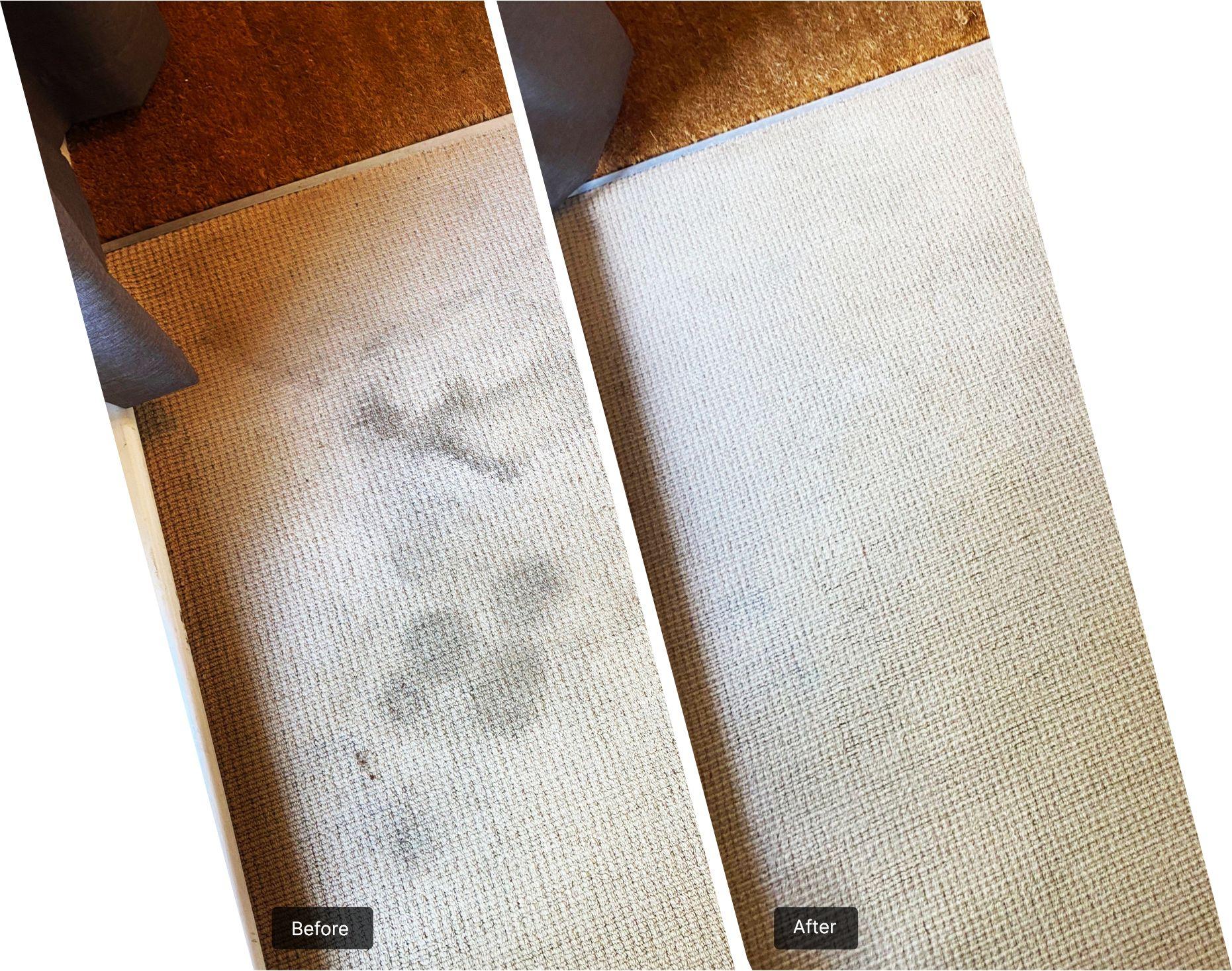
Most calls from East Dulwich start with one mark on an otherwise decent floor - blackcurrant on a landing, olive oil by the sofa, a nappy accident that was mopped at the time and forgotten. The Victorian terraces around SE22 are full of young families, and family floors do not fail gradually. They fail in incidents. Knowing what a particular substance has done to the fibre, rather than reaching for the nearest bottle, is what decides whether a mark comes out or becomes permanent.
Spot, stain and damage are three different things
A spot is deposited material still sitting on the yarn and it usually rinses out. A stain is dye or a dye-like substance that has bonded chemically with the fibre and needs converting, reducing or oxidising rather than washing. Damage is lost colour or melted pile, and cleaning will not restore it. Sorting an incident into the right category before treating it saves the pile, because bleach-type products applied to what was only ever a spot turn a removable mark into a pale patch that stays.
Wicking, or why the mark came back
A spill soaks down to the backing and sometimes into underlay. Clean only the surface and, as the area dries, capillary action draws the remaining residue back up the fibres and reforms the mark two days later. This is the single most common complaint after a DIY clean. The professional answer is to extract from depth rather than skim, then to speed up drying so the solution has no time to travel upwards, blocking the process with airflow and a weighted absorbent pad where the deposit was substantial. Streets a short way west share the same terraced layout and the same reappearing marks, which is why the service in full is tackled from the same direction.
The substances that turn up in family homes
Protein spills such as milk, egg and blood need cool water and an enzyme product; heat sets them permanently. Tannin from tea, coffee, wine and fruit juice responds to mild acid. Oily marks need solvent work before any water, or the grease simply spreads into a larger halo. Chocolate and sauce are usually both at once, so they are treated in stages. Household stain removers marketed as universal are almost always strongly alkaline and leave a sticky residue that pulls in soil until the patch is dirtier than the surrounding floor.
Traffic lanes tell a different story
Alongside the incidents sits ordinary wear: a dark path from the hall through to the kitchen, and a pale crushed area in front of the sofa. That is abrasion and compression rather than dirt, and the treatment is pile lifting and thorough soil removal rather than more chemistry. Households that keep on top of the routine cleaning as well as the flooring often keep to a regular pattern of our nearby specialists, which keeps the grit load low enough that traffic lanes form far more slowly.
Outside surfaces feed the inside
Terraced streets bring the path, the front step and the side return into direct contact with the hallway. Where those surfaces are green or silted, every wet day pushes fine material through the door. Work of the kind done by our local team and by pressure washing across Charlton removes that source, and on hillier streets nearby the same reasoning applies to steep paved frontages handled through Crystal Palace pressure washing specialists. Households further along the line generally pair that with our nearby specialists for the indoor side of the same job.
Making the most of the visit
Have the story ready: what was spilled, roughly when, and what has already been put on it. Keep any offcut from the original fitting, as it is the safest place to test a strong treatment. Pricing works per room with stairs counted separately, and heavily marked areas are identified before work starts. Blot future spills with white cloth from the outside inwards, never rub, and never apply heat. Guidance on individual fibre types is set out on experienced carpet stain removal.