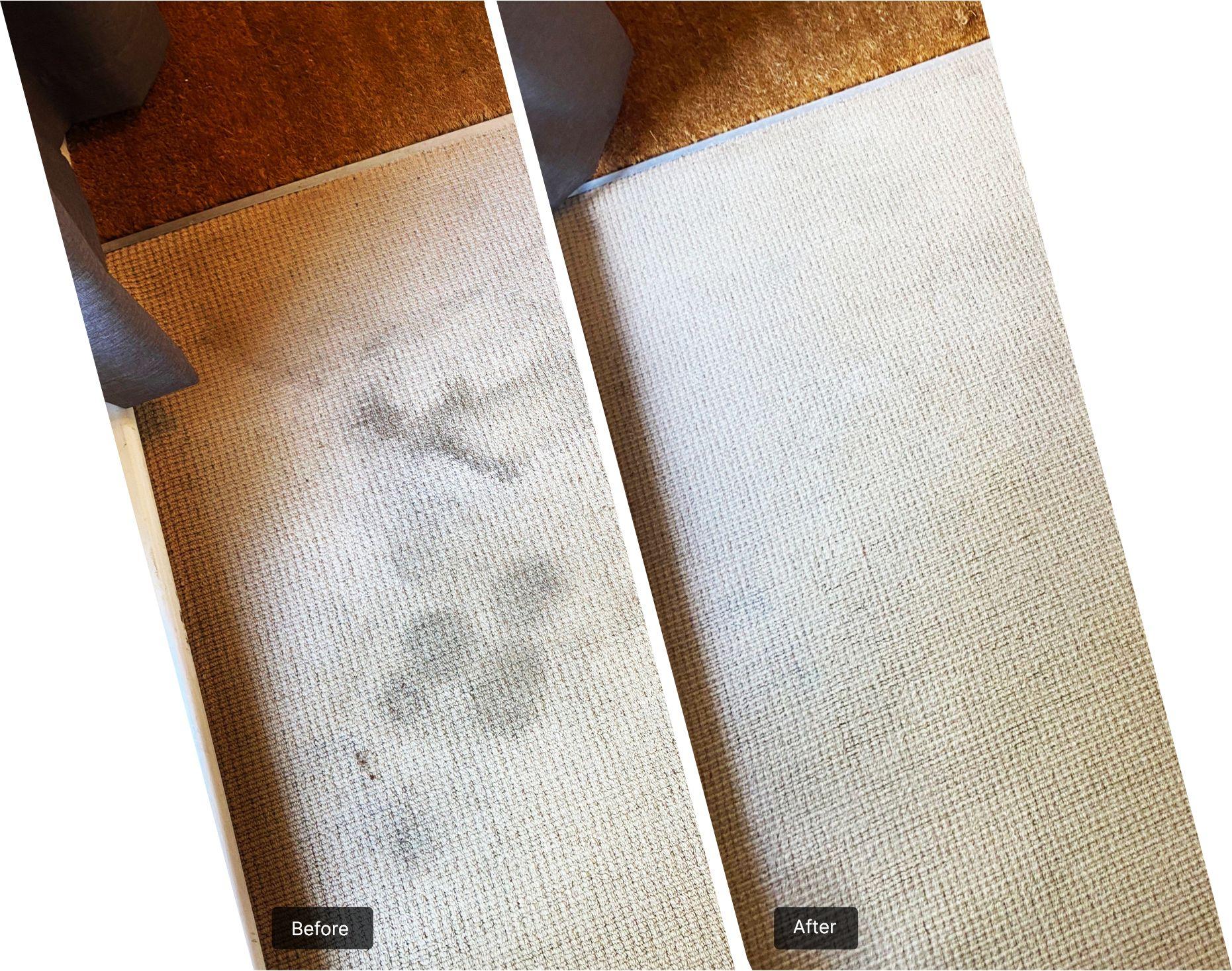
Two words get used interchangeably and they describe different problems. A spot is material sitting on or between fibres, and it comes out when the right chemistry and enough rinsing are applied. A stain is colour that has bonded with the fibre itself, and no amount of cleaning will lift it — it can sometimes be reduced or masked, and sometimes not. Almost every disappointing result in a SW2 flat traces back to one being treated as though it were the other.
Four families, four approaches
Most of what lands on a carpet falls into water-soluble spills, oil-based soil, protein material and dye. Each responds to a different chemistry, and applying the wrong one usually makes the next attempt harder. A general-purpose spray is a compromise across all four, which is why it underperforms on any of them. Identifying what was spilled, or at least which family it belongs to, is the first useful step and it costs nothing.
Heat is wrong on protein
Milk, egg, blood and food residues coagulate when heated, exactly as they would in a pan, and once set into the fibre they are far harder to remove. Protein material is treated cool, with an enzyme product if needed, and given time rather than temperature. The instinct to reach for a kettle of hot water is the single most damaging piece of household advice still in circulation.
What home remedies leave behind
Undiluted washing-up liquid leaves a tacky film that attracts soil for months. Household disinfectants and oxygen bleaches strip dye. Rubbing rather than blotting distorts and fuzzes the pile so the area stays visible even after the mark has gone, and a coloured cloth can transfer its own dye into a damp carpet. Much of what arrives as an emergency call is damage from the first attempt rather than the original spill.
Testing before treating
Any product, whether it came from a supplier or from under the sink, is tried first on a hidden area — inside a wardrobe, under a sofa, in the cut-off behind a door. A small amount is applied to a white cloth, pressed into the pile for a few seconds, and the cloth is then examined for colour transfer. If dye appears, the treatment is wrong for that carpet regardless of what the label claims. The same check applies before any attempt at a spot on a patterned or a dark carpet, where a faded halo left by an over-enthusiastic spotter is far more conspicuous than the original mark ever was.
Damage that cleaning cannot address
Cigarette burns, melted fibre from a dropped iron, cuts and pulled loops are physical damage. On a fitted carpet these are sometimes repairable by cutting out the affected area and bonding in a patch taken from a cupboard or an offcut, matching pile direction carefully. It is a joinery-like job rather than a cleaning one, and it is worth assessing before a carpet is written off.
Conversions, shared halls and who calls it in
Much of Brixton is Victorian terraces split into flats, so the carpet that suffers most is often the one nobody owns. Communal floors take spills that are never reported and never blotted, which is why they justify a scheduled cycle rather than a reactive call. Those areas are frequently handled alongside the cleaning services team in Brixton, with individual flats arranged separately.
What to do before the visit and what it covers
Leave a mark untreated rather than experimenting on it, and keep the packaging of anything that was spilled if it is unusual. Areas are counted rather than timed, with individual spot treatments assessed on arrival because the work varies enormously. Wider household cleaning is covered by local cleaning services across Brixton, fabric furniture by professional mattress cleaning in Clapham, neighbouring districts on vetted carpet cleaning in South London, and the underlying method on the carpet and rug cleaning service.