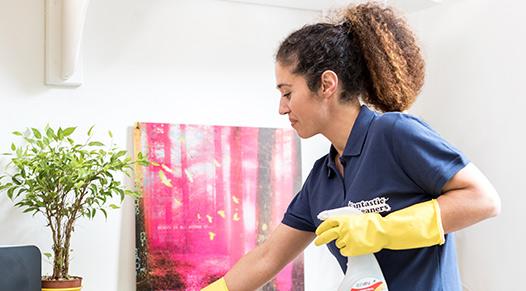
Shared houses wear floors at a rate that single-household properties never approach, and Camberwell has a great many of them. Large Victorian and Georgian houses around SE5 have been subdivided into rooms let individually, with a shared hall, a shared kitchen and a staircase used at every hour by people on different shifts. Five or six occupants means five or six front-door journeys multiplied across a week, no agreement about shoes, and a communal area that nobody feels personally responsible for. The cleaning problem follows directly from the occupancy pattern.
High occupancy changes the soil load, not just the volume
More residents means more food in circulation, more takeaway containers, more spills nobody admits to and a far higher share of greasy soil reaching the hall from the kitchen. That mix responds poorly to a straightforward detergent because the oily element needs a pre-spray with enough dwell time to break down before extraction. Rushing the sequence leaves a floor that looks clean when damp and goes grey again within days as residue attracts new soil to the same places.
Landlord obligations and the condition of communal areas
A licensed house in multiple occupation carries specific duties around the condition and safety of shared parts, and the flooring on escape routes is part of that. Worn, lifting or badly soiled carpet on a communal staircase is a genuine hazard as well as an inspection issue. Keeping communal floors on a scheduled clean rather than a reactive one is both cheaper and easier to evidence, and it tends to reduce the amount of argument at the end of individual room lets.
Working around people who are home at odd hours
Night-shift workers sleeping during the day, remote workers on calls and students revising all occupy a building at once. The practical solution is to clean in sections rather than attempting the whole house in one sweep: stairs and hall first, then rooms as they become free, with the wet sections roped off so nothing is walked through. Access to a single power point and tap is enough; the rest is scheduling. Properties needing a full reset between tenancies are handled through cleaning services across Camberwell.
Mansion flats and porters
Alongside the shared houses are purpose-built blocks with communal entrances, service lifts and contractor-hours rules. Equipment has to be booked through a porter or a concierge in some buildings, and hoses cannot block a fire escape route. Knowing that before arrival saves an abortive visit. Regular occupied-flat work in these blocks generally runs alongside the local team, and corresponding work in similar stock nearby is covered by carpet cleaning services across Southend.
Bedrooms, damp and the individual room let
Rooms let singly are often over-furnished and under-ventilated, with drying laundry on a rack, a window kept shut against street noise and a bed taking up most of the available floor. Very little of the carpet in such a room is reachable without moving something, and the part that is reachable is the part nobody worries about. Carpet edges against a cold external wall pick up that moisture and start to smell, particularly behind a bed pushed into a corner. Cleaning alone will not resolve it if condensation is the cause, and the work covered by trusted black mould removal in Denmark Hill addresses the underlying conditions rather than the symptom.
What to arrange before a visit
For a shared property, give occupants notice so rooms are clear and the staircase is usable, and identify one person to let the technician in and confirm the rooms in scope. Pricing works per room and per flight so a landlord can clean communal areas alone if that is all that is needed. Where the property is being reset entirely between groups of tenants, furniture usually needs shifting, which is where Thamesmead removals specialists or removals services in Walworth comes in. Method and fibre background sits on what the service covers.