Plenty of households in E16 run on hours that do not match a nine-to-five. Nights at a depot, early starts at an airport, rotating shifts in logistics and healthcare all mean somebody is asleep at eleven in the morning or leaving at four in the afternoon. Arranging regular housekeeping around that is a scheduling problem before it is a cleaning one, and it is solvable.
Working a house while somebody sleeps
The practical answer is usually a room order rather than a different service. Start at the far end of the house from the bedroom in use, do all the vacuuming in one block early rather than moving up and down, keep doors closed behind you, and leave the landing until last. Agreed at the first visit, that becomes routine and nobody has to negotiate it every week. Households that have tried and failed usually did so because nobody ever said which bedroom was occupied.
Unattended visits and how trust is built
Most standing arrangements here end up with the cleaner working while the household is out. That requires a key or a code, a clear scope, and a way of flagging anything found — a leak under a sink, a cracked tile, a window left open. A short note left each visit is more useful than a checklist, because it records the things a checklist has no box for. The same person returning each week is what makes this work; a rotating stranger never learns the house.
Regeneration, and the dust that comes with it
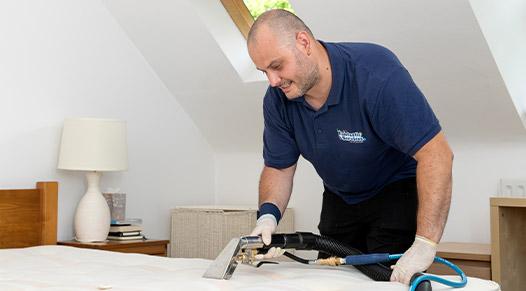
Building work around the district puts a lot of fine material into the air, and homes with older windows take it in along the sill line and around the frame. It is abrasive, so dry-wiping it across a painted sill burnishes the paint. Damp cloth, lifted rather than dragged, rinsed often. Where it has been walked into fabric floors over a long period the pile holds silt that suction cannot reach, and the remedy is professional deep carpet cleaning in Walthamstow.
Small kitchens with heavy use
Where people eat at different times, a kitchen never has a quiet period to be reset. The hob gets used five times a day and the sink is rarely empty. The most valuable half-hour in the visit is usually spent on the hob, the splashback and the bin rather than distributed around the room. Agreeing that explicitly beats hoping it is understood.
What to leave out, and what to leave accessible
If the visit happens while nobody is in, a few minutes of preparation the night before changes the result: worktops clear, floors clear of bags and shoes, the vacuum where it can be found, fresh bin liners somewhere obvious. Note anything not to be touched — a desk, a case of tools, a room in use by a shift worker. Broader household tasks that can be added to the same arrangement are listed under experienced professional cleaners in Canning Town.
Reporting what a cleaner finds
A regular visitor is the household's early-warning system. Damp under a sink, a slow leak behind a washing machine, a scatter of droppings behind a kickboard, insects around a bin store — all get noticed sooner by someone who sees the same rooms weekly. The last of those is not a cleaning problem and the correct response is mice and rat control services in Canning Town, dealt with promptly rather than after a season.
How the booking is structured
A repeating slot is bought in hours on a fixed day, with a minimum length, and the rate follows the hour. Changing the day occasionally to fit a shift pattern is normally straightforward with notice; changing it on the morning is not. Cancellation and rescheduling terms are set at booking, and it is worth reading them if the household's rota moves around. The general scope of recurring housekeeping is described at our domestic cleaning service, and the equivalent page for a catchment further north is domestic cleaning prices in Walthamstow.