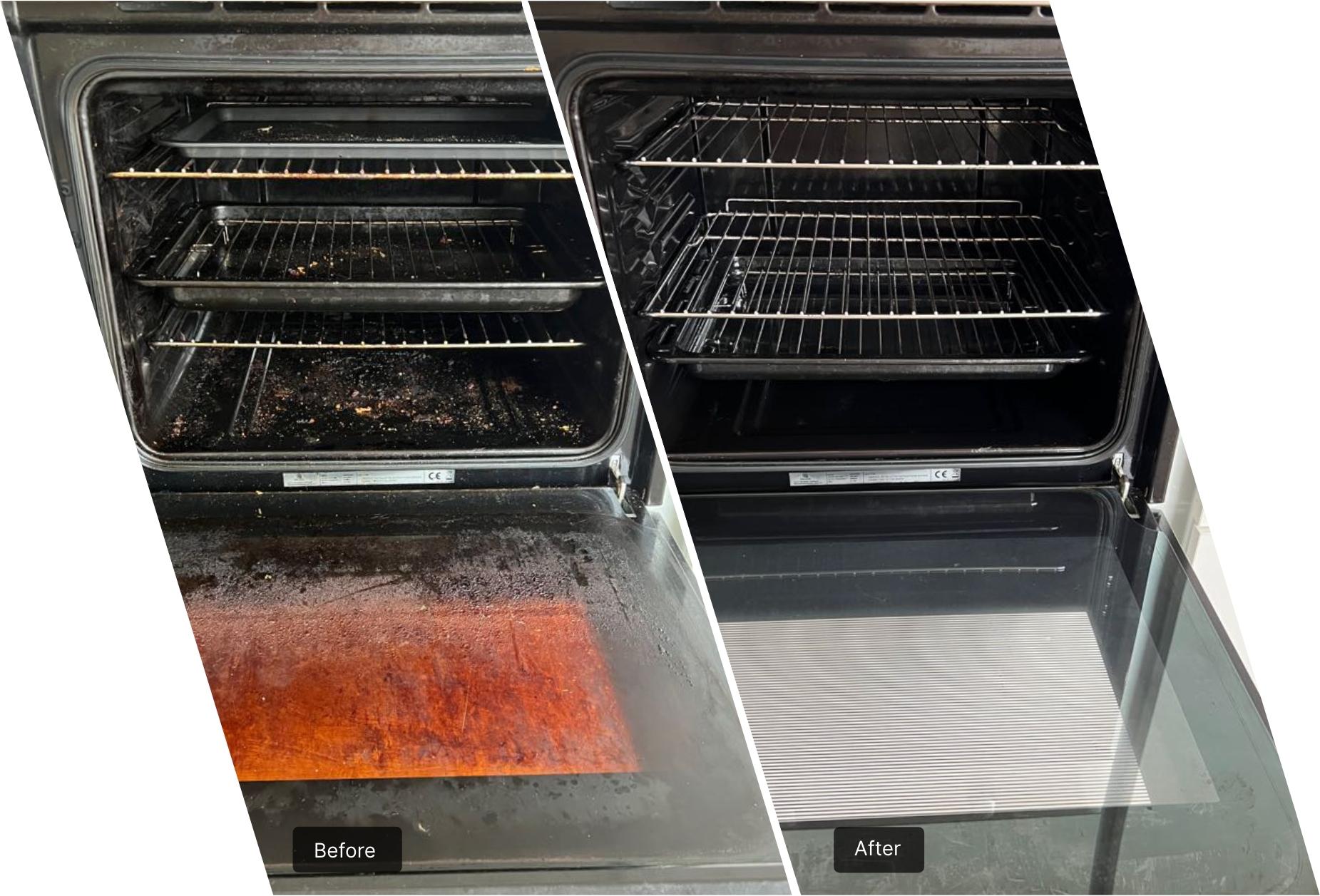
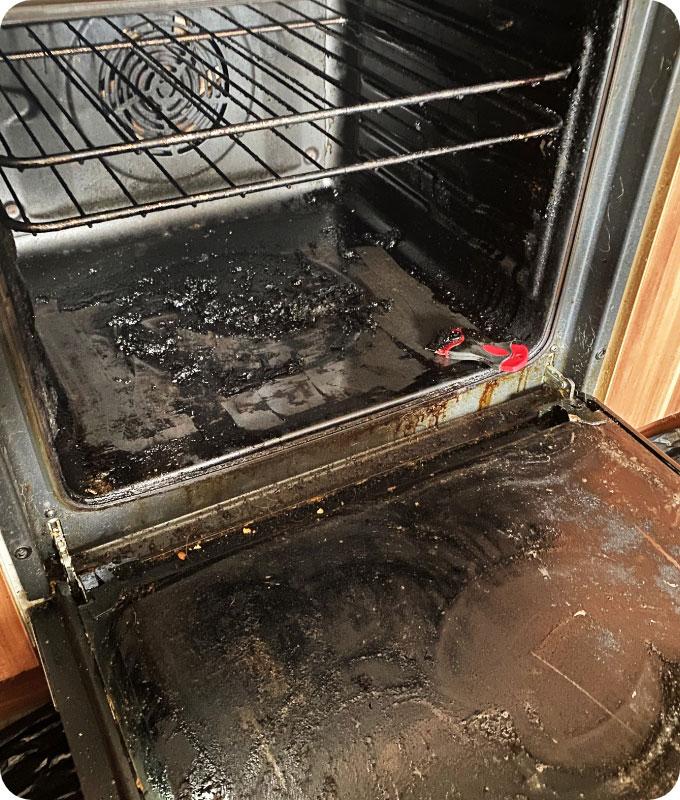
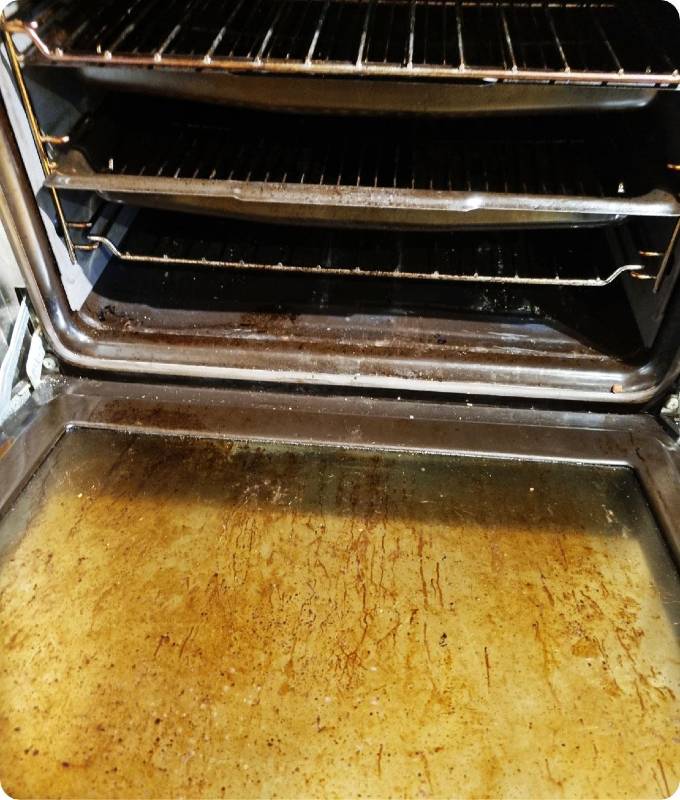
St Albans is a city with real character in its housing. You have everything from converted Victorian and Edwardian terraces in the older residential streets to postwar semis in Marshalswick and London Colney, and newer detached homes on developments further out. Whatever the property type, ovens in regular use follow the same pattern: grease accumulates on the walls and base, carbonises under heat, and eventually becomes something that no amount of spray-and-wipe is going to shift.
When the technician arrives, the first thing they do is lay protective coverings on the kitchen floor. They then take a couple of minutes to look the oven over properly, checking the appliance type, the state of the door seal, whether the fan is circulating correctly, and which areas are carrying the heaviest soiling. That assessment shapes the entire visit rather than just following a generic routine.
- Section-by-section interior treatment: No surface is grouped together or rushed through as part of a general wipe-down.
- Citric acid dip tank: Removable parts soaked at temperature to dissolve carbon safely without abrasive scrubbing.
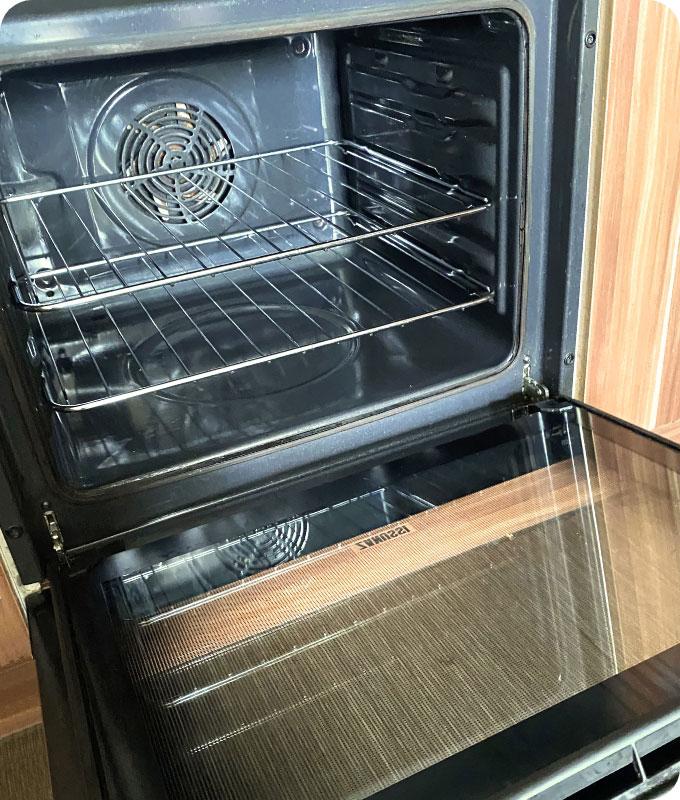
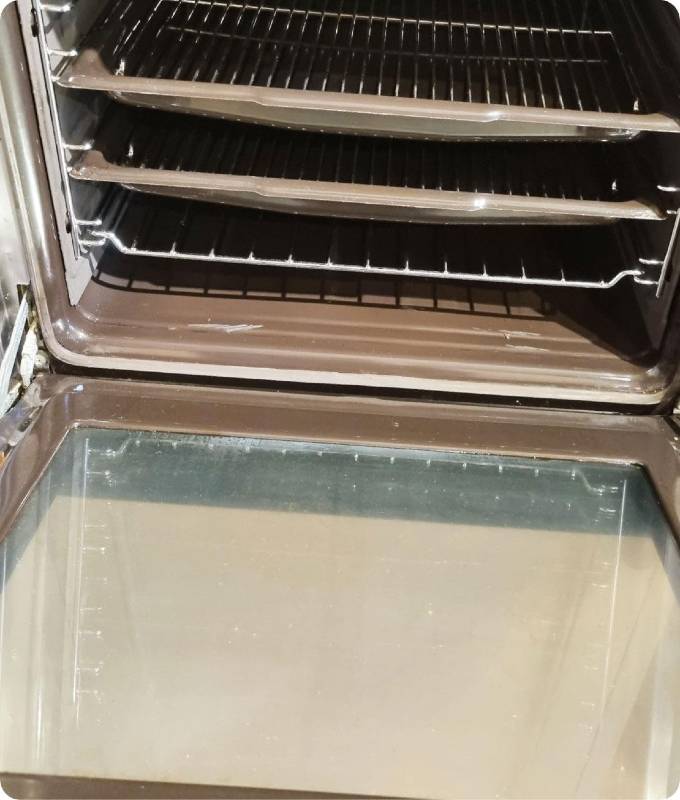
- Full door glass polish: Inner and outer panels cleaned and polished to complete clarity on both sides.
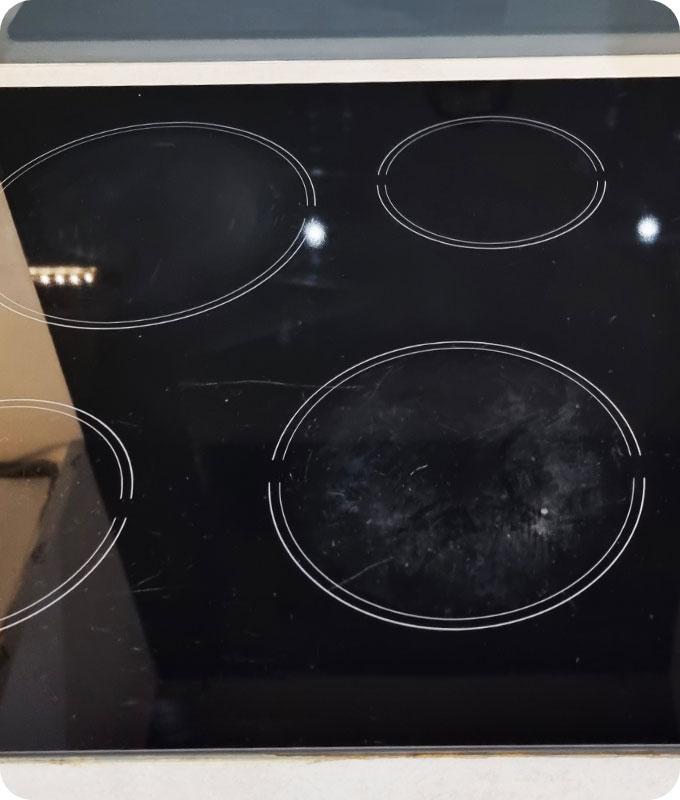
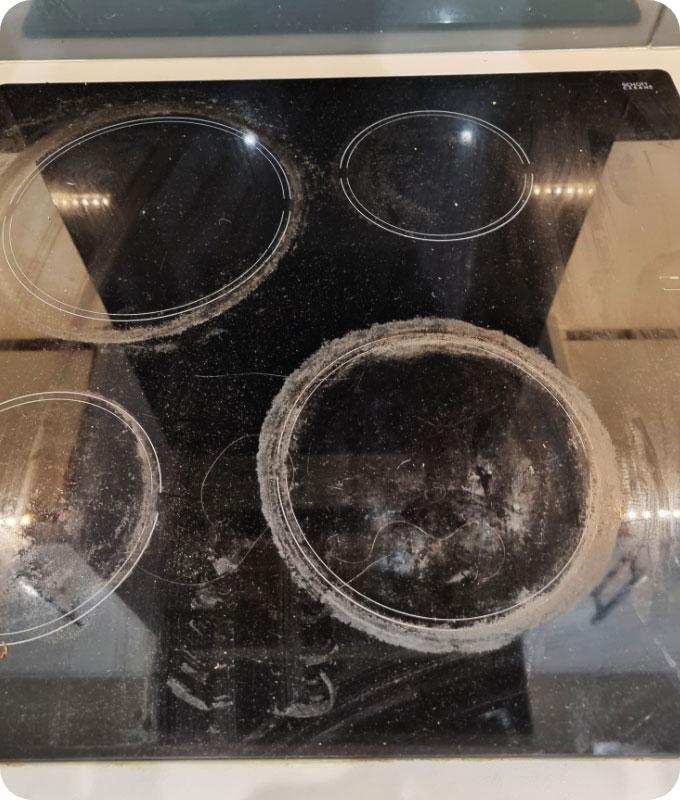
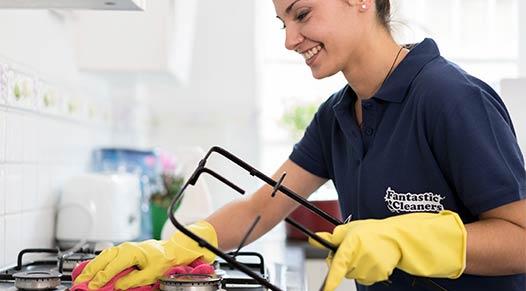
- Hob and extractor cleaning available: Both can be added to the same visit at the booking stage.
- No caustic chemicals at any point: The products used are appropriate for homes with children, pets, and people with respiratory conditions.