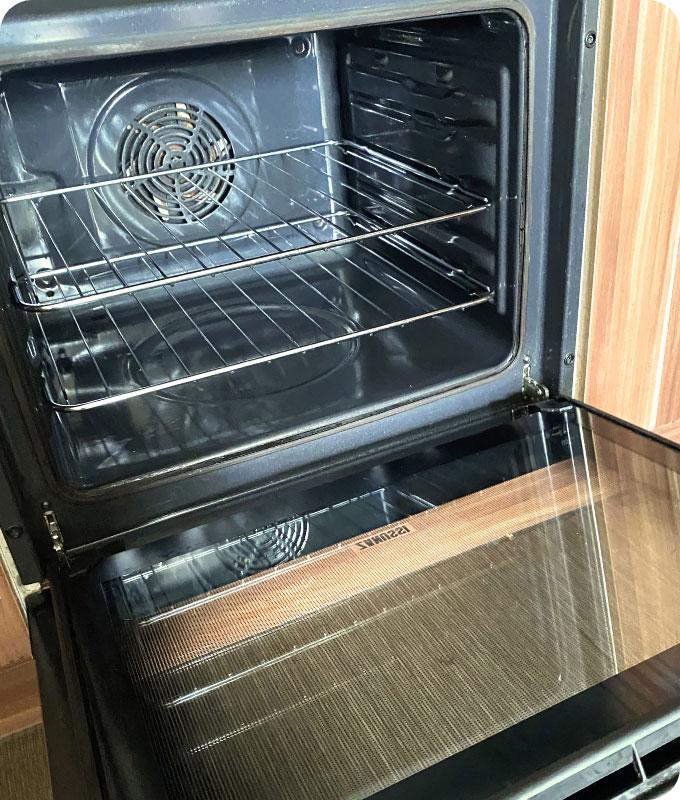
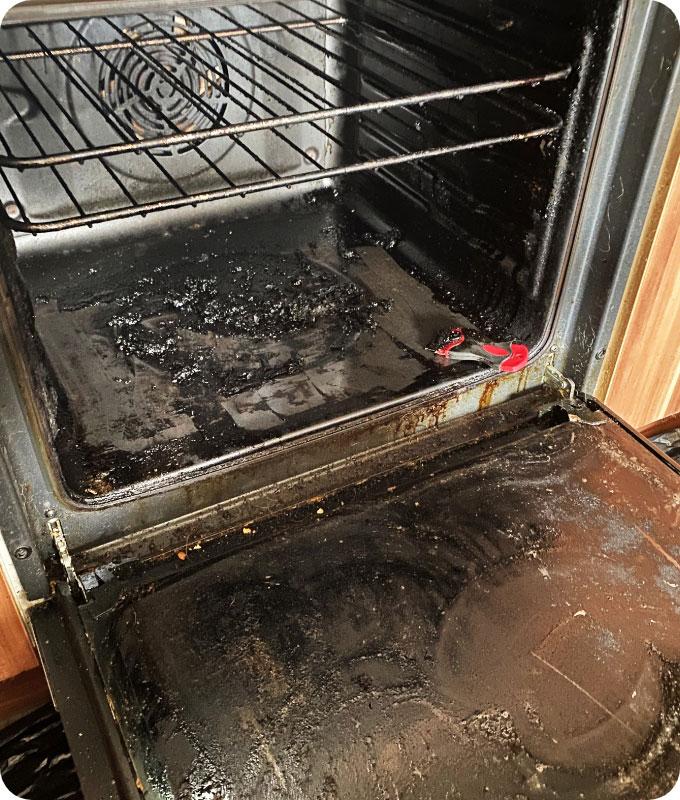
Ash is not dust, and treating it as dust is how a hearth ends up as a grey smear across half a room. Plenty of WD3 lets include a wood-burning stove or an open fire, and a good number sit on the wooded edge of the town where mud, grit and leaf mulch arrive at the door from October onwards. Both leave marks that a general-purpose spray makes worse, and both appear on check-out reports with some regularity.
Emptying a stove without redistributing it
Fine ash becomes airborne the moment a brush touches it, and once it is in the air it lands on every horizontal surface in the room, including the ones already cleaned. The safe method is to let the appliance go completely cold, lift the ash out with a scoop into a metal container rather than a bag, and use a vacuum fitted for fine particulate rather than a domestic machine, whose filters pass it straight back into the room. Glass doors carry a tar deposit that needs a damp cloth in wood ash itself, which is mildly alkaline and works remarkably well.
Soot on stone, brick and painted surrounds
Soot is oily and porous surfaces drink it. Wetting a sooty brick or stone surround drives the staining deeper and sets it, so the first stage is always dry: a soft brush and suction, repeated, before anything wet is considered. Painted timber surrounds take a mild detergent afterwards. A hearth that has genuinely absorbed soot over several winters has a staining problem rather than a cleaning one, and saying so before the inspection is more useful than promising to shift it.
Solid floors that carry the outside in
Quarry tiles, flagstones and sealed concrete in utility rooms and back halls take a beating in a wet winter. Grit is abrasive, so it is vacuumed thoroughly before any mop appears, otherwise it is simply dragged across the surface. Unsealed stone should never meet an acidic product, and detergent left to dry on it leaves a film that shows as soon as the light is low. Doormat wells and the recess under a threshold hold a compacted mud that has to be dug out.
Leaf litter, gutters and the boundary planting
Properties with mature trees over them accumulate leaf mulch in porches, along paths and in drainage channels, and where a tenancy makes the garden the tenant's responsibility that is squarely within the agreement. Restoring an overgrown boundary hedge and clearing a season of leaf fall is seasonal outdoor work handled through gardening across Rickmansworth and nearby areas, and it wants doing before the check-out rather than in the same week as the cleaning.
Where a landlord has had works carried out
Older houses in this area frequently see a chimney relined, a bathroom replaced or a roof repaired during a void, and the residue from that is construction dust rather than household soil. Fine plaster and masonry dust travels through a property and keeps reappearing for days, which is why it is handled separately, as described under the local team.
Holding a property between tenancies
An empty house under heavy tree cover does not stay presentable for long, and landlords letting seasonally often arrange interim visits ahead of viewings; that upkeep is the sort of thing Rickmansworth cleaning services team covers. Tenants moving the short distance north generally want the same handover standard in Kings Langley, which is set out on trusted check-out cleaning in Kings Langley.
Practical arrangements
Costs are calculated from the size of the property and the condition described when the booking is made, not by the hour, and a stove or open fire is worth mentioning because it adds genuine time. Let the fire go out at least a day beforehand, leave the electricity and hot water connected, and clear the log store and hearth of anything that is going with the household. The general specification sits on experienced check-out cleaning.