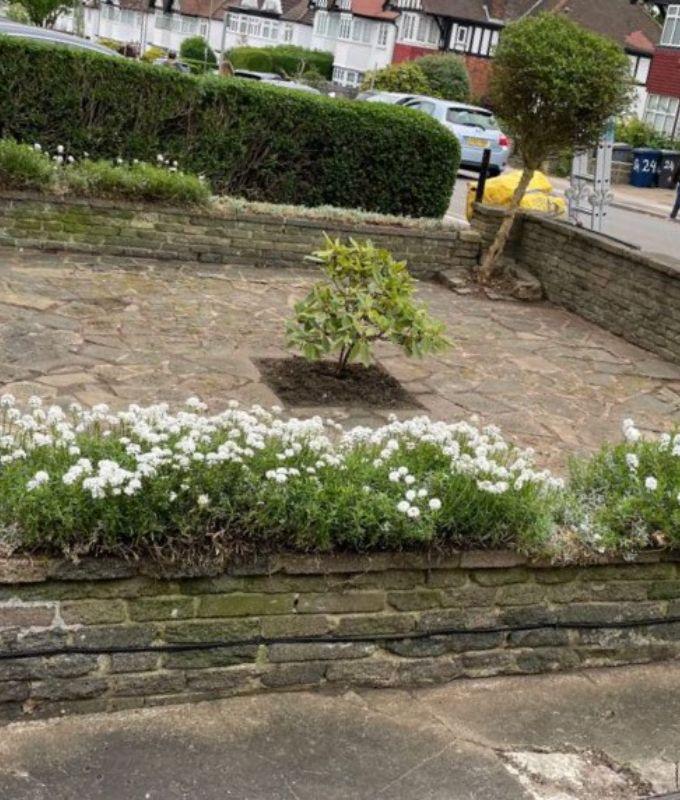
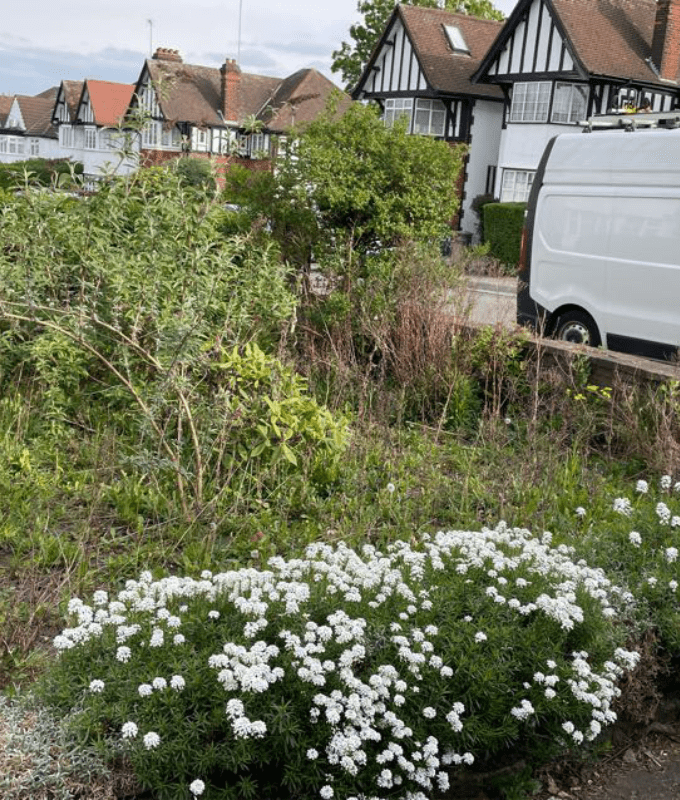
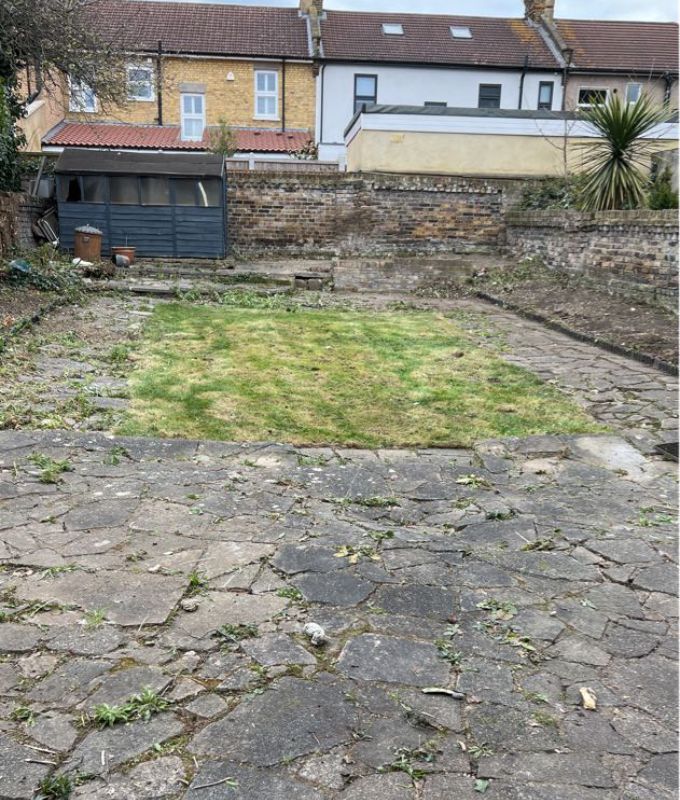
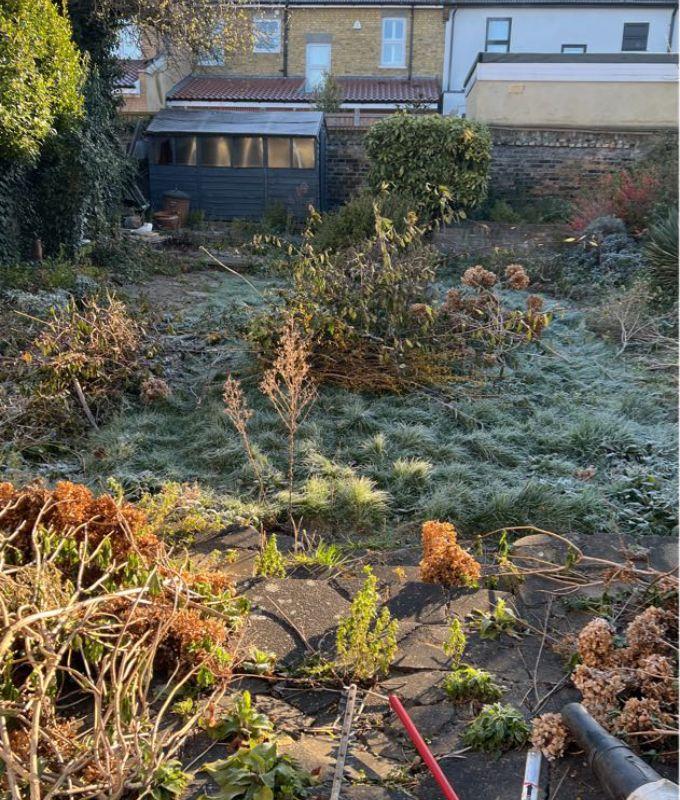
Cold air behaves like water. It drains downhill, collects in the lowest ground available and sits there until the sun shifts it, which is why the bottom of a garden can be several degrees colder on a clear March night than the terrace beside the house. Gardens around RG14 that sit low in the valley, or that have a solid wall or a close-boarded fence across the foot of a slope, hold frost long after everything above them has cleared, and the planting losses in those gardens are concentrated in a band nobody has quite accounted for.
Frost pockets and the barrier that makes one
A hedge or an open fence at the bottom of a slope lets cold air filter through and keep moving. A wall, a solid panel or a dense evergreen screen dams it, and everything on the uphill side of that barrier sits in the pool. Thinning a screen or moving vulnerable planting up the slope works better than protecting individual plants year after year. Where the answer is structural rather than horticultural, a raised bed, a change of level or a rebuilt boundary, that is construction work and belongs with experienced landscaping services in Newbury.
What actually kills a plant over winter
Cold on its own is rarely the culprit. Roots sitting in cold saturated soil kill far more shrubs than air temperature does, which is why the same plant survives in a free-draining bed and dies in a heavy one. Drying wind is the second cause: an evergreen loses water through its leaves while the ground is frozen and cannot replace it, so it scorches. Newly planted stock is lifted by frost heave and left with roots in the air. And a late frost in April, catching soft new growth, does more visible damage than anything in January.
Fleece, and the way it is usually misused
Horticultural fleece works by trapping a layer of still air, so it has to be held off the foliage rather than wrapped tight against it. Polythene in direct contact with leaves is worse than nothing, since moisture condenses on the inside and freezes there. Covers go on ahead of a forecast cold night and come off again when the weather turns mild, because a plant kept permanently wrapped is soft, damp and a good deal more vulnerable when the cover finally comes off.
Containers freeze in a way the ground never does
A pot has cold on every side, and the root ball inside it can freeze solid while the same plant in open ground is untouched. Pots are moved together against a house wall where they shelter each other, stood on feet so water runs out of the base, and wrapped around the container rather than over the plant. Anything that can be moved into a shed, a porch or an unheated garage for the worst weeks is better off there.
Lifting, storing and what stays put
Dahlias in light, well-drained soil are increasingly left in the ground under a thick mulch; on cold wet ground they are lifted after the first blackening frost, dried, and stored somewhere frost-free and airy where they can be checked for rot through the winter. Pelargoniums and fuchsias are cut back and kept barely moist rather than watered, since more are lost to winter wet than to cold. Tender plants brought indoors drop leaves and shed compost across floors for months, and putting that right in spring is the sort of task our cleaning services in Newbury takes on.
Leaving things alone until spring
Autumn tidiness is the enemy here. Stems left standing protect the crown beneath them and are cut back in spring instead. Nothing is fed after midsummer, because soft late growth is exactly what a first frost destroys, and frost-sensitive shrubs are pruned in spring rather than autumn so the cuts are not left open through the cold months. Plants overwintering behind glass need every hour of winter light there is, and a conservatory that has gone green over the autumn is dealt with by window cleaning team in Reading.
Arranging protection and taking it off again
Winter protection is booked as a pair of visits rather than one: a wrapping and moving visit in late autumn once the first cold nights have been forecast, and an uncovering visit in spring, which matters just as much, since covers left on into April cook growth and invite rot. Both are charged by the length of the visit and by what has to be moved, with heavy pots the main variable. Gardens on higher ground a little to the east are covered by a local professional, and how this sits in the rest of the year's work is described on garden maintenance services UK.