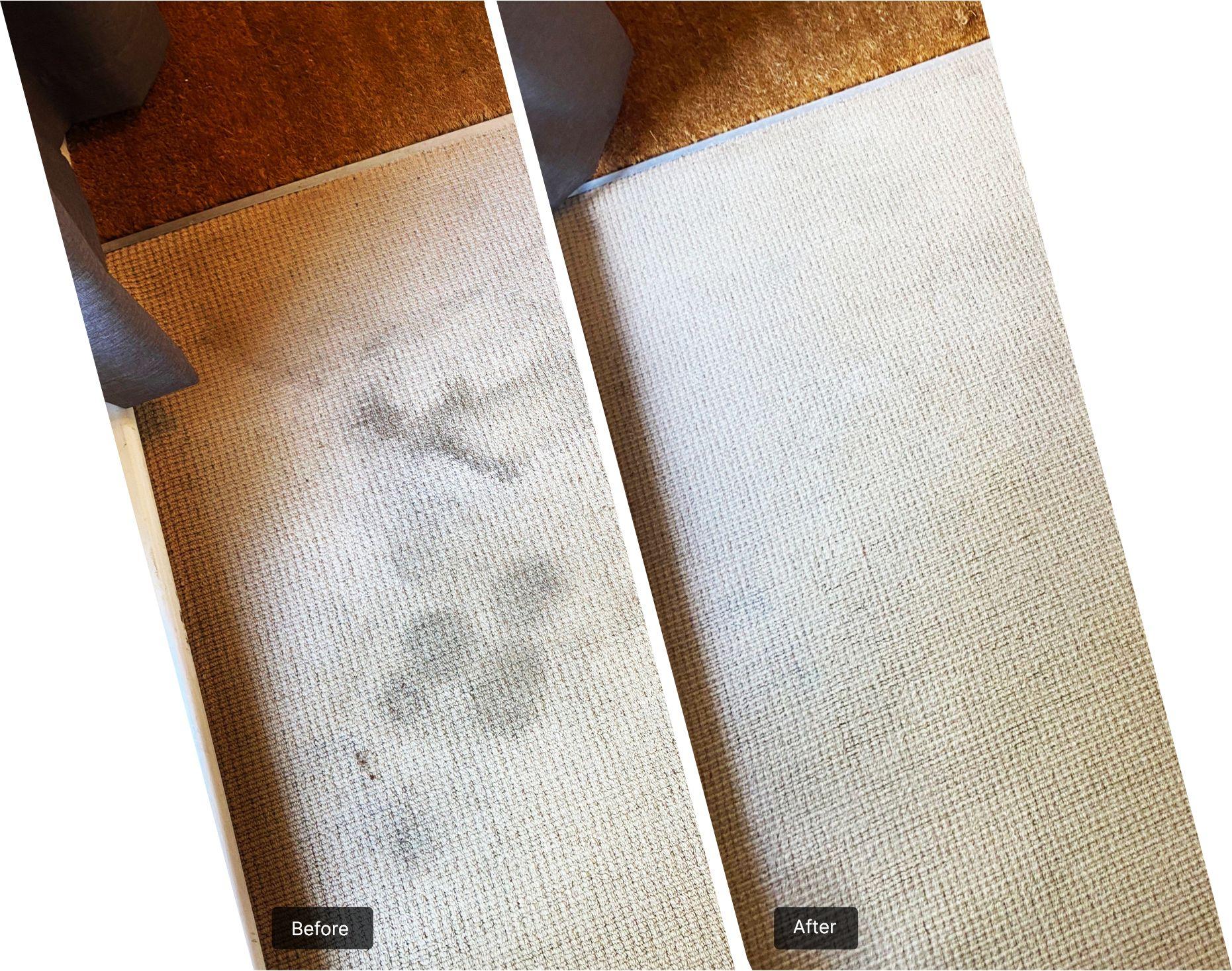
Odour is what brings most pet-related enquiries in Lambeth, and odour is a sign that the problem is no longer on the surface. When an animal has urinated on a fitted floor, only a small proportion of the liquid stays in the pile. The rest passes through the backing into the underlay and, given time, into the boards or screed below, where it crystallises and releases smell every time the room warms or the humidity rises.
Three layers, not one
A soiled floor has to be thought of as a sandwich. The pile can be washed easily. The backing holds a great deal more. The underlay acts like a sponge and keeps the majority of it, and whatever has soaked into a timber sub-floor is beyond the reach of any surface treatment. Cleaning the top layer alone produces a floor that smells fine for a fortnight and then does not, which is why so many people conclude that carpet cleaning does not work on pets.
Finding the contamination before treating it
Dried deposits fluoresce under ultraviolet light in a darkened room, which gives an accurate map of where the affected areas are and how far they have spread — usually far wider at the backing than the visible mark on the surface suggests. A moisture meter confirms whether the underlay is still damp. That survey decides whether the job is a treatment or a replacement conversation, and it is worth doing before any quote is given.
Why ordinary detergent fails on urine
The smell comes from uric acid salts, which are not water-soluble and simply sit there after a wash, reactivating with humidity. An enzyme or oxidising treatment breaks them down chemically instead of rinsing them, and it needs prolonged contact — often hours under a cover so it cannot dry out — to reach the depth the contamination did. Masking agents do nothing except add a second smell to the first. Material notes explaining how each backing type holds liquid are collected on carpet and rug cleaning services UK.
Flood rinsing and lifting the floor
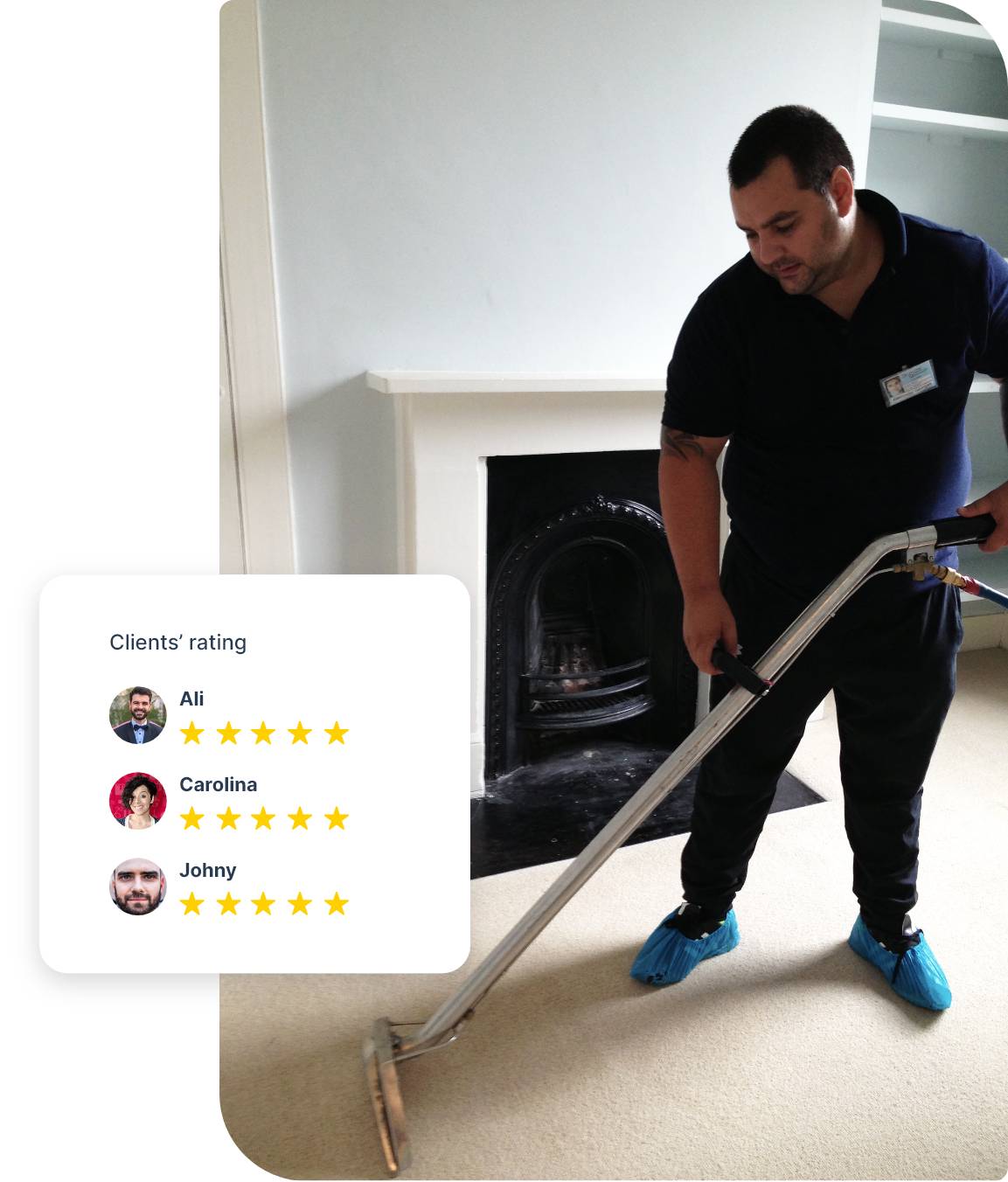
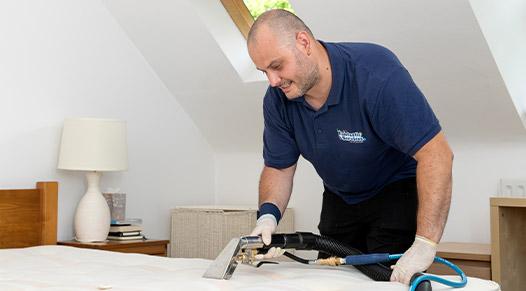
Serious contamination is treated by applying a large volume of solution to the affected area and recovering it with a sub-surface extraction tool that pulls from below the carpet rather than from the pile. Where the underlay is saturated, the honest answer is to lift that section, replace the underlay, seal the sub-floor and re-lay. That is more work than a clean, and it is the only thing that reliably ends the problem.
Cats, kittens and repeat marking
Animals return to a spot they can still smell, so a partially treated area invites a repeat. Keeping the animal away from a treated patch for a few days, and dealing with every affected area at once rather than one at a time, matters as much as the chemistry. Where a household is also preparing a property for handover, floors are usually the item a check-out clerk scrutinises most, and that whole scope is set out under a local pro near you.
After the floor, the rest of the room
Contamination seldom stops at the pile. Skirting boards, the foot of a sofa, the underside of a door and occasionally the wall itself hold traces, and a room that still smells once the floor has been dealt with usually has one of those as the source. Hard surfaces in the affected room are worth doing at the same time, and the range of household work available across the borough is grouped under what the visit includes. Where a radiator sits above the affected patch, warmth will keep bringing any residue back until the whole area has been treated.
What the appointment involves
Pricing is by affected area and by depth of treatment, with sub-surface work and underlay replacement quoted separately because they take considerably longer than a standard clean. Furniture is moved where it is safe to do so, and the room is left ventilated with the animal shut elsewhere until the backing is genuinely dry rather than merely dry to the touch. A neighbouring round covers carpet cleaning services in Kennington on other days, and the full list of what else is arranged locally sits behind trusted house cleaning in Lambeth.