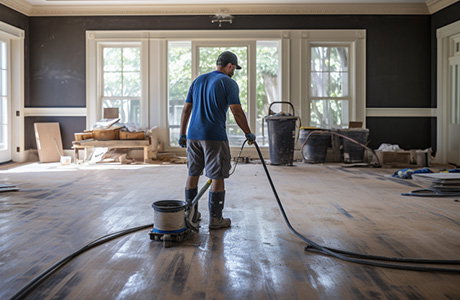
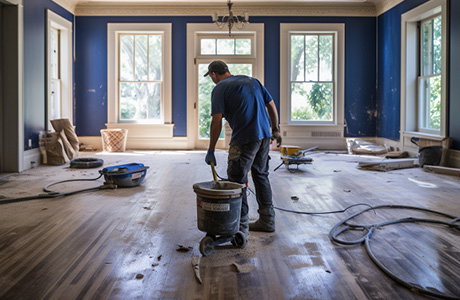
One question decides how a post-construction visit in HP1 actually goes, and it is asked far too late: who is taking the waste away. A cleaning crew is not a waste carrier, and the difference is legal rather than a matter of willingness. Anyone who transports another person's construction waste needs to be registered, and the material has to go to an authorised site with a transfer note. Households who assume the clean includes removing half a skip's worth of rubble tend to find the day stalls before it has started.
Duty of care in plain terms
Responsibility for construction waste follows it from the property to its final destination. Whoever produced it and whoever moves it both carry obligations, and a paper trail is expected. In practice that means the builder disposes of what the build created, under their own registration, and the cleaning team removes what a clean creates - packaging from the products used, the contents of a vacuum, cloths and consumables. Established beforehand, it never becomes an argument.
What crews can and cannot take
Small quantities of general household rubbish found during a clean are usually straightforward. Rubble, plasterboard, timber, old sanitaryware, paint tins and anything with fixings in it are not, and plasterboard in particular has to be kept separate from general waste because of how it breaks down in landfill. Paint, adhesive, solvent and sealant are chemical waste and go to a household recycling centre or a licensed contractor, not into a black bag.
Sequencing around the skip
Where a skip is still on the drive, the sensible order is to finish the interior, let the contractor clear the skip, then clean the external hardstanding where it stood - because the collection lorry will drag and drip across whatever has just been done. A skip on a public road needs a permit from the highway authority, and the marks left underneath it are a cleaning job in their own right once it has gone.
Dust that stays after the rubbish leaves
An empty property is not a finished one. Removing waste reveals the residue underneath: fines in the corners where bags stood, a tide line on the wall at bag height, adhesive from tape used to hold protection down, and grit ground into the threshold by weeks of traffic. That is where the actual clean starts, working from ceiling level down and finishing with floors, so nothing lands on completed surfaces. Skirting mitres and the heads of doors hold the same fines and are done by hand. Comparable work in the valley to the south is listed as our Chesham team.
Floor coverings under the traffic route
The path from the front door to the works carries every load in and every bag out, and whatever covering is on it absorbs the punishment. Protection helps but never seals the edges, and grit migrates underneath. Deep extraction along that route, and in the rooms either side of it, removes what a vacuum leaves behind - arranged as steam carpet cleaning services in Hemel Hempstead.
Outside, once the vehicles have gone
Windows take the most obvious hit from a skip and a cutting station: cement splash, brick dust and the fine film that bonds once it rains. Upper-floor glazing outside needs pole-fed equipment rather than a ladder on soft ground, and it is quoted separately through window cleaning for flats in Hemel Hempstead.
Agreeing the boundary before the crew arrives
The enquiry that runs smoothly is the one that states what is still on site, who is removing it and when. Scope then covers the rooms involved, the floor area, whether glazing is included and whether the property is occupied. Charging follows crew hours and team size. Utilities need to be on, and access clear enough to bring equipment in without carrying it around a skip. Service inclusions are set out on local construction dust removal.