A post-construction clean depends on three things a building may not have yet: power at the sockets, running water, and light. On a Fulham refurbishment where the consumer unit has been replaced, the stopcock is off pending a leak test, or the lighting circuit is still on temporary festoon, a crew can arrive to find most of the planned method unavailable. Checking that before the van is loaded is not a formality.
Power, and what a vacuum actually needs
Industrial vacuums and floor machines draw real current, and a property running off a single extension lead will not support them. Where an installation is new, sockets may be live but untested, and protective devices trip repeatedly when a motor on a long cable starts. The practical answer is confirming with the electrician that circuits are commissioned, and bringing battery equipment where they are not. Temporary supplies rigged for the trades come down by the electrician rather than by a cleaning team, and a board left live in a stripped room is treated as out of bounds.
Water off, and the ways round it
Bathroom and kitchen fit-outs often end with the supply isolated. Cleaning without running water is possible - containers filled elsewhere, pre-moistened cloths, waste water carried out - but it is slower and it is not how a floor is best rinsed. A day's notice that the supply will be off changes the equipment list and the quote, and it prevents a wasted visit. New pipework that has just been pressure-tested may also be drained deliberately, which is worth confirming rather than discovering at a tap.
Light, and why a clean done in the dark fails
Film on glass, streaks on gloss and missed edges are only visible in raking light. A property with bulbs still in boxes and daylight going by four o'clock in winter cannot be finished to a standard anyone will accept. Work is planned to put the detail stages in daylight hours, and task lighting is brought where a room has no fitting yet. The standard detail work is judged against is described on our after builders cleaning team. Temporary festoon lamps come down before the final glazing pass, so nothing is judged under their colour.
Flat fronts, basements and getting a hose to the back
Terraces here mostly open straight onto the pavement with no side access to the rear, and many have had a basement dug out. Everything travels through the house. Where a lower ground floor has been formed it is the dustiest part of the building and the hardest to ventilate, so it is cleaned with the windows above open and a fan moving air. Waste is bagged at the point it is generated, never carried loose up a new stair. Lightwells and pavement vaults are cleared at the same time, since they collect everything that falls from above during a build.
Clearing the site before the clean
Spoil bags from a basement dig, old joinery and the previous bathroom suite are not cleaning waste and cannot be absorbed into a cleaning booking. They leave under a licensed carrier, organised through local specialists. Second-fix items still outstanding, whether a shelf, a blind bracket or a door binding on a new floor, are handled by Fantastic Services and are best done before the final clean rather than after.
The checklist that makes the day work
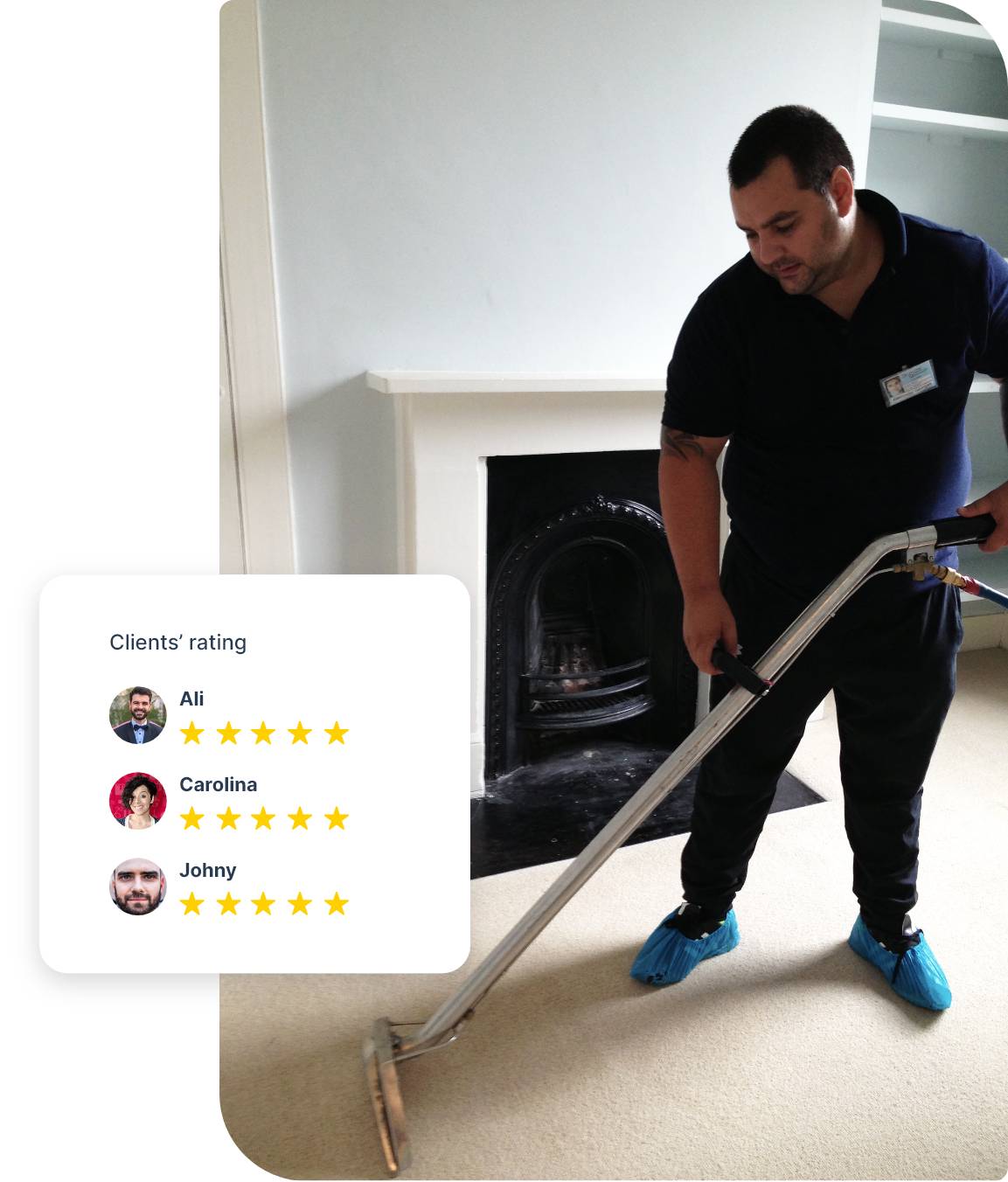
Four confirmations shorten a job here more than anything else: circuits commissioned, water back on, somewhere to unload, and the building empty of tools and materials. Permit parking is the norm and a visitor permit arranged in advance saves an argument. Textiles are the final stage, with fitted carpet and rugs extracted by our carpet cleaning in Fulham once every hard surface is done, and the same sequence is used further south through professional construction dust removal in Clapham.