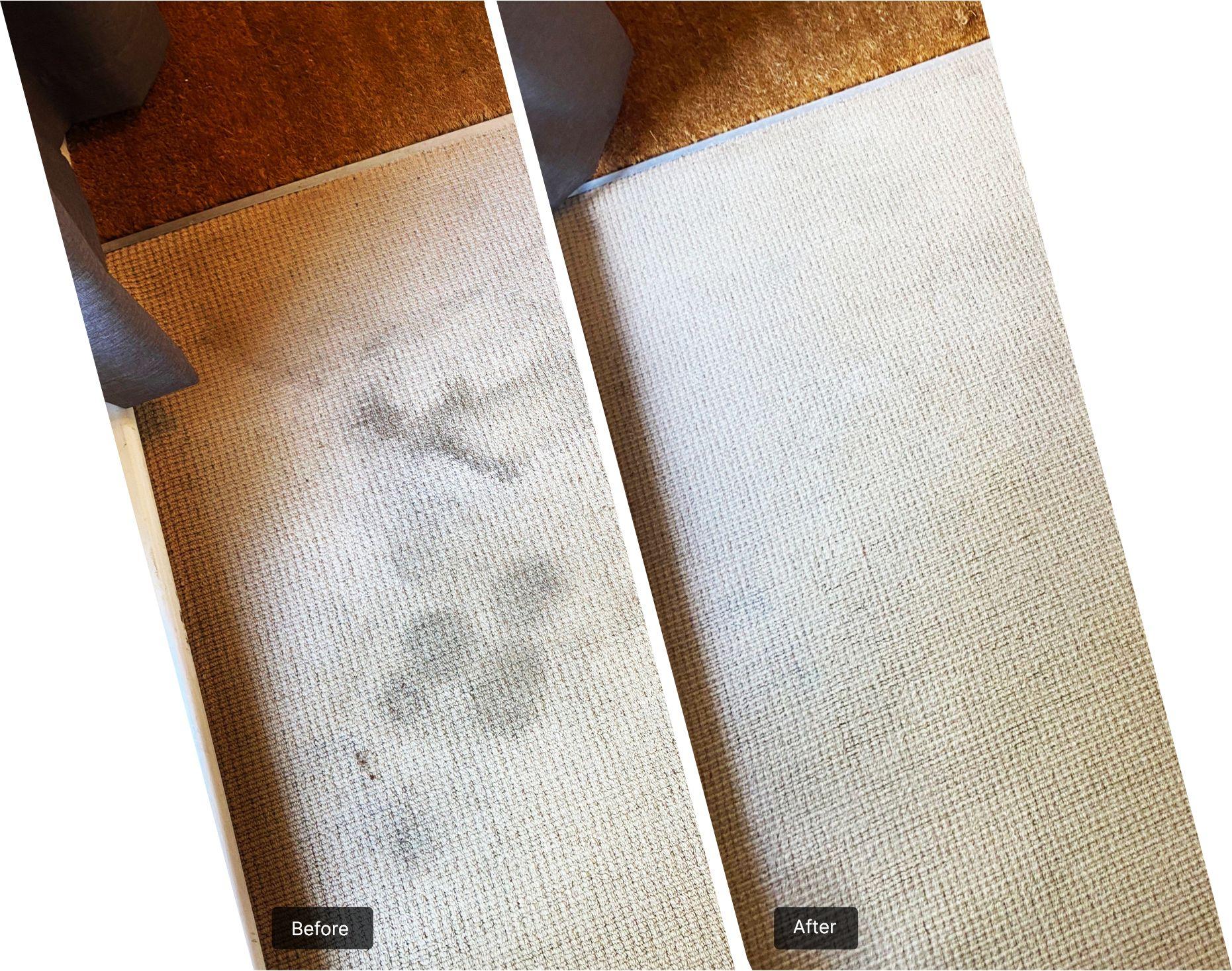
Plaster dust is the most difficult material a domestic vacuum will ever be asked to lift, and Acton generates a great deal of it. W3 has been extending, converting and subdividing for years, and the aftermath of that work ends up in the carpet of whichever room was left furnished while the builders were in the next one.
Fine dust behaves nothing like ordinary soil
Garden grit is angular and heavy and sits in the lower third of the pile. Construction dust is the opposite: gypsum, silica and brick particles fine enough to stay airborne for hours, drifting under doors and settling into fibre so evenly that the carpet simply looks a shade paler. Because the particles are so small they pack into the spaces between fibres rather than resting on them, and ordinary suction passes straight over the top.
Filtration decides whether it is removed or redistributed
A vacuum without sealed filtration will draw fine dust in and blow a proportion of it straight back into the room, which is why a house often seems dustier after cleaning than before. Proper work uses a machine with a sealed body and a high-efficiency filter, and the bag is changed far more often than normal because a loaded bag loses airflow rapidly. Several slow passes in alternating directions are needed; one quick pass removes only what was sitting on the surface.
Gypsum, alkalinity and why rinsing matters
Plaster residue is alkaline, and combining it with an alkaline pre-spray does nothing useful. Worse, wetting gypsum dust before it has been mechanically removed turns it into a paste that sets in the base of the pile and is then close to impossible to lift. Dry removal comes first, exhaustively, and only then is any liquid introduced, finished with an acid rinse to bring the fibre back to a sensible pH and stop it attracting the next fortnight's dust.
Protecting a floor during works costs less than restoring it
Self-adhesive carpet film, a taped dust barrier at the doorway of the room being worked on and a sheet of hardboard over any route used by trades will prevent most of this. The cost of that protection is a fraction of restorative cleaning, and it also prevents the damage that cannot be cleaned at all: dropped tools, paint splashes and a compressed lane where a wheelbarrow ran.
Paint, adhesive and sealant marks
These are spot problems rather than soiling problems, and each needs its own approach. Emulsion that is still soft comes out with water and patience; once cured it has to be softened with a specific solvent and picked out of the fibre, sometimes strand by strand. Silicone and expanding foam are mechanical removals. Solvent-based paint on a synthetic pile is the one case where an over-enthusiastic remover can dissolve the fibre itself, so testing on an offcut or a cupboard edge is not optional.
Getting the order of a refurbishment right
Carpet cleaning belongs at the end, after the last trade has gone and after a thorough builders' clean of hard surfaces, ceilings and window reveals. Cleaning the floor while dust is still coming off the walls wastes the work entirely. Where the whole property is being finished, the sequence set out in the cleaning services team in Acton puts the floor covering last for exactly that reason, and a room that has been emptied first cleans better, so a load handled as removals team in Marylebone is often booked into the same week.
Booking it and what to have ready
Pricing follows rooms and staircases, with heavily contaminated areas flagged at survey because they need substantially more dry-side time than a normal clean. Skirtings, window boards and the tops of doors should be wiped before the carpet is touched, and any remaining offcuts kept aside for testing. Upholstery that stood in the property during works carries the same dust and is dealt with as described on local upholstery cleaning across Ealing. Ongoing household upkeep afterwards sits with the cleaning services team in Acton or fully insured house cleaning in Ealing, comparable central work is covered by carpet cleaning across Soho and nearby areas, and the method notes behind the dry-first approach are on Fantastic Services.