Almost every practical decision about cleaning a carpet in Soho is settled before a machine is switched on, by the question of how the equipment gets through the door and when it is allowed to make a noise. W1D is a district of flats and small offices above ground-floor trade, reached by narrow original staircases, with no realistic prospect of parking outside.
The staircase decides the machine
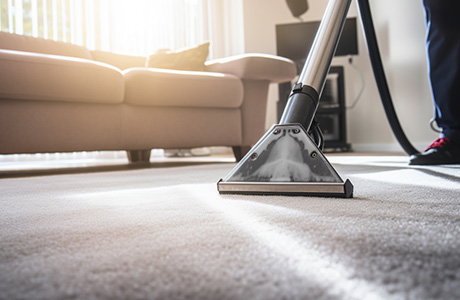
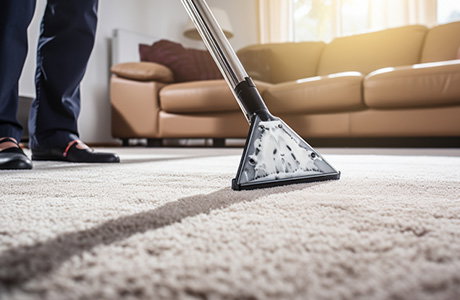
A flight with winders, a tight half-landing and a door at the top that opens inwards rules out anything heavy. The practical answer is a compact portable extractor carried in parts, or a low-moisture system that needs only a brush machine and a tank. Both can produce an excellent result; what neither can do is tolerate a technician who has not measured the staircase first. Asking about the approach at booking, rather than discovering it on the morning, is what keeps a job to its slot.
Portable units against van-mounted power
A truck-mounted machine heats its own water and generates far greater vacuum, but it depends on a hose run from a vehicle that has somewhere legal to stand. In this part of the West End that is rarely available, and a hose dragged through a shared entrance and up two flights creates its own problems. A modern portable with adequate heat and a second vacuum stage closes most of the gap, provided the operator compensates with slower strokes and more dry passes.
Working around the hours a building allows
Flats sit above premises that trade late and deliveries that arrive early, and many leases restrict noisy work to specific hours. Early starts suit residential flats; offices above are often better served after close of business. Either way the appointment is booked against the building's rules rather than the cleaner's preference, and a brief conversation with whoever manages the entrance avoids a wasted journey.
Waste water has to go somewhere sensible
Every litre sprayed comes back as dirty solution, and in a first-floor flat it is emptied into a domestic soil stack. That means filtering out fibre and grit so nothing blocks, carrying full tanks down a staircase safely, and never using a shared yard gully. It is a mundane part of the job that separates careful operators from careless ones, and it is worth asking about.
Clearing a small floor plan
Central flats are compact, so there is nowhere to put the sofa while the floor underneath is cleaned. Work proceeds in halves, with furniture shifted across and then back, or the room is cleared properly beforehand. Where a larger clearance is required, the load handling set out in our team in the area is usually arranged first so the flat can be worked on empty, which produces both a better clean and a faster dry.
Offices above the shops run on a different cycle
Small professional premises on the upper floors here carry a soil pattern quite unlike a flat. Everything arrives at the door, so the entrance and the first stretch of corridor take the load while the rooms beyond stay comparatively clean. That argues for frequent light attention to the approach and an occasional deeper pass elsewhere, rather than treating the whole floor at one frequency. Where a desk area sits on a tiled floor covering, moisture has to be kept minimal because tile backings are impervious and any liquid applied must come back up rather than drain away.
Fitting the appointment into a working week
Pricing follows room count, with a staircase treated as its own unit and any office area quoted on floor area instead. Drying in a small, warm flat with the windows opened onto a courtyard is typically a matter of hours rather than overnight. Regular upkeep between deep cleans is normally handled as part of experienced professional cleaners in Soho, seating fabric follows the approach described on upholstery cleaning across Chiswick, comparable work in the larger west London stock is covered by local carpet cleaning across Acton, and the fibre and method background sits on more about this service.