In a Marylebone mansion block, the managing agent often has as much influence over how a carpet is cleaned as the person who owns the flat. W1U is dominated by substantial red-brick and stone-faced blocks with a porter at the entrance, a service lift at the back and a written set of rules about contractors that predates most of the residents.
What the building will want to see first
Blocks with a staffed desk usually require a contractor's public liability details and advance notice of the visit, sometimes with a named arrival time. Some restrict noisy work to weekday daytime hours and exclude weekends entirely. None of this is obstructive once it is known, but it does mean a booking made for a Saturday morning may not be a booking the building will admit. A call to the porter's desk during the week is the simplest way to establish the position.
Service lifts and the route through the back
Passenger lifts in these blocks are small, often original, and frequently off limits to equipment. The service lift is the proper route and it may need reserving. Where there is no goods lift, equipment goes up a back staircase, which favours a system that breaks down into carryable parts. Protective matting along communal corridors is expected rather than optional, and anything dripped on a shared carpet becomes a conversation with the agent.
Corridor carpet belongs to everyone
Communal landings and corridors in these blocks take constant footfall and are usually a dark patterned wool chosen to hide it. They are cleaned on the block's schedule, not a resident's, and that work has to keep a means of escape clear at all times. Half-width working, so one side of the corridor is always passable, and rapid air movement afterwards are how it is done without closing anyone in.
Deep flats and the problem of moving air
Mansion flats are often arranged along a single internal corridor with rooms opening off it and windows only at the ends. That layout traps humidity. Doors are wedged open, air movers are set to push along the corridor rather than across it, and the extract in a bathroom is run to give the moisture somewhere to leave. Without that, a flat that would dry in four hours takes a day.
Where carpet stops and original floor begins
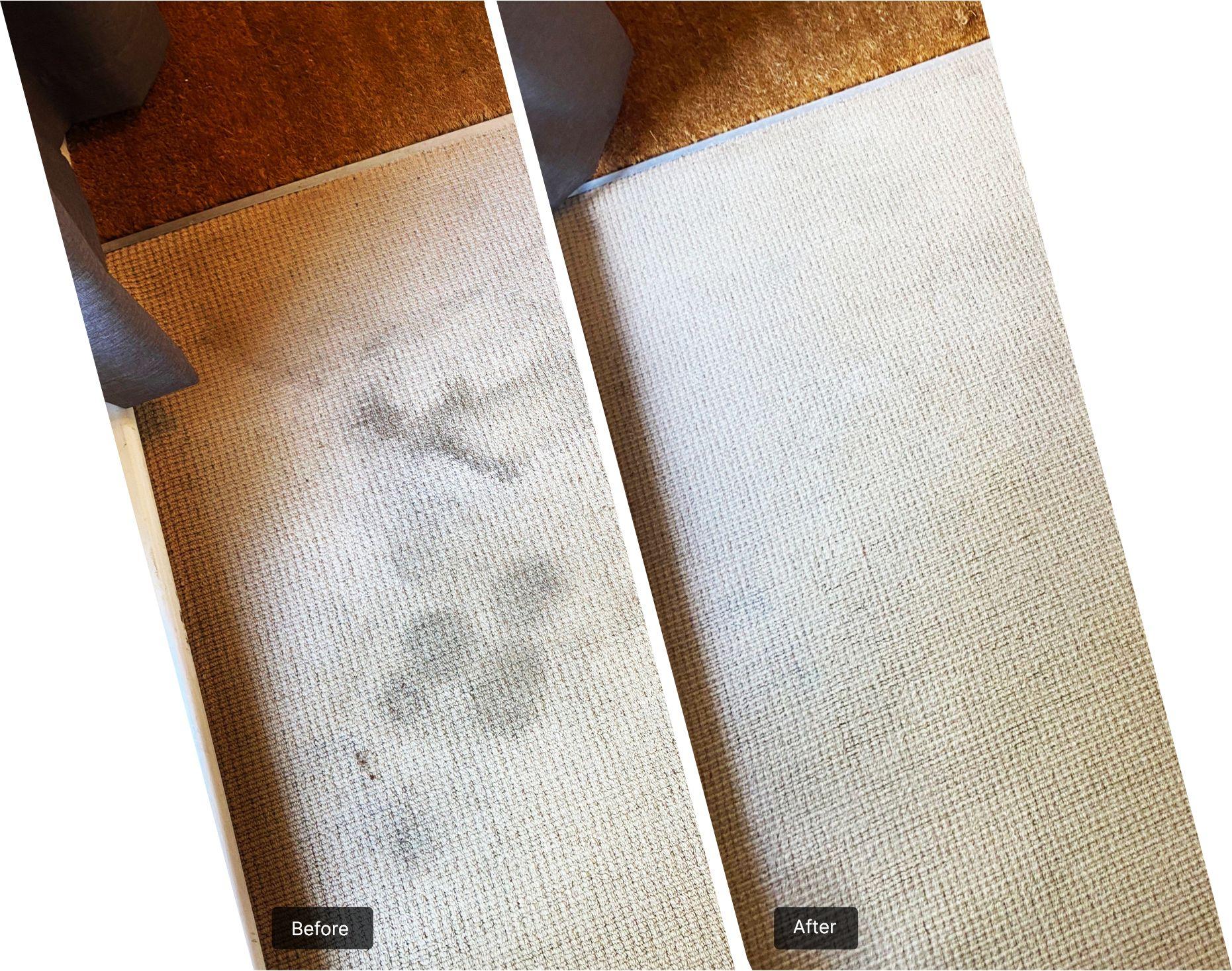
Many of these flats have parquet or boarded borders around a fitted carpet or a large rug. Solution overspray onto a waxed border will mark it, so the edge is masked or worked with a hand tool and a shielded spray. Rugs lying on parquet are lifted rather than cleaned in place, because moisture trapped between the two will lift the blocks. Neighbouring work in comparable central stock is described on rug cleaning services in Soho.
Filling and emptying inside a flat
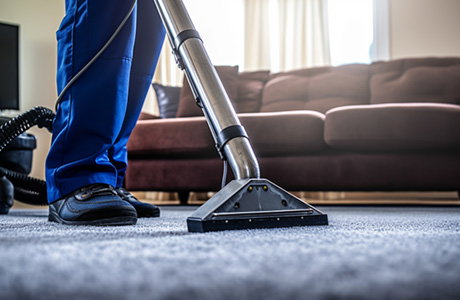
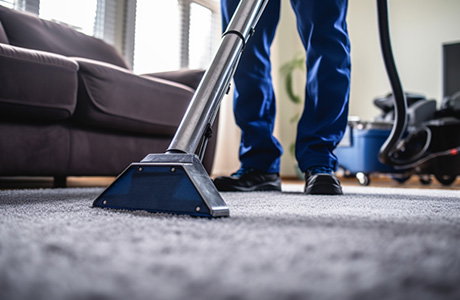
Without a vehicle at the kerb, a machine is filled and emptied indoors. That means drawing hot water from a bathroom or kitchen tap, which in an older block can be slow and inconsistent in pressure, and discharging recovered solution through a domestic waste with a filter in place to catch fibre and grit. Hoses across a hallway are a trip hazard in a shared flat, so the run is planned and matted rather than improvised. None of this is difficult, but it adds time to an appointment and is worth allowing for when a slot is booked.
Getting the flat ready and settling the terms
Clearing rugs, lifting curtain hems clear of the floor and identifying a point where equipment can be set down all shorten the appointment. Small items are moved by the technician; anything heavy or fragile is better dealt with beforehand, and where furniture has to leave the flat entirely the handling described in our man and van service in Marylebone is arranged in advance. Charging follows room count with corridors measured by area, and the reasoning behind each method appears on nationwide carpet and rug cleaning services. Routine upkeep between deep cleans usually sits within Marylebone cleaning services team, while a flat being handed back at the end of a let follows the sequence set out on Acton end of tenancy cleaning service.