A rota pinned to a fridge door works for about six weeks. After that one person is doing most of it, somebody else has stopped noticing the state of the hob, and the kitchen has quietly become a source of friction rather than a shared room. Putney has a lot of houses occupied by four or five unrelated adults on separate tenancies, and in that situation a paid visit is less about standards than about removing a recurring argument from the household.
Why shared kitchens fail before anything else
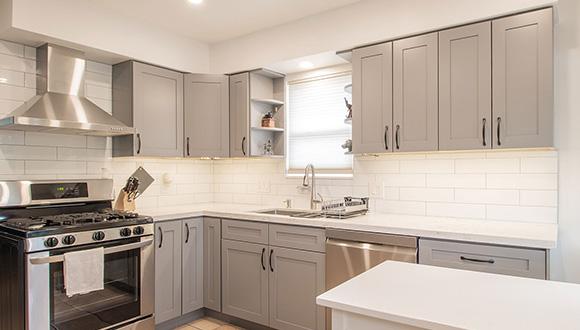
Five people cooking separately produce five times the aerosolised fat of one household and roughly five times the washing up, on a surface area designed for a family. Grease lands on cabinet doors, the wall behind the hob and the underside of wall units, and because no individual feels responsible for the whole room it accumulates until it needs a solvent rather than a wipe. Fridges with shelves divided between occupants are worse again, since nobody empties the drip channel at the back.
Bathrooms with several users and one extractor
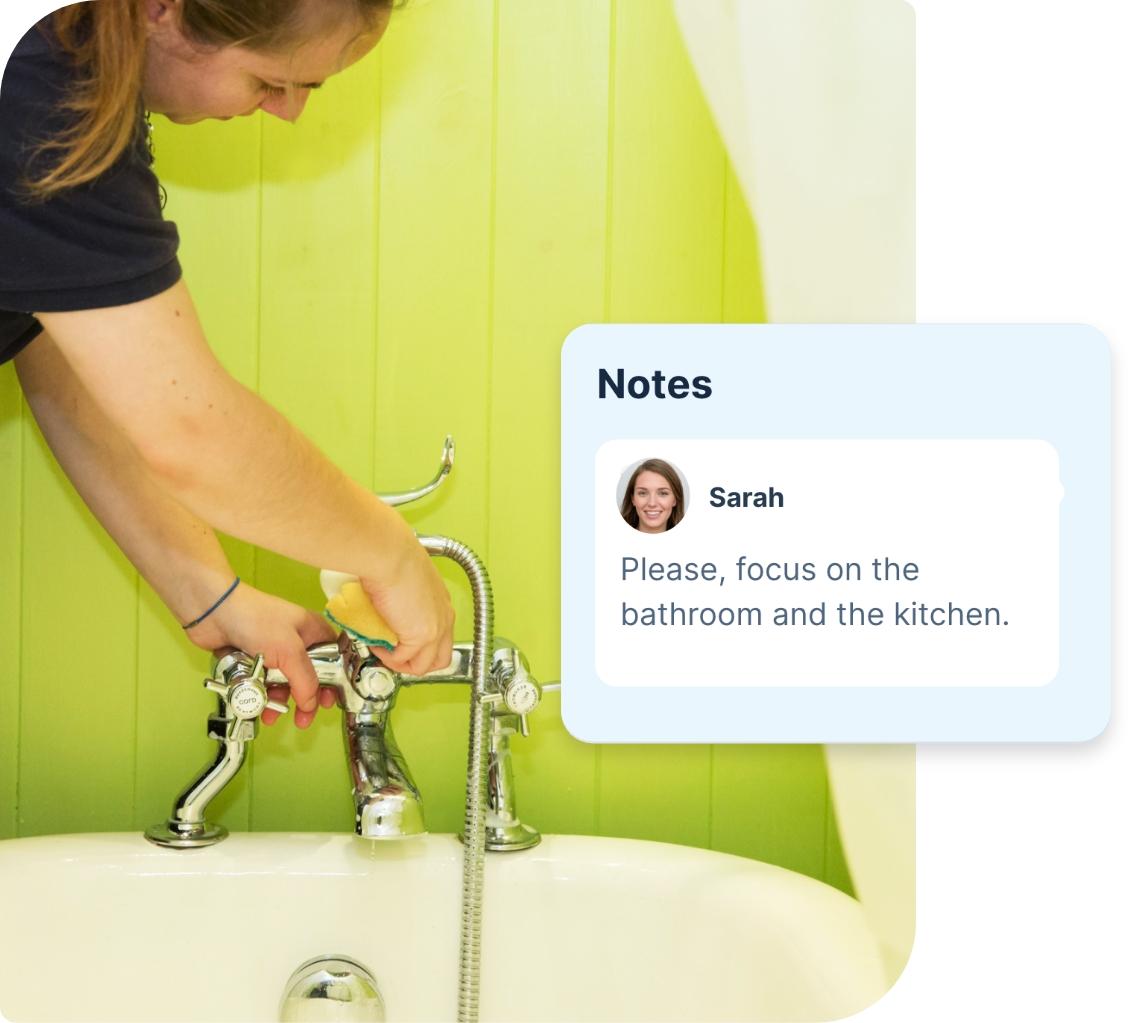
A bathroom used by five people in the same two hours each morning never dries out. Constant high humidity plus hair and product residue gives grout and sealant everything they need, and the extractor is usually running for a fraction of the time the room is wet. A shared bathroom benefits far more from short frequent attention than from an occasional deep effort, and the descaling of screen and taps is the part that most affects how the room looks.
What a communal visit should and should not include
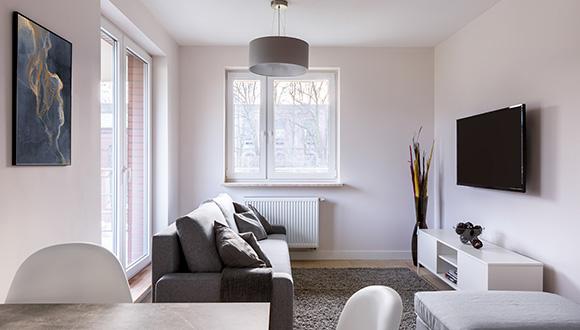
The workable boundary is communal space only: kitchen, bathrooms, hallway, stairs, living room. Bedrooms stay out of scope unless an individual arranges their own. That keeps the brief unambiguous, avoids disputes about belongings, and means the visit is not held up by a locked door. It also makes the cost easy to divide, because everyone is paying for the same thing.
Splitting the cost and fixing the slot
Pricing follows the length of the visit and how many people attend, so a shared house divides a known figure rather than negotiating a share of something variable. A fixed weekday slot works better than a rotating one in a house where people work different shifts, and it needs somebody nominated to hold access arrangements. Households wanting more than communal maintenance can add deeper work through professional domestic cleaning in Putney, booked as a separate appointment.
Licensing, landlords and communal areas
Where a property is licensed as a house in multiple occupation, the landlord carries duties around the condition of shared areas, waste storage and means of escape, and a cluttered hallway is a compliance problem as well as an untidy one. Many landlords fund communal cleaning for exactly that reason. Tenants organising it themselves should confirm who holds the arrangement, since it affects who can change it.
Waste, recycling and the job nobody owns
Bin duty collapses first in a shared house, because it cannot be deferred without consequence and because nobody has agreed to own it. Five people generate a great deal of packaging, the recycling gets contaminated by whoever is in a hurry, and collection day passes with the containers still behind the gate. A paid visit can empty and wash them out, and can keep the store area from becoming a problem, but it cannot put them on the pavement on the right morning. That part stays with a named housemate.
The changeover at the end of a tenancy year
Group tenancies tend to end together, which concentrates every departure into the same fortnight. The property has to be returned in the condition recorded at the start, and a communal maintenance visit is not the same thing as a check out clean, which is why our team in the area exists as a separate scope with its own standard. Booking it early in that fortnight is the difference between a smooth deposit return and a deduction. Similar arrangements nearby run through Tooting domestic cleaning specialists, and the wider list is on our main service page.