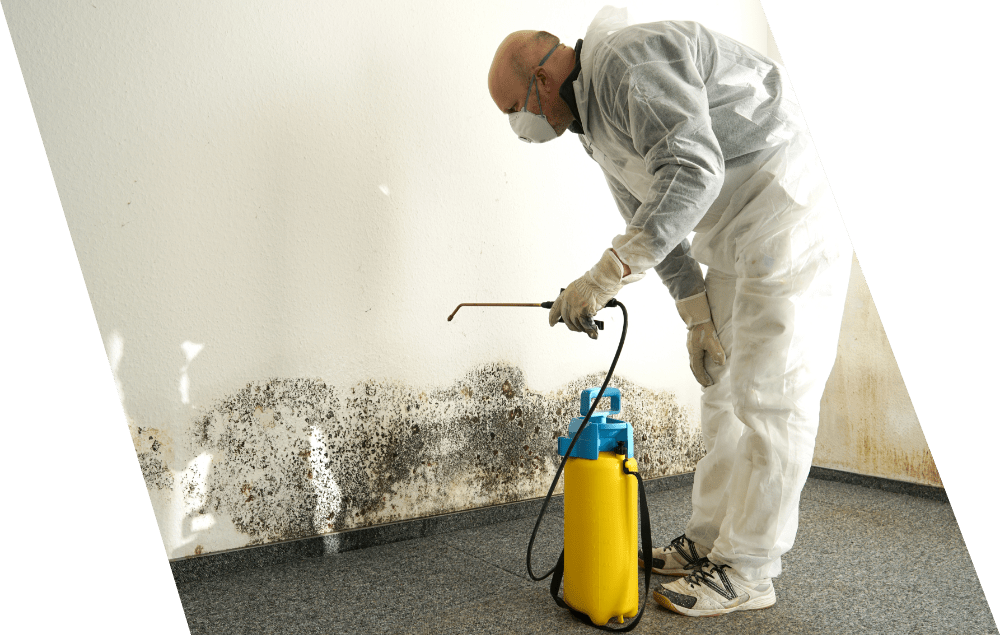
Open a built-in wardrobe on an outside wall in January and the air inside it is several degrees colder than the bedroom it opens into. That gap is the whole story behind a very large share of the calls from HA5. Eastcote's interwar and mock-Tudor semis came with generous built-in joinery - deep alcove cupboards either side of a chimney breast, a wardrobe run across the end wall of the front bedroom, a boxed press over the stairs - and every one of those enclosures is a small unheated room with no ventilation and a lot of absorbent contents.
Why a closed cupboard behaves like an outbuilding
A radiator warms the room, not the cupboard. Behind a closed door, the plaster on the external wall sits close to outdoor temperature while the air that leaks in around the door carries the bedroom's humidity with it. Packed clothing then makes matters worse by stopping what little air movement there is and by holding its own moisture. The result is growth on the back panel, along the underside of a fixed shelf, on the wall behind the hanging rail, and on the outer faces of whatever is pressed against the back.
What happens to the contents
Different materials fail differently. Wool, cotton and linen take up moisture readily and support growth on the fibre surface, which usually washes out. Leather shoes, belts and bags develop a pale surface bloom that wipes off but leaves the finish marked, and the lining is often worse than the outside. Suede rarely recovers fully. Foam-padded hangers, shoulder pads and stored bedding hold water through their thickness and are generally not worth saving. Anything being kept should be taken out of the house before it is brushed, because dry brushing indoors distributes spores through the room.
Cleaning textiles properly
Laundering at the highest temperature the fabric allows deals with most washable items. Dry cleaning handles tailoring and anything that cannot be wetted. What does not work is a damp cloth and a household spray on the affected garment, which drives the growth into the weave and leaves a shadow. Items are dried fully before they go back, and they do not go back into the same cupboard until the cupboard itself has been dealt with, or the whole exercise repeats within a couple of months.
Making a built-in cupboard survivable
The fix is nearly all joinery. The back panel comes off and the wall behind it is treated and then lined with insulated board, which removes the cold surface that started the problem. Ventilation slots are cut top and bottom of the doors, or the doors are replaced with louvred ones, so a slow current can pass. Hanging rails are brought forward off the back wall, shelving is set on battens with a gap behind, and solid bases are perforated. handyman across Eastcote covers that work. Where a wardrobe is in poor condition, removing it and using freestanding furniture set a hand's width off the wall is frequently the better answer.
Moths, beetles and damp wool
Damp, undisturbed wool in a dark cupboard is exactly what clothes moths and carpet beetles look for, and infestations are found alongside mould far more often than separately. The two problems reinforce each other: larvae feed on soiled and humid natural fibres, and their debris adds to the contamination. Where casings, larvae or grazed patches on woollens turn up during a survey, Eastcote pest control service treats the room and the cupboard while it is empty, which is the only practical moment.
What a visit covers
An inspection compares surface temperature and humidity inside the cupboard against the room, which is what demonstrates the cause rather than merely describing the symptom. Contents need to be emptied beforehand - a visit to a full wardrobe achieves very little - and a note of which items are affected helps with the salvage assessment. Pricing follows the number of enclosures treated and whether lining, ventilation or replacement joinery is included, with textile cleaning quoted separately by volume. Bedrooms cleared for this work usually want a full clean before everything returns, and experienced cleaning services in Pinner handles it. The same joinery pattern runs through the larger houses to the east, covered under mould removal prices in Stanmore, and method detail is on our mould removal and remediation team.