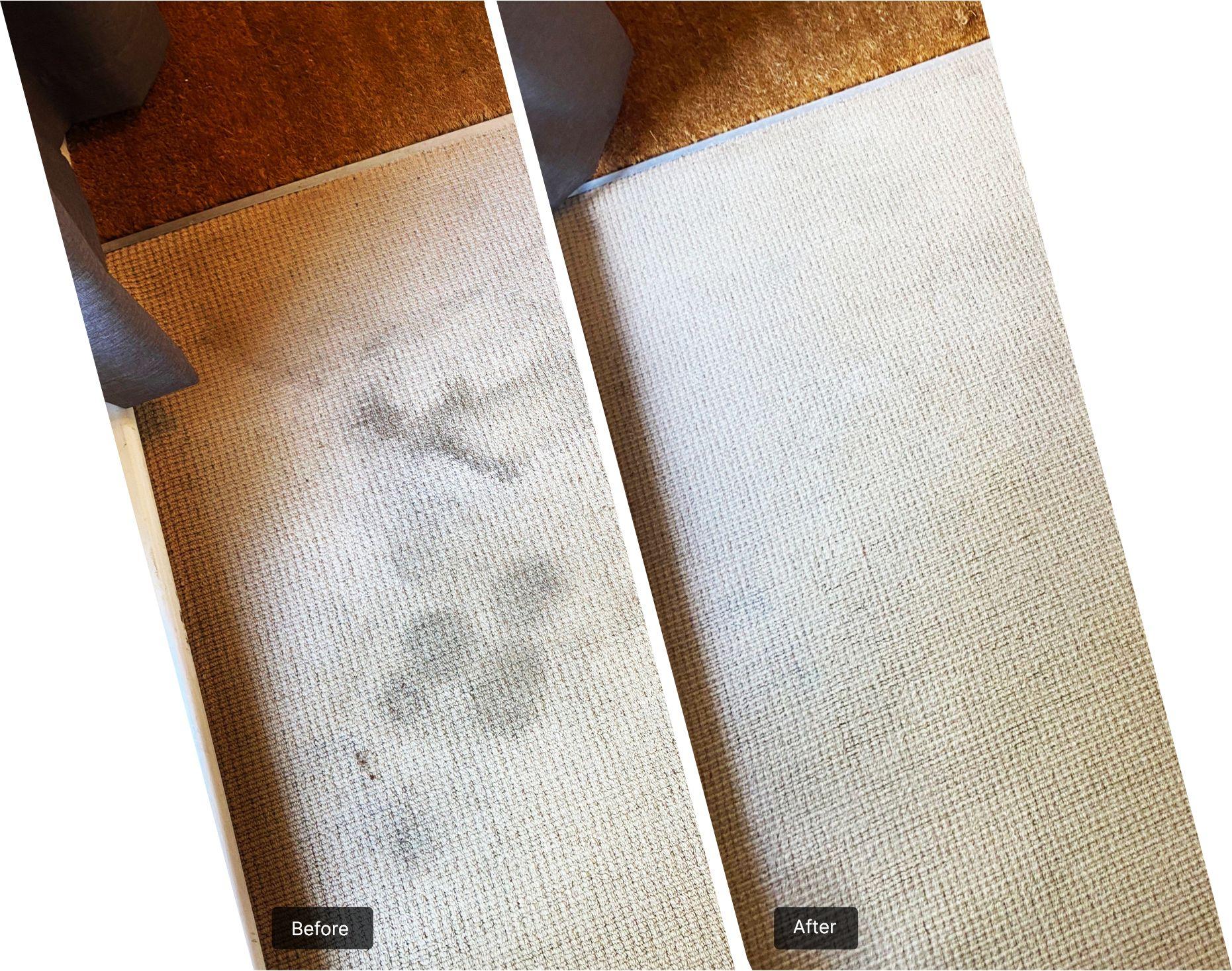
Between November and March, the single biggest source of soil in a Hornchurch house is the back door. The 1930s semis that fill much of RM11 came with long rear gardens on London clay, and clay behaves like nothing else underfoot: it stays plastic for weeks after rain, clings to a sole in flat cakes and dries into a stubborn grey film once it has been walked into a pile. Dealing with it is a seasonal problem with a seasonal answer.
Why clay is worse than ordinary garden soil
Clay particles are extremely fine and slightly charged, which makes them bond to fibres instead of resting on them. Sandy soil shakes out; clay has to be released chemically and then carried away in suspension. That is the difference between a floor that looks better after a vacuum and one that does not. It also means the pre-treatment needs proper dwell time on a clay-soiled route, because rushing straight to extraction leaves half of it bonded in place.
The route from the back door inwards
Almost every house of this type has the same pinch point: a rear door into a kitchen or utility space, then a doorway into a hall. The first two metres take several times the soil load of anywhere else, and that is where a floor fails first. A hard-surface zone by the door and a long mat inside it will do more for the life of the hall carpet than any amount of subsequent cleaning.
Bay windows, condensation and the pile beneath
The projecting bays on these houses are cold spots, and single-glazed or older replacement units there shed condensation down onto the floor below. Over a winter that keeps the pile at the bay permanently slightly damp, which encourages odour and, on wool, mildew spotting. Any treatment in that area is deliberately drier than the rest of the room and gets extra airflow while it dries.
Timing a clean to the seasons
There is little sense in cleaning a hall in the middle of a wet February if the household is out in the garden daily. Late spring, once the ground has firmed, holds its appearance far longer, with a shorter maintenance treatment of the main routes before winter if needed. Households planning it that way often combine the floors with regular housework arranged through domestic cleaning across Hornchurch.
Moving out and handing a property back
Floors are one of the first entries on a check-out report, and clay staining that has been left over a season reads as neglect rather than wear. Where a whole property needs preparing for handover, the scope is set out under our local team, and a dated record of the floor treatment usually settles any later question about condition.
Doormats, and the maintenance nobody enjoys
A doormat that has absorbed a winter of clay stops being a barrier and becomes a reservoir, feeding soil back onto a clean floor every time somebody stands on it. Mats want washing or replacing on roughly the same cycle as the floors themselves, and a coir mat that has gone stiff and dark has finished its useful life. Rubber-backed mats laid on a fitted floor cause their own trouble, because moisture trapped underneath them can mark the pile permanently. The fibre and construction notes that explain why some mats shed and others hold are on nationwide carpet and rug cleaning services.
What to expect from the appointment
Pricing follows rooms and their measured area, with stairs and landings counted separately. A quick survey identifies fibre and backing, a colour test is run somewhere out of sight, and heavily soiled routes are flagged before work starts so that expectations match the likely outcome. Rooms are usually walkable within a few hours and dry by the next morning with a window on the latch. The rest of the household work available locally is on the Hornchurch branch, and customers nearer the estates sometimes prefer a slot listed for vetted carpet cleaning services in Dagenham.